Most Effective Foods for Chronic Bronchitis
Chronic bronchitis, a type of chronic obstructive pulmonary disease, or COPD, is a lung infection that blocks airflow and makes breathing difficult. Symptoms of chronic bronchitis include a lasting cough that brings up mucus, shortness of breath, wheezing, swelling of the ankles, feet and legs, and blue-toned lips. In addition to anti-inflammatory medications and inhalers that ease breathing, a healthy diet may improve your symptoms. For best results, seek specified guidance from a qualified health care professional.
Probiotics
Probiotics are healthy bacteria that work against harmful bacteria in your digestive system. In addition to easing digestion and help to prevent infections caused by harmful bacteria, probiotics may help prevent respiratory infections, such as bronchitis, according to the University of Maryland Medical Center, and reduce cold-like symptoms. Valuable sources of probiotics include yogurt with live active cultures, such as lactobacillus, kefir, a yogurt-like beverage, buttermilk, fermented soy products and various fortified foods and beverages.
Fruits and Vegetables
Foods That Help the Respiratory System
Learn More
Fruits and vegetables are prime source of antioxidants -- nutrients that strengthen your body's ability to defend itself from infections and disease. According to a study published in "Chest" in May 2007, upping your fruit and vegetable intake may lead to fewer bronchitis symptoms. In the study, the diets and respiratory symptoms of 2,012 high school students were examined for one year. By the study's end, researchers found that participants who consumed fewest amounts of antioxidant-rich foods were most likely to develop chronic bronchitis and other respiratory problems, such as asthma and wheezing. To reap protective benefits of antioxidants, incorporate colorful fruits and vegetables, such as berries, citrus fruits, cantaloupe, red grapes, tomatoes, leafy greens, bell peppers, broccoli, sweet potatoes and winter squash into your meals and snacks routinely.
- Fruits and vegetables are prime source of antioxidants -- nutrients that strengthen your body's ability to defend itself from infections and disease.
- According to a study published in "Chest" in May 2007, upping your fruit and vegetable intake may lead to fewer bronchitis symptoms.
Chicken Soup
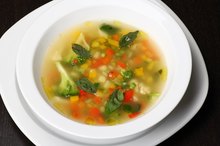
Chicken soup is a time-honored remedy for respiratory symptoms. The University of Maryland Medical Center recommends chicken soup for sore throat relief, loosened mucus and reduced congestion. Consume broth-based soup over creamy soup, which may worsen phlegm buildup. Broth in soup also enhances hydration, which is important for flushing toxins from your body through urine. Incorporating vegetables into your soup provides additional antioxidant benefits. Protein in chicken and other soup ingredients, such as beans, lentils and turkey, provides amino acids -- the building blocks of lean tissue. Protein-rich foods also promote strong immune system function, sustained energy and tissue repair -- attributes that may support your recovery from bronchitis outbreaks.
- Chicken soup is a time-honored remedy for respiratory symptoms.
- The University of Maryland Medical Center recommends chicken soup for sore throat relief, loosened mucus and reduced congestion.
Related Articles

Foods That Help the Respiratory System
Learn More
Foods That Heal Infections
Learn More

Foods to Avoid When Asthmatic
Learn More

Foods for Phlegm Removal
Learn More

Can Coffee Trigger Stomach Virus Symptoms?
Learn More
Foods That Help Panic Attacks
Learn More

Foods That Make Sleep Apnea Worse
Learn More
Anti-Inflammatory Foods List
Learn More

Vitamins and Minerals for Fever Blisters
Learn More
Should You Eat Certain Foods With a Kidney Infection?
Learn More
References
- "Chest"; Low Dietary Nutrient Intakes and Respiratory Health in Adolescents; Jane S. Burns, ScD et al.; May 2007
- National Heart, Lung, and Blood Institute. Bronchitis.
- Cleveland Clinic. Bronchitis. Updated August 12, 2019.
- American Lung Association. Acute Bronchitis Symptoms, Causes & Risk Factors. Updated March 13, 2018.
- American Lung Association. Chronic Bronchitis.
- John Hopkins Medicine. Acute Bronchitis.
- John Hopkins Medicine. Bronchitis.
- Cleveland Clinic. Bronchitis: Management and Treatment. Updated August 12, 2019.
- Braz J Phys Ther. 2013 Nov-Dec;17(6):533-40. doi: 10.1590/S1413-35552012005000120. Epub 2013 Nov 1.
- Hooper LG, Young MT, Keller JP. et al. Ambient Air Pollution and Chronic Bronchitis in a Cohort of U.S. Women. Environ Health Perspect. 2018 Feb 6;126(2):027005. doi: 10.1289/EHP2199.
- Jacinto CP, Gastaldi AC, Aguiar DY, Maida KD, Souza HC. Physical therapy for airway clearance improves cardiac autonomic modulation in children with acute bronchiolitis.
- Kuroda M, Ohta M, Okufuji T, et al. Frequency of soup intake is inversely associated with body mass index, waist circumference, and waist-to-hip ratio, but not with other metabolic risk factors in Japanese men. J Am Diet Assoc. 2011;111(1):137-42. doi:10.1016/j.jada.2010.10.004
- Zhu Y, Hollis JH. Soup consumption is associated with a reduced risk of overweight and obesity but not metabolic syndrome in US adults: NHANES 2003-2006. PLoS One. 2013;8(9):e75630. doi:10.1371/journal.pone.0075630
- Wright N, Wilson L, Smith M, Duncan B, Mchugh P. The BROAD study: A randomised controlled trial using a whole food plant-based diet in the community for obesity, ischaemic heart disease or diabetes. Nutr Diabetes. 2017;7(3):e256. doi:10.1038/nutd.2017.3
- Pan A, Hu F. Effects of carbohydrates on satiety: Differences between liquid and solid food. Curr Opin Clin Nutr Metab Care. 2011;14(4):385-390. doi:10.1097/mco.0b013e328346df36
Writer Bio
August McLaughlin is a certified nutritionist and health writer with more than nine years of professional experience. Her work has been featured in various magazines such as "Healthy Aging," "CitySmart," "IAmThatGirl" and "ULM." She holds specializations in eating disorders, healthy weight management and sports nutrition. She is currently completing her second cookbook and Weight Limit—a series of body image/nutrition-related PSAs.