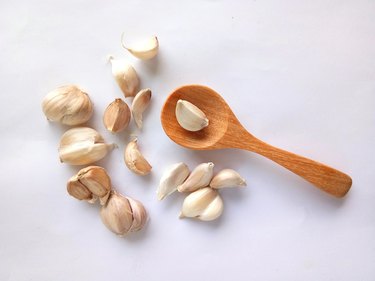
Too much garlic may sound absurd to you, especially if you love Italian food, but it is possible that you could be eating far more garlic than you need. In fact, eating too much garlic can lead to adverse effects.
Read more: Which Is Healthier, Raw or Cooked Garlic?
Video of the Day
Video of the Day
Is Garlic Overdose Possible?
Any food you consume too much of can have negative effects on your health. Garlic is not an exception to this rule. According to National Center for Complementary and Integrated Health (NCCIH), there are limited studies on garlic. While the NCCIH doesn't suggest an upper limit of garlic consumption, it does note that side effects may exist from eating raw garlic such as an upset stomach.
However, it is much more likely that you will want to stop eating garlic well before reaching this threshold. That is because you'll likely develop bad breath if you continue to eat more garlic.
When consumed in food, it is not very likely you will come close to hitting an unsafe upper limit of garlic. However, if you choose to take a supplement, you may want to exercise caution and use only the indicated amount. You should also consult your doctor before starting a garlic supplement, especially if you use blood thinners.
Increased Bleeding Risk
Garlic has natural anti-clotting properties. Though this may benefit the heart and circulation, the NCCIH and the Mayo Clinic warn that it can pose a risk of bleeding for people who use anticoagulants or blood thinners such as warfarin.
The NCCIH suggests avoiding garlic supplements prior to surgery as well and points out that garlic supplements may interfere with the effectiveness of certain medications, such as saquinavir, a drug used to treat HIV.
Talk to your doctor or surgeon prior to taking garlic supplements. He or she can help you figure out whether garlic supplements will interact poorly with the medications you are taking.
Garlic Can Cause Gastrointestinal Upset
Garlic may cause gastrointestinal discomfort. This can show up as bloating, diarrhea and pain in the stomach. This is especially likely if you are eating more garlic than you normally do or if you consume raw garlic. If you have an upset stomach after eating garlic, you can try eating bland foods such as rice, bananas or bread.
To avoid gastrointestinal upset, you should gradually introduce or increase the amount of garlic you consume. Also, if raw garlic causes you indigestion, you may want to try black garlic.
According to Consumer Reports, black garlic is aged under high heat and humidity for 10 days. Black garlic removes the irritants typically found in garlic while maintaining its potential health benefits.
Disadvantages of Eating Raw Garlic
You are most at risk of annoying side effects when you consume raw garlic. Raw garlic is very pungent, which means your breath will likely stink for several hours after eating it.
If you consume raw garlic, you also run the risk of the nasty garlic smell seeping through your pores. To combat this, you could reduce the amount of garlic you eat, use probiotics for optimal gut health or try adding good smelling herbs to your diet.
Another potential risk occurs when you handle raw garlic to prepare it. According to the Cleveland Clinic, you may also experience a stinging feeling on your hands from handling raw or powdered garlic. To avoid the potential of developing skin lesions where you came in contact with the garlic, they recommend wearing protective gloves.
Read more: 10 Incredible Garlic Hacks
The Cleveland Clinic also identified garlic as a potential trigger for headaches. Therefore, people who suffer from frequent headaches may want to avoid using garlic. Also, people who have migraines should avoid garlic as well because it can potentially trigger a migraine.
Too Good to Be True?
Unfortunately, according to the NCCIH and Consumer Reports, the health benefits of garlic may be over-emphasized. Both organizations identify potential issues with the findings of most of the available research as:
- Too limited either in scope of the study (small) or lacking additional research.
- Contradictory evidence between studies.
- Weak or inconclusive evidence.
If you're experiencing unpleasant side effects when eating too much garlic, try not to use garlic in large portions. Instead, eat what you can tolerate and avoid garlic supplements, as they may not have the effect that you are hoping for.