Can You Eat Rhubarb Leaves?
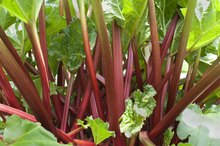
A slice of strawberry rhubarb pie may be your idea of a delicious treat and the stalks can be part of a nutritious diet. A rhubarb stalk is a deep red vegetable that resembles celery. Rhubarb has been used for centuries for medicinal purposes. It can be eaten as a vegetable or taken in supplement form. You should know that the entire rhubarb plant is not edible and learning which parts to avoid can help you enjoy the taste and nutrition rhubarb has to offer.
What Rhubarb is Used For
The toxicity of the rhubarb plant does not need to scare you away from eating the stalk. The stalk is quite nutritious and can be used to make a variety of foods, including desserts, jams, jellies, sauces and juice. Rhubarb is also used medicinally for its potential to help treat gastrointestinal disorders, renal disorders and cancer, but studies have not proven its effectiveness Drugs.com reports. The large, but poisonous, leaves of the rhubarb plant are also used for landscaping purposes.
Toxins in Rhubarb Leaves
When Can Babies Have Rhubarb?
Learn More
Oxalic acid is the compound present in rhubarb leaves that can cause poisoning to occur. The National Institutes of Health reports that anthraquinone glycosides may also be found in the leaves of the rhubarb plant, and they can be toxic as well. Eating rhubarb leaves will cause you to ingest these poisons and can cause a variety of symptoms and unwanted side effects.
Symptoms of Poisoning
Consuming too much oxalic acid can be fatal, although death from it is incredibly rare, c. You would have to consume a very large amount of rhubarb leaves for death to become a threat. More likely, you will experience a range of uncomfortable symptoms, including a burning sensation in your mouth and throat, as well as difficulty breathing. You may also experience diarrhea, eye pain, nausea, stomach pain, vomiting, weakness and urine that is red in color. More seriously, you may develop kidney stones or seizures, or go into a coma.
Treatment and Prevention
Allergic Reactions to Oleanders
Learn More
Preventing rhubarb leaf poisoning can be done simply be avoiding ingesting any of the leaves of the plant. Once rhubarb is harvested, trim the leaves off the stalks and discard them immediately. This will prevent contamination of the leaves onto the edible portion of the rhubarb. You should also wash the rhubarb stalks well before preparing them to eat. If you do ingest poisonous rhubarb leaves, call a doctor or Poison Control immediately. Treatment for your symptoms may include assistance breathing, activated charcoal and intravenous fluids.
Related Articles
When Can Babies Have Rhubarb?
Learn More
Allergic Reactions to Oleanders
Learn More

Signs & Symptoms of Weed Killer Poisoning
Learn More
How to Blanch Kale
Learn More
The Effects of Eating Buttercup Flowers
Learn More
Side Effects of Phytolacca Berry
Learn More
Black Radish Side Effects
Learn More
Weight Loss With Rhubarb
Learn More
Side Effects of Chicory Root Extract
Learn More
Side Effects of Eating Raw Seafood
Learn More
References
Writer Bio
Sara Ipatenco has taught writing, health and nutrition. She started writing in 2007 and has been published in Teaching Tolerance magazine. Ipatenco holds a bachelor's degree and a master's degree in education, both from the University of Denver.