How Many Doses of Benadryl Can a Child Have if Having an Allergic Reaction to Something?
Diphenhydramine, an antihistamine, carries the brand name Benadryl 6. It blocks histamines, which the body manufactures during some allergic reactions. Many parents use Benadryl to control minor allergic reactions such as hives in their children 4. Though it may be tempting to give your child a second dose if the first one doesn't work, this is extremely risky. Never overdose your child on Benadryl. If your child is experiencing his first allergic reaction to something, no matter how minor, contact your pediatrician.
Common Allergies
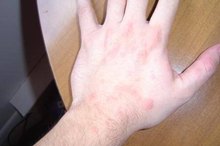
Benadryl is most effective at treating minor colds, inhalation allergies and hives. Hives are a common minor allergic reaction that produce small bumps that fade and then reappear all over the body. Never assume your child has hives. Some serious allergic reactions may look like hives at first and then become more serious. Whenever your child experiences a first-time allergic reaction, it's vital to contact her doctor. Allergies can be fatal, so don't take unnecessary risks.
- Benadryl is most effective at treating minor colds, inhalation allergies and hives.
- Whenever your child experiences a first-time allergic reaction, it's vital to contact her doctor.
Other Allergies
What Are the Dangers of Mucinex for Children?
Learn More
Uncommon childhood allergies include anaphylactic reactions to bee stings, certain medications and other allergens. Benadryl does not treat anaphylactic shock, and parents should never use it in place of medical care. If your child is having trouble breathing, experiencing swelling of parts of the body or is unconscious, call an ambulance. In some allergic reaction emergencies, your doctor may recommend giving your child Benadryl on the way to the hospital.
- Uncommon childhood allergies include anaphylactic reactions to bee stings, certain medications and other allergens.
- If your child is having trouble breathing, experiencing swelling of parts of the body or is unconscious, call an ambulance.
Benadryl Dosing
Benadryl should not be given to children under 4-years-old unless a doctor has instructed otherwise 4. If a child is under 6-years-old, limit usage to products that only have one ingredient. Some versions of Benadryl such as long-acting doses are unsafe for children under the age of 12 4. If your child meets the age qualifications, you can repeat a dosage every six hours on an as-needed basis. Read the package before giving any medication to your child, and never give more than the recommended dosage unless directed to do so by your pediatrician. Because Benadryl often causes drowsiness, excessive use may lead to dependency on the drug to sleep.
- Benadryl should not be given to children under 4-years-old unless a doctor has instructed otherwise 4.
- Read the package before giving any medication to your child, and never give more than the recommended dosage unless directed to do so by your pediatrician.
Benadryl Side Effects
How Does Mucinex Work?
Learn More
Before giving your child Benadryl, you must know about its side effects. The most common one is drowsiness. In fact, many people take Benadryl as a sleep aid. Avoid giving Benadryl to a child before a long bike ride, hike or sports game. She may injure herself. Benadryl also dries out the sinuses and skin. Without adequate water, it might cause dehydration, so ensure your child continues drinking water. Allergies to Benadryl are rare but can be life threatening. If your child's allergic reaction gets worse after taking the drug, she may be allergic to it. Contact your pediatrician or go to the emergency room.
- Before giving your child Benadryl, you must know about its side effects.
- In fact, many people take Benadryl as a sleep aid.
Related Articles
What Are the Dangers of Mucinex for Children?
Learn More

How Does Mucinex Work?
Learn More
Zyrtec for Infants
Learn More

Safety of Claritin for Kids
Learn More

Baby Tylenol Side Effects
Learn More

Overdose Signs of Zyrtec
Learn More

Safe Over-the-Counter Allergy Medicine for Toddlers
Learn More

My Infant Gets a Fever After Shots
Learn More

Side Effects of Children's Zyrtec
Learn More
How to Treat Hives With Benadryl
Learn More
References
- "The Portable Pediatrician"; William Sears, et al.;2011
- "Caring For Your Baby and Young Child, 5th Edition"; American Academy of Pediatrics; 2009
- "Health, Safety and Nutrition for the Young Child"; Lynn R. Marotz; 2011
- Benadryl: Children's BENADRYL Allergy Liquid
- Children's Hospital St. Louis: Diphenhydramine (Benadryl) Dosage Table
- Healthy Children: Diphenhydramine Dosage Table (eg, Benadryl) (Antihistamine)
- U.S. National Library of Medicine: MedlinePlus. Diphenhydramine. Updated August 15, 2018.
- U.S. National Library of Medicine DailyMed. Label: Benadryl—diphenhydramine hydrocholoride tablet, film coated. Updated December 9, 2019.
- U.S. National Library of Medicine: MedlinePlus. Diphenhydramine overdose. Updated March 23, 2020.
- Gray SL, Anderson ML, Dublin S, et al. Cumulative use of strong anticholinergics and incident dementia: a prospective cohort study. JAMA Intern Med. 2015;175(3):401-407. doi:10.1001/jamainternmed.2014.7663
- Drugs and Lactation Database (LactMed) Diphenhydramine. Updated October 31, 2018.
- Kar S, Krishnan A, Preetha K, Mohankar A. A review of antihistamines used during pregnancy. J Pharmacol Pharmacother. 2012;3(2):105–108. doi:10.4103/0976-500X.95503
Writer Bio
Brenna Davis is a professional writer who covers parenting, pets, health and legal topics. Her articles have appeared in a variety of newspapers and magazines as well as on websites. She is a court-appointed special advocate and is certified in crisis counseling and child and infant nutrition. She holds degrees in developmental psychology and philosophy from Georgia State University.