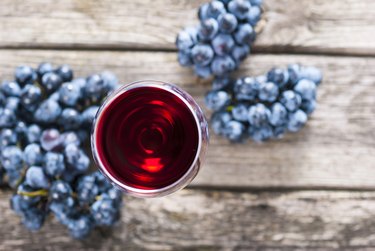
The advantages and disadvantages of red wine are frequently debated. If you enjoy having a glass or two, there may be some benefits — and some downsides too. The key is knowing the pros and cons of red wine and practicing moderation — about a glass a day for women or two a day for men.
Tip
Some research suggests that red wine benefits female drinkers, in particular, and boosts health for women and men alike. If you do drink, weigh the advantages and disadvantages of red wine consumption and drink only in moderation.
Video of the Day
Red Wine and Heart Health
Red wine is high in antioxidants, including resveratrol, a compound produced by some plants. It can be found in the skin of grapes — more so in red wine than white wine — as well as in blueberries, cranberries, chocolate and peanuts. Resveratrol is also available in supplement form.
Video of the Day
This antioxidant may help prevent cardiovascular disease by neutralizing free oxygen radicals and reactive nitrogenous radicals, according to research published in July 2018 in the journal Molecules. It crosses the blood-brain barrier and thereby has protective benefits for the brain and nerve cells. Resveratrol also may help protect against the formation of blood clots, or thrombi, which block the normal flow of blood.
An April 2016 study in the journal mBio, published by the American Society for Microbiology, suggests that resveratrol could reduce the risk of heart disease, thanks to the way it interacts with the gut microbiome. It's also touted for its anti-aging effects on the skin.
Health Benefits for Women
There may be important red wine benefits for female drinkers, in particular. Alcohol consumption is generally associated with a higher risk of breast cancer among adult women. However, the type of alcohol consumed could make a difference.
According to a November 2015 study published in Women's Health, red wine may protect against breast cancer development while also boosting cardiovascular health. Resveratrol is thought to be the main contributor to these protective benefits. Note that beer also contains certain compounds derived from malt and hops that may protect against cancer.
The Molecules review also points to research that studied the effects of higher antioxidant consumption among a group of women. The research, published in January 2014 in BMC Public Health, shows that red wine benefits for female drinkers extend beyond cancer protection.
According to the study, women who consumed more red wine showed a lower risk of cardiovascular disease, heart arrhythmia, hypertension and diabetes. Coffee, tea, blueberries, walnuts, oranges, cinnamon and broccoli were also shown to provide protective benefits. The women who drank red wine regularly were found to have the lowest risk.
Read more: 5 Hidden Health Benefits of Alcohol
Disadvantages of Red Wine
Despite the potential benefits, the American Heart Association questions whether red wine is the best source of resveratrol, versus getting it from food.
To enjoy the protective benefits of this compound, you may need to drink a lot of wine, which can have negative health consequences. Liver damage, obesity, certain cancers, stroke, high blood pressure and heart arrhythmia are just a few of the possible downsides of too much drinking.
In short, there isn't a definitive link between drinking red wine and improved heart health. As such, the AHA and federal guidelines do not endorse drinking per se, but rather advise drinking only in moderation.
If you do drink, the 2015-2020 Dietary Guidelines for Americans recommend that women have no more than one drink per day, and men have no more than two. The Guidelines define one drink as 5 ounces of wine, 12 ounces of beer or 1.5 ounces of 80-proof spirits.
Should You Supplement?
Red wine in excess is bad for your health — so should you take resveratrol supplements instead? Some animal studies show that resveratrol supplementation decreased cardiovascular risk factors and improved cardiovascular function in rodents.
However, human trials of resveratrol supplementation are lacking. As such, it's unclear whether resveratrol's health benefits are transferable to humans, according to a July 2016 review in the journal Advances in Nutrition. Researchers state that there's a need for clinical trials to determine the exact effective human dosage of resveratrol for the therapy of specific diseases.
Part of the issue with resveratrol is that your body doesn't readily absorb it from supplements, notes the Mayo Clinic. Most of it is rapidly metabolized and eliminated in urine.
There is some evidence that pairing resveratrol with certain compounds could improve its absorption. For example, absorption may be boosted by combining resveratrol with piperine, the alkaloid responsible for black pepper's pungency. More research is needed on the potential benefits of such pairings, however.
Additional Red Wine Benefits
There may be another reason you enjoy pouring a glass of red wine — and it's not just the alcohol content. The resveratrol in red wine may block the expression of an enzyme related to the control of stress in the brain, according to July 2019 research published in the journal Neuropharmacology. When this enzyme, known as phosphodiesterase 4 (PDE4), is elevated in the brain, it can lead to depression and anxiety.
Note that the research used mice to study the effects of resveratrol on stress. As with other animal studies, further research may be needed to examine how the findings translate to humans. However, resveratrol may be an effective alternative to drugs for treating patients living with depression and anxiety disorders, according to a July 2019 research article published by the University at Buffalo.
The study isn't the only research pointing to the potential for red wine's antidepressant qualities. Another study, published in Nature Communications in February 2018, identified two phytochemicals in red wine as enhancing resilience against stress in mice.
The amount of the compounds is not significant enough in a glass of red wine to make a difference, though, according to the study. Also, human trials would be needed to confirm the benefits. However, the study offers additional hope that red wine compounds have potential as an alternative treatment for depression.
- mBio: "Resveratrol Attenuates Trimethylamine-N-Oxide (TMAO)-Induced Atherosclerosis by Regulating TMAO Synthesis and Bile Acid Metabolism via Remodeling of the Gut Microbiota"
- American Heart Association: "Drinking Red Wine for Heart Health? Read This Before You Toast"
- Office of Disease Prevention and Health Promotion: Dietary Guidelines 2015-2020: "Appendix 9. Alcohol"
- Mayo Clinic: "Red Wine and Resveratrol: Good for Your Heart?"
- Advances in Nutrition: "Resveratrol: How Much Wine Do You Have to Drink to Stay Healthy?"
- U.S. Department of Veterans Affairs: Office of Research and Development: "Unleashing the Power of the Grape: Researchers Revisit Resveratrol"
- National Center for Biotechnology Information: Molecules: "Contribution of Red Wine Consumption to Human Health Protection"
- National Center for Biotechnology Information: Women's Health: "Links Between Alcohol Consumption and Breast Cancer: A Look at the Evidence"
- National Center for Biotechnology Information: BMC Public Health: "Food Items Contributing Most to Variation in Antioxidant Intake; A Cross-Sectional Study Among Norwegian Women"
- Neuropharmacology: "The Antidepressant- and Anxiolytic-Like Effects of Resveratrol: Involvement of Phosphodiesterase-4d Inhibition"
- UBNow: "Compound Found in Red Wine Opens Door for New Treatments for Depression, Anxiety"
- Nature Communications: "Epigenetic Modulation of Inflammation and Synaptic Plasticity Promotes Resilience Against Stress in Mice"