
Is It Bad to Walk in Soccer Cleats on Concrete?
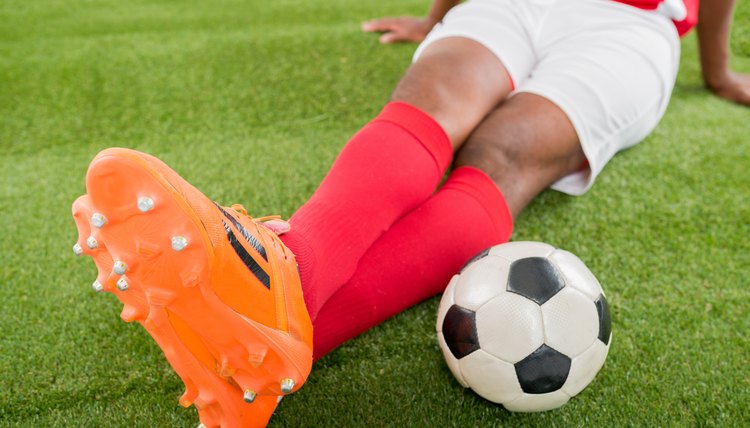
Walking in soccer cleats on concrete is a bad idea because it can be hazardous to you and your cleats. Even though your cleats are rough and durable out on the soccer field, they could be rendered useless if you romp on concrete -- even for that short walk across the parking lot after the game.
Cleat Hazard
Walking on concrete is akin to rubbing sandpaper on the smooth, hard surface of your cleats, wearing them down with every step. Scrape your cleats against the concrete with a walking shuffle and you’re speeding up the process even further. Walking on concrete will make the cleats shorter, duller and less effective at grabbing and penetrating the ground during the game. Playing in worn-down cleats can affect your traction, speed, ability to push off the field and change direction or even make you slip, slide and fall during the game.
Personal Hazard
Walking with soccer cleats on concrete can be perilous. Cleats are meant for traction on ground they can grab. A hard, flat, impenetrable surface such as concrete doesn’t give them anything to grab. Your footing will be precarious from just the concrete, but add any rocks, rubbish or other debris on concrete and you can easily trip and fall. Wet concrete can be especially hazardous because the cleats are hard, rather than rubber, and cannot grip the surface.
Easy Answer
The simplest way to keep your cleats -- and yourself -- safe from concrete is to immediately remove your cleats when you leave the playing field. Bring and change into a pair of sneakers or other shoes after every practice or game.
Considerations
Even with the best of care, soccer cleats generally last only about a year if you wear them regularly. Letting concrete wear them down can make you need a new pair sooner. Keeping your cleats clean can help them live up to their full lifespan, as can letting them dry naturally when they get wet. Knock off dirt and mud clumps before you store your cleats and even periodically during the game, as the clumps can affect your traction. Placing your cleats near a heat source or in the dryer to dry can ruin the shoes.
References
Writer Bio
Ryn Gargulinski is a writer, artist and performer whose journalism career began in 1991. Credits include two illustrated books, "Bony Yoga" and "Rats Incredible." She holds a Master of Arts in English literature and folklore and a Bachelor of Fine Arts in creative writing with a French minor from Brooklyn College.