Does Too Much Salt Intake Cause Swelling of the Left Side Ankle?
Edema, or swelling, can occur at anytime in your life and is very common in the leg or ankle, even just one side. While too much salt in your diet can be the reason for your left-sided ankle swelling, you'll want to consult your doctor to rule out a medical cause first.
Salt and Edema
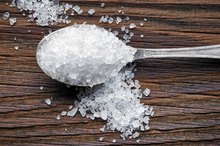
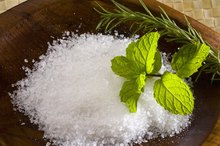
Salt is made up of sodium and chloride. Sodium is an essential nutrient that helps maintain fluid balance in your cells. When healthy people consume more sodium than their bodies need, the kidneys work to remove and excrete the excess sodium. When you continuously consume too much sodium, however, your body may have a harder time getting rid of the excess, according to the Colorado State University Extension. This can lead to fluid retention and edema 1.
- Salt is made up of sodium and chloride.
- When healthy people consume more sodium than their bodies need, the kidneys work to remove and excrete the excess sodium.
How Much Sodium
Foods to Avoid for Edema
Learn More
It is recommended that you consume no more than 2,300 milligrams of sodium a day. Ideally, keep your intake at 1,500 milligrams. Colorado State University reports that most Americans consume too much sodium. In addition to fluid retention and edema, too much sodium in your diet also increases your risk of high blood pressure 1. For reference, 1 teaspoon of salt has 2,325 milligrams of sodium.
- It is recommended that you consume no more than 2,300 milligrams of sodium a day.
- Ideally, keep your intake at 1,500 milligrams.
Not Just the Shaker
In addition to the salt you add to your food, many packaged goods also contain salt and may be contributing to the swelling in your ankle. Canned goods, frozen meals, cheese, breakfast cereals, snack foods and deli meats are all sources of sodium. Condiments such as soy sauce, salad dressing and ketchup are also high-sodium foods. If you eat out, be aware that most restaurant meals, as well as fast food, are high in sodium.
- In addition to the salt you add to your food, many packaged goods also contain salt and may be contributing to the swelling in your ankle.
- Condiments such as soy sauce, salad dressing and ketchup are also high-sodium foods.
What to Eat
Sodium Sensitivity & Ankle Swelling
Learn More
If too much salt is causing your ankle to swell, you not only want to stop adding salt to your food, but you also want to eat foods that are naturally low in sodium. This means more fresh foods and fewer processed foods. Good choices include fresh or frozen fruits and vegetables without added sauces, grains such as brown rice or quinoa, fresh meats, dry beans and milk or milk alternatives. Use herbs, spices, vinegar and lemon to add flavor to your food without the salt.
- If too much salt is causing your ankle to swell, you not only want to stop adding salt to your food, but you also want to eat foods that are naturally low in sodium.
- Use herbs, spices, vinegar and lemon to add flavor to your food without the salt.
Related Articles
Foods to Avoid for Edema
Learn More
Sodium Sensitivity & Ankle Swelling
Learn More
How to Get Rid of Excess Water Weight From Too Much Salt
Learn More

How to Relieve Ankle Swelling Naturally
Learn More
What Is the NAS Diet?
Learn More
How to Lower Sodium Levels in the Blood Naturally
Learn More
Does Sodium Make Your Face Fat?
Learn More
Are There Certain Foods That Reduce Ankle Swelling?
Learn More
What Can I Eat or Drink to Reduce Swelling in My Feet & Ankles?
Learn More

Fluid Buildup in the Calf
Learn More
References
- Up to Date: Edema
- USDA National Nutrient Database: Salt, Table
- American Heart Association. Sources of Sodium.
- Centers for Disease Control and Prevention. Top 10 Sources of Sodium. 2017.
- Institute of Medicine. Dietary Reference Intakes Tables and Application. National Academies of Sciences, Engineering, and Medicine, Health and Medicine Division. 2015.
- United States Department of Agriculture. Dietary Guidelines for Americans 2015–2020. United States Department of Health and Human Services. 2015.
Writer Bio
Jill Corleone is a registered dietitian and health coach who has been writing and lecturing on diet and health for more than 15 years. Her work has been featured on the Huffington Post, Diabetes Self-Management and in the book "Noninvasive Mechanical Ventilation," edited by John R. Bach, M.D. Corleone holds a Bachelor of Science in nutrition.