What does fact checked mean?
At Healthfully, we strive to deliver objective content that is accurate and up-to-date. Our team periodically reviews articles in order to ensure content quality. The sources cited below consist of evidence from peer-reviewed journals, prominent medical organizations, academic associations, and government data.
- "Antimicrobial Agents and Chemotherapy"; Effects of Cranberry Juice on Pharmacokinetics of β-Lactam Antibiotics following Oral Administration; Meng Li, et al.; July 2009
- "Antimicrobial Agents and Chemotherapy"; Effects of Cranberry Juice on Pharmacokinetics of β-Lactam Antibiotics following Oral Administration; Meng Li, et al.; July 2009
- MayoClinic.com; Percent Daily Value: What Does It Mean; Katherine Zeratsky; May 2010
The information contained on this site is for informational purposes only, and should not be used as a substitute for the advice of a professional health care provider. Please check with the appropriate physician regarding health questions and concerns. Although we strive to deliver accurate and up-to-date information, no guarantee to that effect is made.
Interactions of Cranberry Juice & Amoxicillin
Cranberry juice is frequently recommended in cases of urinary tract infection 1. But case reports indicate that the juice may alter the metabolism of certain medications. The popular antibiotic amoxicillin, however, is not one of them 2. Research indicates cranberry juice does not hamper the effectiveness of amoxicillin 12.
Amoxicillin
Amoxicillin is a synthetic penicillin 2. It is used to treat various bacterial infections such as ear infections, bladder infections, pneumonia, gonorrhea or E. coli. You should not take amoxicillin if you are allergic to penicillin or other penicillin-based antibiotics 2. Like other antibiotics, it is important that you take the entire dose as prescribed by your doctor to clear up the infection. Amoxicillin may cause diarrhea 2. If your diarrhea is bloody, stop taking your amoxicillin and contact your doctor immediately 2.
Cranberry Juice
Can I Drink Grapefruit Juice With Wellbutrin?
Learn More
Cranberry juice is an antioxidant-rich juice that may help prevent urinary tract infections 1. It also may help lower your risk of heart disease and aid in cancer treatment. A 1-cup serving of unsweetened cranberry juice contains 116 calories, 1 g of protein, 0 g of fat and 30 g of carbohydrates 15. It also contains 24 mg of vitamin C, 114 IU of vitamin A and 3 mg of vitamin E. These substances protect your cells against oxidation.
Amoxicillin and Cranberry Juice
Because cranberry juice is recommended as part of the treatment plan for a urinary tract infection, researchers investigated whether cranberry juice interacts negatively with amoxicillin 12. In a 2008 study, scientists at the University of Washington tested the effects of cranberry juice on amoxicillin metabolism in 18 women volunteers 12. The subjects were given two doses of amoxicillin -- 500 mg and 2 g -- with or without an 8 oz 2. serving of cranberry juice 135. At the conclusion of the study, the researchers saw no change in absorption or renal clearance of the amoxicillin in the participants given the cranberry juice 12.
Considerations
Grapefruit & Augmentin
Learn More
Although it does not appear to hamper amoxicillin, cranberry juice is highly acidic 12. Such foods can interfere with the absorption of some medications, and physicians have recommended that patients avoid acidic foods at the time they take their drugs. As a rule, always talk to your doctor or pharmacist about potential drug and food interactions.
- Although it does not appear to hamper amoxicillin, cranberry juice is highly acidic 1.
- Such foods can interfere with the absorption of some medications, and physicians have recommended that patients avoid acidic foods at the time they take their drugs.
Related Articles
Can I Drink Grapefruit Juice With Wellbutrin?
Learn More
Grapefruit & Augmentin
Learn More

What Does Positive Leukocytes Mean?
Learn More

Antibiotics Recommended for Infected Wounds
Learn More

Dosage of Amoxicillin to Cure Gonorrhea
Learn More
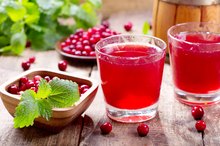
Cranberry Juice & the Herpes Virus
Learn More

What Is the Difference Between Cellulitis & Mrsa?
Learn More

Calories in a Slice of Whole-Grain Bread
Learn More
Grapefruit's Effect on Thyroid Medication
Learn More

Metronidazole for Acne Treatment
Learn More
References
- Drugs.com: Cranberry
- Drugs.com: Amoxicillin
- "Antimicrobial Agents and Chemotherapy"; Effects of Cranberry Juice on Pharmacokinetics of β-Lactam Antibiotics following Oral Administration; Meng Li, et al.; July 2009
- MayoClinic.com; Percent Daily Value: What Does It Mean; Katherine Zeratsky; May 2010
- USDA; Nutrient Database; Cranberry Juice, Unsweetened
- Soukavong M, Kim J, Park K, et al. Signal Detection of Adverse Drug Reaction of Amoxicillin Using the Korea Adverse Event Reporting System Database. J Korean Med Sci. 2016;31(9):1355-61. doi:10.3346/jkms.2016.31.9.1355
- Stein GE, Gurwith MJ. Amoxicillin-potassium clavulanate, a beta-lactamase-resistant antibiotic combination. Clin Pharm. 1984;3(6):591-9.
- Thomas VM, Thomas-eapen N. An Uncommon Side Effect of a Commonly Used Antibiotic: Amoxicillin-Clavulanic Acid Induced Hepatitis. Korean J Fam Med. 2017;38(5):307-310. doi:10.4082/kjfm.2017.38.5.307
- Millard G. Further experience with augmentin in the treatment of skin infections. Scott Med J. 1982;27 Spec No.:S35-8. doi:10.1177/00369330820270S108
- Blaser M. Antibiotic overuse: Stop the killing of beneficial bacteria. Nature. 2011;476(7361):393-4. doi:10.1038/476393a
- Zaman SB, Hussain MA, Nye R, Mehta V, Mamun KT, Hossain N. A Review on Antibiotic Resistance: Alarm Bells are Ringing. Cureus. 2017;9(6):e1403. doi:10.7759/cureus.1403
- Amoxil, Moxatag (amoxicillin) dosing, indications, interactions, adverse effects, and more.
- Augmentin, Augmentin XR (amoxicillin/clavulanate) dosing, indications, interactions, adverse effects, and more.
Writer Bio
Jill Corleone is a registered dietitian and health coach who has been writing and lecturing on diet and health for more than 15 years. Her work has been featured on the Huffington Post, Diabetes Self-Management and in the book "Noninvasive Mechanical Ventilation," edited by John R. Bach, M.D. Corleone holds a Bachelor of Science in nutrition.