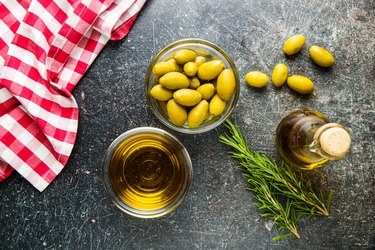
In the debate of olive oil vs extra virgin olive oil, extra virgin olive oil comes out ahead. Extra virgin olive oil is the cold-pressed juice of olives and is the first product of the extraction process. It is less refined than other olive oils, thus retaining more of its valuable health benefits.
Tip
Extra virgin olive oil — or EVOO — is considered the most healthful of the olive oils because it is less processed and retains a higher amount of natural compounds that may offer anti-inflammatory and antioxidant qualities.
Video of the Day
Olive Oil Classifications
There are several classifications for olive oils in the United States — extra virgin, virgin, light and classic olive oil. The American Institute for Cancer Research describes extra virgin olive oil (sometimes called EVOO) as the highest quality and most expensive olive oil that must meet rigorous standards.
Video of the Day
Extra virgin olive oil is the least processed of the oils. It has the strongest flavor and aroma with a slightly greenish color, distinct flavor and a light peppery finish.
Virgin olive oil is also from the first pressing, but is slightly lower quality. Light olive oil refers to an oil that lacks olive flavor, making it preferable for more flavorful dishes that need a neutral oil. Classic or pure olive oil is a mixture of virgin olive oil and refined oil.
Extra virgin olive oil is an unrefined oil, meaning it is less processed the other olive oil varieties. Because of the way extra virgin olive oil is made, it retains more of the natural vitamins and minerals found in olives and a lower amount of oleic acid, a monounsaturated fat identified by the U.S. Food and Drug Administration (FDA) as potentially reducing the risk of coronary heart disease when substituted for fats and oils higher in saturated fat.
Nutritionally, the fat in all types of olive oil is mainly monounsaturated fat (MUFA). When MUFA is substituted for saturated fat, it lowers LDL ("bad") cholesterol without reducing HDL ("good") cholesterol, the Institute explains. All olive oils, regardless of the way they're processed, contain natural compounds that may have anti-inflammatory and antioxidant properties that promote heart health and other possible health benefits.
Although it may be a stretch to call extra virgin olive oil the best olive oil in the world, extra virgin olive oil is believed to offer the most potential health benefits of the varieties of olive oil because it is the least processed and retains more of these compounds, including squalene, polyphenols and tocopherols (related to vitamin E).
Read more: Is Canola Oil More Healthy Than Olive Oil?
Pure Olive Oil for Cooking
Pure olive oil, or classic olive oil, is a blend of olive oils including including both cold-pressed and processed oils. Any cold-pressed oil that doesn't meet extra virgin standards is further refined to get rid of undesirable impurities, giving the oil a more neutral flavor and lighter color.
All olive oils, as the Mayo Clinic notes, are high in calories so they are meant to be used moderately. (A tablespoon of olive oil contains 120 calories and 13 grams of fat, according to the United States Department of Agriculture.)
But if you wish to substitute some of the fats you use in cooking — butter, for example — a choice of pure olive oil may be the way to go because it is somewhat cheaper than extra virgin olive oil. Because pure olive oil is a blend of oils that includes extra virgin olive oil, you will still receive some of its specific benefits and you will certainly receive the benefits of it being a monounsaturated fat.
In baking, pure olive oil may be substituted one for one with coconut oil or butter. It is a go-to for pan-frying vegetables or rubbing on meat before roasting or stir-frying. Swap out the vegetable oil in your favorite salad dressing recipe for pure olive oil, or simply dress your greens with a dash of vinegar and olive oil.
While extra virgin olive oil is still the gold standard in terms of health benefits, you may wish to save the more pricey stuff for drizzling on soup or roasted vegetables just before you serve them for a flavor boost. Or simply drink a tablespoon a day.
- USDA: "FDA Completes Review of Qualified Health Claim Petition for Oleic Acid and the Risk of Coronary Heart Disease"
- American Institute for Cancer Research: "What is the Difference Between Pure Olive Oil, Light Olive Oil, Virgin Olive Oil and Extra Virgin Olive Oil?"
- Mayo Clinic: "Olive Oil: What Are the Health Benefits?"
- "Mayo Clinic: "Mayo Clinic Minute: 5 Tips for Cooking with Healthier Oils"
- USDA: "USDA Branded Food Products Database"