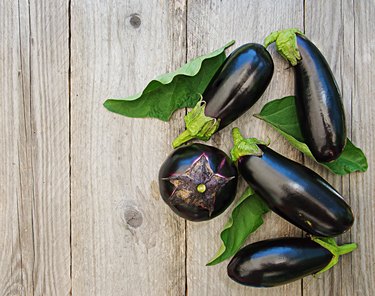
A lot of people think of raw as better when it comes to vegetables because there is less processing, and there is less oil and salt involved. But there are a few plants you definitely should apply some heat to: For example, did you know raw eggplant can be toxic? Or that cooked tomatoes might be healthier?
Tip
Eggplant is one vegetable that needs to be cooked because a chemical in it can upset your digestive tract if eaten raw.
Video of the Day
Raw Versus Cooked
Are raw vegetables better for you? Some experts, such as those at Piedmont Healthcare, encourage eating raw vegetables if possible. This is the best way to get all the enzymes, vitamins and minerals, as some of these are lost when vegetables get overcooked.
Video of the Day
Read more: Raw Vegetables Vs. Cooked Vegetables
But in most cases, a vegetable is good for you no matter how it is served. According to the U.S. Department of Agriculture, a serving of vegetables could be raw, cooked, fresh, frozen, canned, dried or even juiced — they're all forms that are good for you. In most cases, the serving size for vegetables is the same, so 1 cup of cooked carrots nutritionally counts the same as 1 cup of raw carrots.
That doesn't mean there aren't some vegetables you would never think of eating uncooked. For example, vegetables like pumpkin, winter squash, corn or potatoes are so hard when they are raw that most people would not consider it (hence why USDA's Choose My Plate lists serving sizes for these foods only in their cooked forms).
What About Raw Eggplant?
Raw eggplant is a food you might want to avoid, according to the University of Vermont Extension Department of Plant and Soil Science, and not just because you may not like the way it tastes. Although eggplant benefits are plentiful — it's low in fat, high in fiber and full of potassium, magnesium, folic acid and vitamins B6 and A — it also contains chemicals that, when eaten raw, can upset your digestive system. Therefore, raw eggplant is unadvised.
If you want to enjoy eggplant benefits, however, there are plenty of easy eggplant recipes to follow. The Academy of Nutrition and Dietetics has eggplant recipes like eggplant pesto pizza or ratatouille, as well as plenty of other ideas on how to incorporate eggplant into your menu planning. These eggplant recipes make use of such cooking methods as grilling and roasting, so you don't have to eat it raw.
Read more: 10 Vegetable Recipes That Taste Like Treats
What About Raw Tomato?
Eggplant benefits emerge when they're eaten cooked, but they're not the only ones. Take a look at tomato — it's a popular vegetable that's equally enjoyable raw or cooked. You might find raw tomato sliced up on a sandwich or chopped up in a salad. Its cooked form can be found in marinara sauce or other Italian pasta dishes.
Even though tomato certainly can be eaten and enjoyed in its raw form, the American Institute for Cancer Research explains that one of its most abundant nutrients, the antioxidant lycopene, is more easily absorbed by the body when the tomato has been cooked.
In most cases, whether you choose to eat vegetables raw or cooked is a matter of taste. If you're not sure how a vegetable is best enjoyed, look up a few recipes, including those that incorporate raw vegetables, such as salads and appetizers.
- Piedmont Healthcare: “Health Benefits of Raw Vegetables”
- Choose My Plate: “All About the Vegetable Group”
- University of Vermont Extension Department of Plant and Soil Science: “The Many Uses of Eggplant”
- Academy of Nutrition and Dietetics: “Eggplant”
- American Institute for Cancer Research: "Heat, Shape and Type: Increasing Lycopene Absorption"