
Volleyball Team Bonding Ideas
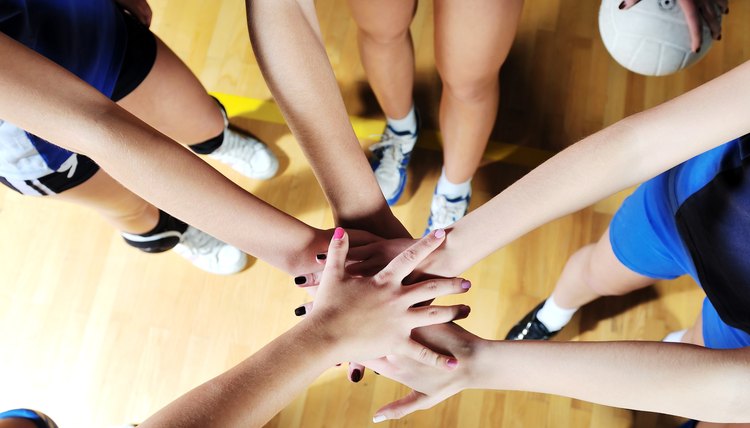
Although the phrase "there is no I in team" is often overused, it resonates strongly when you talk about volleyball squads. University of Northern Iowa volleyball coach Bobbi Petersen, in an article in the "Waterloo Cedar Falls Courier," said, "Volleyball is one of the most team sports there is. Nothing else can happen without someone else doing their job." Great chemistry and cohesion are forged through activities on and off the court. In many cases, these activities create bonds between teammates that last for a lifetime.
Fun Activities
Bonds are often built during activities that have nothing to do with volleyball. At SelfGrowth.com, volleyball coach and author Hayley Merrett advises coaches to take their squads out for pizza, a bowling night or a paintball session, which enables players to socialize in a casual environment and get to know each other better. At UNI, coaches design playful preseason activities, which can range from fishing to tie-dying clothes.
Challenging Activities
Non-volleyball activities that put players in situations where they must work together are excellent ways to build bonds. Volleyball and soccer teams at UNI have competed against each other in dodgeball, kickball and swimming contests. Sometimes, the challenges are even more intense -- volleyball players have gone through Navy SEAL training exercises devised by the UNI strength and conditioning coach. "What we do a lot of times is put them in situations that will cause stress, or cause them to have to use their minds and work together," Petersen said in the "Courier" article.
On-Court Drills
As STACK notes, drills for specific skills also can be used to build team cohesion. For example, a number of serving drills can be used "to pump up your team and get them loud, active and communicating, thus promoting team bonding." One highly recommended drill is called the amoeba. It's a lively exercise designed to improve serving accuracy. At the same time, the drill forges team unity, because other teammates are rooting for and cheering on the servers. A teammate sits in the serving area, cross-legged and not moving. The rest of the team serves balls at the same time, aiming at the seated teammate. If she catches your serve, you run over and sit next to her. As more balls are caught, the seated teammates form an "amoeba-like" pattern.
Considerations
It's not easy to create a team with great chemistry -- otherwise every volleyball team would function as a totally cohesive unit. "We all have very different personalities and some of them don't always mesh," Petersen told the "Courier." Merrett said: "Attitudes will clash, and alliances will be formed." When you add in the pressure athletes feel to win, fissures in team unity can easily appear. But if players genuinely like and respect each other, a team can hang together through the ups and downs of a long and challenging season and often defeat opponents with more individual talent.
References
Writer Bio
Jim Thomas has been a freelance writer since 1978. He wrote a book about professional golfers and has written magazine articles about sports, politics, legal issues, travel and business for national and Northwest publications. He received a Juris Doctor from Duke Law School and a Bachelor of Science in political science from Whitman College.