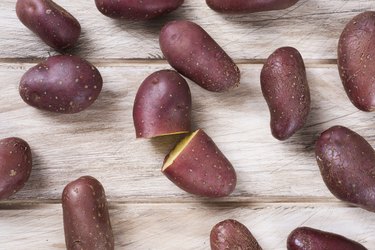
Potatoes are usually shunned due to their carb count, but according to the University of Maine (UMaine), they're actually quite nutrient-dense. Potatoes are full of fiber, vitamins, minerals and antioxidants.
The healthiest potatoes are those with darker-colored flesh, like purple and red potatoes. While all spuds are low in calories, fat-free and rich in complex carbs, darker-pigmented potatoes have up to twice as many antioxidants than their lighter relatives, according to UMaine.
Video of the Day
Video of the Day
When cooking potatoes, opt for low-fat methods, such as broiling or baking. Try using olive oil instead of butter and low-fat sour cream in place of the full-fat variety to cut down on saturated fat.
Keep reading to learn all about potato nutrition and which potatoes are best for you. For most of the article below, we'll be talking about a 3.5-ounce serving of potatoes, which is about one small potato or half of a large potato.
Potato Comparison Table
Per 3.5 oz. baked | Calories | Carbs | Fiber | Vitamin C |
|---|---|---|---|---|
White Potatoes | 92 | 21.2 g | 2.2 g | 9.5 mg, 11% Daily Value (DV) |
Sweet Potatoes | 89 | 20.5 g | 3.3 g | 19.4 mg, 22% DV |
Russet Potatoes | 94 | 21.3 g | 2.3 g | 8.2 mg, 9% DV |
Purple Potatoes | 73 | 17.2 g | 1.3 g | 18 mg, 20% DV |
Yukon Golds | 74 | 17.4 g | 1.4 g | 18.1 mg, 20% DV |
Red Potatoes | 86 | 19.4 g | 1.8 g | 12.5 mg, 14% DV |
Potato Flesh vs. Skin
The idea that all the potato's nutrients are in the skin is a myth.
Eating both the flesh and the skin of the potato gives you the most nutrition, but each part of the potato offers specific perks. The skin contains close to half of the total dietary fiber, but the bulk (more than half) of the other nutrients, such as potassium and vitamin C, are found within the flesh, per the USDA.
See the chart below for the nutritional value of potato skins vs. potato flesh.
Skinless Baked Potato (3.5 oz.) | Skin Only (1 oz.) | |
|---|---|---|
Calories | 92 | 56 |
Carbohydrates | 21.4 g | 13.1 g |
Fiber | 1.5 g | 2.2 g |
Fat | 0.1 g | 0 g |
Protein | 1.9 g | 1.2 g |
Vitamin C | 12.7 mg, 14% Daily Value (DV) | 3.8 mg, 4% DV |
Potassium | 388 mg, 8% DV | 162.4 mg, 3% DV |
Magnesium | 24.8 mg, 6% DV | 12.2 mg, 3% DV |
White Potatoes
While some may snub white potatoes in favor of sweet potatoes, white taters provide many essential nutrients your body needs. And the white potato has just about the same number of calories as a sweet potato (but less sugar!).
According to the USDA, a 3.5-ounce baked white potato (with the skin) contains:
- Calories: 92
- Total fat: 0.1 g, 0% Daily Value (DV)
- Cholesterol: 0 mg
- Sodium: 9.9 mg, 0% DV
- Total carbohydrates: 21.2 g, 7% DV
- Dietary fiber: 2.2 g, 8% DV
- Sugar: 1.2 g, 2% DV
- Protein: 2.5 g, 5% DV
- Vitamin C: 9.5 mg, 11% DV
- Iron: 1.1 mg, 6% DV
- Potassium: 530.9 mg, 11% DV
- Phosphorous: 69.5 mg, 6% DV
- Vitamin B6: 0.3 mg, 18% DV
White Potatoes vs. Sweet Potatoes
Per 3.5 oz. | White Potato | Sweet Potato |
|---|---|---|
Calories | 92 | 89 |
Carbohydrates | 21.2 g, 7% Daily Value (DV) | 20.5 g, 7% DV |
Fiber | 2.2 g, 8% DV | 3.3 g, 12% DV |
Sugar | 1.2 g, 2% DV | 6.4 mg, 13% DV |
Potassium | 530.9 mg, 11% DV | 471.3 mg, 10% DV |
Iron | 1.1 mg, 6% DV | 0.7 mg, 4% DV |
Vitamin A | 1 μg, 0% DV | 953.6 μg, 106% |
Vitamin C | 9.5 mg, 11% DV | 19.4 mg, 22% DV |
The calories in white potatoes and sweet potatoes are almost the same, and both are good sources of iron and potassium.
Iron is part of hemoglobin, a protein that carries oxygen from the lungs throughout the body. It also stores oxygen in your muscles so that it's readily available when you exercise, according to the National Institutes of Health (NIH). A 3.5-ounce serving of white potato meets 6 percent of your DV for iron.
And potassium is one of the electrolytes your body uses to stimulate muscles and nerves, per the U.S. National Library of Medicine (NLM). It also helps lower your blood pressure through two actions: It relaxes muscles in blood vessels, and it tells the kidneys to get rid of extra sodium. A 3.5-ounce serving of white potato has 11 percent DV for potassium.
The sweet potato takes the nutritional win, though, offering higher amounts of vitamins A and C. Vitamin A supports growth and development, eye health and the immune system, per the NIH. As an antioxidant, vitamin C neutralizes free radicals before they can damage cells, per the NIH. Your body also needs vitamin C to make collagen and to support your skin, bones, tendons and blood vessels.
Sweet Potatoes
True to their name, sweet potatoes are (you guessed it) naturally sweet — and cooking them makes them even more flavorful, per the Harvard T.H. Chan School of Public Health. They typically have copper-colored skin and vibrant orange flesh unlike yams, which have skin that resembles tree bark.
A 3.5-ounce baked sweet potato has:
- Calories: 89
- Total fat: 0.1 g, 0% Daily Value (DV)
- Cholesterol: 0 mg
- Sodium: 35.7 mg, 2% DV
- Total carbohydrates: 20.5 g, 7% DV
- Dietary fiber: 3.3 g, 12% DV
- Sugar: 6.4 mg, 13% DV
- Protein: 2 g, 4% DV
- Vitamin A: 953.6 μg, 106%
- Vitamin C: 19.4 mg, 22% DV
- Iron: 0.7 mg, 4% DV
- Potassium: 471.3 mg, 10% DV
- Vitamin B6: 0.3 mg, 17% DV
Sweet potatoes' calories come mostly from carbs, just like with other potatoes. They're also one of the richest sources of vitamin A, so when it comes to sweet potatoes vs. regular potatoes, sweet taters win.
Dried Sweet Potatoes
Like their whole counterpart, bite-sized dried sweet potatoes are low in fat and a good source of fiber, vitamins and minerals, which makes them a great snack.
A 1-ounce serving (about a handful) of dried sweet potatoes has:
- Calories: 100
- Total fat: 0 mg
- Sodium: 10 mg, 0% Daily Value (DV)
- Total carbohydrates: 24 g, 8% DV
- Dietary fiber: 6 g, 24% DV
- Sugar: 41 g
- Protein: 2 g, 4% DV
Because they're dehydrated, dried sweet potatoes are a more concentrated source of calories than cooked or raw sweet potatoes. A 3.5-ounce portion of dried sweet potatoes contains about 350 calories while the same-sized serving of baked sweet potato contains 89 calories.
Mashed Sweet Potatoes
This Thanksgiving staple has the same nutritional value as a baked sweet potato if it's made without any added ingredients. But adding butter and maple syrup will add fat and calories, too.
Generally, 3.5 ounces of canned mashed sweet potatoes has:
- Calories: 100
- Total fat: 0.2 g, 0% Daily Value (DV)
- Cholesterol: 0 mg
- Sodium: 74.4 mg, 3% DV
- Total carbohydrates: 23 g, 8% DV
- Dietary fiber: 1.7 g, 6% DV
- Sugar: 5.4 g, 11% DV
- Protein: 2 g, 4% DV
- Vitamin A: 435 μg, 48%
- Vitamin C: 5.2 mg, 6% DV
- Iron: 1.3 mg, 7% DV
- Potassium: 208.4 mg, 4% DV
- Phosphorous: 51.6 mg, 4% DV
- Vitamin B6: 0.2 mg, 14% DV
Mashed sweet potato calories come mostly from carbs (you'll get 23 grams per 3.5-ounce serving).
Try mashing sweet potatoes with a bit of fat-free milk, vegetable broth or water for a smooth consistency and season with fresh or dried herbs. For a slightly sweeter variation, sprinkle a dash of cinnamon or nutmeg.
Candied Sweet Potatoes
Another classic Thanksgiving side dish, candied sweet potatoes are usually sliced thin and prepared with maple syrup, butter, vanilla and warm spices such as cinnamon, but the recipes vary.
Typically, a 3.5-ounce serving of candied sweet potatoes contains:
- Calories: 212
- Total fat: 0.7 g, 1% Daily Value (DV)
- Cholesterol: 0 mg
- Sodium: 92.3 mg, 4% DV
- Total carbohydrates: 51.7 g, 17% DV
- Dietary fiber: 2.1 g, 7% DV
- Sugar: 33.3 g, 67% DV
- Protein: 0.7 g, 1% DV
- Vitamin C: 3.4 mg, 4% DV
- Iron: 0.8 mg, 4% DV
Russet Potatoes
Most of the calories in a russet potato come from carbs, but the veggie also has plenty of other nutrients, such as vitamin C, vitamin B6 and potassium.
A 3.5-ounce baked russet potato (with skin) contains:
- Calories: 94
- Total fat: 0.1 g, 0% Daily Value (DV)
- Cholesterol: 0 mg
- Sodium: 13.9 mg, 1% DV
- Total carbohydrates: 21.3 g, 7%
- Dietary fiber: 2.3 g, 8% DV
- Sugar: 1.1 g, 2% DV
- Protein: 2.6 g, 5% DV
- Vitamin C: 8.2 mg, 9% DV
- Iron: 1.1 mg, 6% DV
- Potassium: 545.7 mg, 12% DV
- Phosphorous: 71 mg, 6% DV
- Vitamin B6: 0.4 mg, 21% DV
Vitamin B6 is necessary for normal brain development and for keeping the nervous system and immune system healthy, per the Mayo Clinic. One small baked russet potato contains 0.4 milligrams of vitamin B6, which fills a quarter of your recommended needs.
One small russet also provides 9 percent of the DV for vitamin C.
Purple Potatoes
Their bright color makes dishes more attractive, but purple potatoes aren't just pretty. They're a good source of dietary fiber and vitamin C and are especially rich in antioxidants.
According to Potatoes USA, a 3.5-ounce purple potato contains:
- Calories: 73
- Total fat: 0 g
- Cholesterol: 0 mg
- Sodium: 0 mg
- Total carbohydrates: 17.2 g, 6% Daily Value (DV)
- Dietary fiber: 1.3 g, 5% DV
- Sugar: 1 g, 2% DV
- Protein: 2 g
- Vitamin C: 18 mg, 20% DV
- Iron: 0.7 mg, 4% DV
- Potassium: 410 mg, 10% DV
- Vitamin B6: 0.1 mg, 7% DV
Purple potatoes have more antioxidant anthocyanins than their white-fleshed cousins, and anthocyanins are linked to good eye and brain health, according to a July 2017 review in Food and Nutrition Research.
What's more, purple potato nutrition facts show that the veggie is rich in vitamin C, which helps make collagen and neutralizes free radicals.
Yukon Gold Potatoes
This yellow-fleshed, Canadian-bred tuber was named after the Yukon River and its tie to the Klondike Gold Rush, according to the National Post.
A 3.5-ounce Yukon Gold contains:
- Calories: 74
- Total fat: 0 g
- Cholesterol: 0 mg
- Sodium: 0 mg
- Total carbohydrates: 17.4 g, 6% Daily Value (DV)
- Dietary fiber: 1.4 g, 5% DV
- Sugar: 0.7 g, 1% DV
- Protein: 2 g, 4% DV
- Vitamin C: 18.1 mg, 20% DV
- Iron: 0.7 mg, 4% DV
- Potassium: 415.8 mg, 9% DV
- Vitamin B6: 0.1 mg, 8% DV
Yukon gold potato nutrition facts show that a small tater has 74 calories and is also fat- and cholesterol-free. There are about 17 grams of carbs in Yukon Gold potatoes, 1.4 grams of which are from fiber.
Like other potatoes, the Yukon Gold is also a good source of vitamin C.
Red Potatoes
Waxy in texture, red potatoes stay firm when cooked and have a thinner (and red) skin than other potatoes, per Potatoes USA.
A 3.5-ounce baked red potato contains:
- Calories: 86
- Total fat: 0.1 g, 0% Daily Value (DV)
- Cholesterol: 0 mg
- Sodium: 12 mg, 1% DV
- Total carbohydrates: 19.4 g, 6% DV
- Dietary fiber: 1.8 g, 6% DV
- Sugar: 1.4 g, 3% DV
- Protein: 2.3 g, 5% DV
- Vitamin C: 12.5 mg, 14% DV
- Iron: 0.7 mg, 4% DV
- Potassium: 540.8 mg, 12% DV
- Phosphorous: 71.4 mg, 6% DV
- Vitamin B6: 0.2 mg, 12% DV
The more color a potato has, the higher its total antioxidants, per UMaine. That means red potatoes are healthier than russets in terms of antioxidant content.
Aside from their antioxidants, reds and russets are very similar nutrition-wise. Check out the table below to see how they compare, per the USDA.
Red Potatoes vs. Russet Potatoes
Per 3.5 oz. baked | Russet Potatoes | Red Potatoes |
|---|---|---|
Calories | 94 | 86 |
Carbohydrates | 21.3 g | 19.4 g |
Fiber | 2.3 g | 1.8 g |
Potassium | 545.7 mg, 12% Daily Value (DV) | 540.8 mg, 12% DV |
Iron | 1.1 mg, 6% DV | 0.7 mg, 4% DV |
Vitamin C | 8.2 mg, 9% DV | 12.5 mg, 14% DV |
Vitamin B6 | 0.4 mg, 21% DV | 0.2 mg, 12% DV |
- University of Maine: "Research Reveals Potato as Antioxidant Powerhouse"
- Potatoes USA: "Your Guide to Potato Nutrition"
- Potatoes USA: "Nutrition in Skin vs. Flesh"
- U.S. Department of Agriculture: "Nutrition Comparison Tool of Baked Potato (No Skin and Potatoes Baked Skin Only With Salt"
- National Institutes of Health: "Iron"
- National Institutes of Health: "Vitamin A"
- U.S. National Library of Medicine: "Potassium"
- Mayo Clinic: "Vitamin B-6"
- National Institutes of Health: "Vitamin C"
- Potatoes USA: "Purple Potatoes"
- Journal of Agricultural and Food Chemistry: "High-Antioxidant Potatoes: Acute In Vivo Antioxidant Source and Hypotensive Agent in Humans After Supplementation to Hypertensive Subjects"
- National Post: "Canadian-Bred Yukon Gold Potato, Beloved by Cooks, Marks 50th Anniversary"
- USDA: "Baked Russet Potatoes"
- USDA: "Yukon Gold Potatoes"
- USDA: "Baked Potatoes (With Skin)"
- Potatoes USA: "Red Potatoes"
- USDA: "Baked Red Potatoes"
- Harvard T.H. Chan School of Public Health: "Sweet Potatoes"
- USDA: "Baked Sweet Potatoes"
- Center for Science in the Public Interest: "Rating Rutabagas"
- Eat This Much: "Dried Sweet Potatoes"
- USDA: "Mashed Sweet Potatoes"