
With age comes wisdom, but it can also come with some other unexpected changes. For instance, you'll need fewer calories as you age — which means you might also find it's harder to get the essential vitamins and minerals you need through food.
"Both men and women over age 50 have some additional nutrition needs," says certified gerontological specialist Phyllis Famularo, RD for Sodexo North America and adjunct assistant professor at Rutgers University. With the potential exception of calcium, a nutritious diet is generally the best way to get vitamins and minerals, Famularo says.
Video of the Day
Video of the Day
Multivitamins can help men over 50 get the essential nutrients that they could otherwise miss out on. If you avoid certain foods due to allergies, intolerances or preferences or have a chronic disease, you may not be meeting your needs from food alone.
As you age, you produce less gastric acid, which can limit the amount of nutrients you absorb from the food you eat, per the Michigan State University Extension.
Take a look at the recommended multivitamins for men over age 50, along with the details on nutritional priorities and what to look for in these supplements.
A Note on Language
We typically use more inclusive language when it comes to sex and gender, but we are use the terms "men" and "women" here to match the language used by vitamin manufacturers.
How We Chose
The FDA doesn't regulate supplements as closely as it does medications, so we spoke with a dietitian and reviewed relevant research to recommend the supplements below.
We also looked for products with Current Good Manufacturing Practice regulations enforced by the FDA as well as compliance or verification from one of the three main independent quality control groups that test and review supplements:
Learn more about how we cover products here.
Tip
Always talk to your doctor before adding a new supplement to your routine.
Our Picks
- Best Overall: GNC Mega Men 50 Plus (GNC, $14.99)
- Best Budget-Friendly: Equate Complete Multivitamin 50+ (Walmart, $13.77)
- Best for Vitamin D: Nature Made Multi for Him 50+ (Amazon, $13.49)
- Best Gummy: SmartyPants Men’s Formula Daily Gummy Multivitamin (Amazon, $25.65)
- Best Daily: One A Day Men's 50+ Healthy Advantage Multi-Vitamins (Amazon, $26.90)
- Best for Vitamin B12: Centrum Silver Men 50+ (Walmart, $19.12)
1. Best Overall: GNC Mega Men 50 Plus
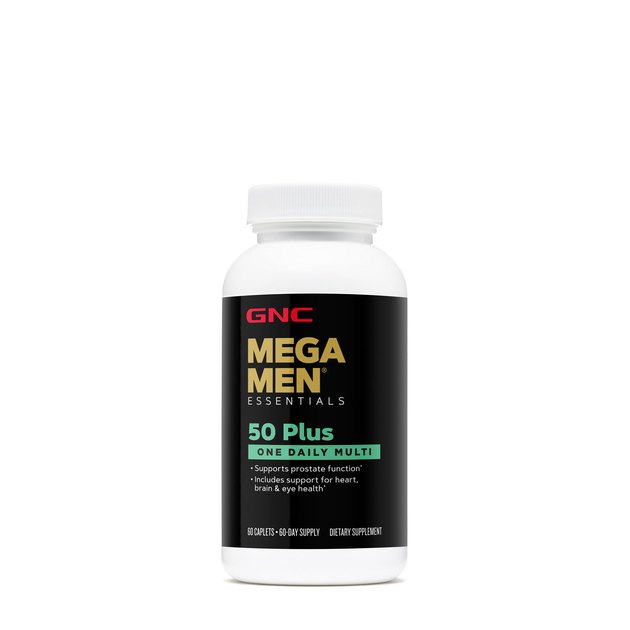
GNC Mega Men 50 Plus One Daily
The wide range of important vitamins and nutrients in this daily capsule support eye, heart, brain and prostate health.
Supplement Facts
- Serving size: 1 caplet
- Amount per serving and percent daily value (DV)
- Magnesium: 125 mg, 30% DV
- Folate: 1,020 mcg (600 mcg folic acid), 255%
- Chloride: 70 mg, 3% DV
- Manganese: 2 mg, 87% DV
- Copper: 2mg, 222% DV
- Vitamin D: 30 mcg, 150% DV
- Vitamin K: 60 mcg, 50% DV
- Riboflavin: 3.74 mg, 288% DV
- Vitamin B6: 6.6 mg, 388% DV
- Vitamin B12: 110 mcg, 4,583% DV
- Pantothenic acid: 16.5 mg, 330% DV
- Chromium: 200 mcg, 571% DV
- Iodine: 150 mcg, 100% DV
- Selenium: 120 mcg, 218% DV
- Calcium: 240 mg, 18% DV
- Vitamin C: 150 mg, 167% DV
- Biotin: 300 mcg, 1,000% DV
- Vitamin A: 1,050 mcg, 117% DV
- Molybdenum: 75 mcg, 167% DV
- Vitamin E: 40.2 mg, 268% DV
- Niacin: 22 mg, 138% DV
- Zinc: 30 mg, 273% DV
- Potassium: 80 mg, 2% DV
- Phosphorus: 30 mg, 2% DV
- Thiamin (Vitamin B1): 4.95 mg, 413% DV
- Other nutrients with no established daily value
- Gingko Biloba Leaf Extract: 10 mg
- Inositol: 2.5 mg
- Lutein: 1 mg
- Zeaxanthin: 200 mcg
- Pumpkin Seed Powder: 5 mg
- Saw Palmetto Berry Extract: 5 mg
- Lycopene: 600 mcg
- Silica: 2 mg
- Boron: 150 mcg
- Vanadium: 10 mcg
- Other ingredients: microcrystalline cellulose, maltodextrin, hydroxypropyl methylcellulose, caramel color, choline bitartrate, corn starch, croscarmellose sodium, ethyl cellulose, glucose syrup, gum arabic, hydroxypropylcellulose, magnesium stearate, mixed tocopherols, modified food starch, natural vanilla flavor, polyethylene glycol, sodium ascorbate, sodium sulfate, stearic acid, stevia leaf extract, sugar, talc, titanium dioxide, tricalcium phosphate
- Does not contain: Iron. Most people get all the iron they need from food, and older adults may be likely to have too much iron, according to the NIH.
This once-daily vitamin claims to support prostate and brain health in men over 50 with the addition of ingredients such as saw palmetto berry extract, pumpkin seed meal, lycopene and Ginkgo Biloba leaf.
2. Best Budget-Friendly: Equate Complete Multivitamin 50+
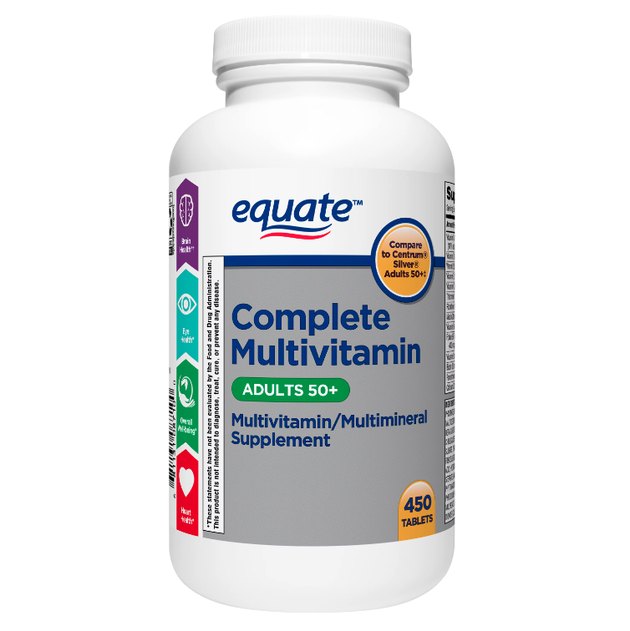
Equate Complete Multivitamin Adults 50+
The makeup of Equate multivitamins compares favorably to the pricier Centrum brand.
Supplement Facts
- Serving size: 1 tablet
- Amount per serving and percent DV
- Vitamin A: 750 mcg, 83% DV
- Vitamin C: 60 mg, 67% DV
- Calcium: 220 mg, 17% DV
- Potassium: 80 mg, 2% DV
- Vitamin D: 25 mcg, 125% DV
- Vitamin E: 22.5 mg, 150% DV
- Vitamin K: 30 mcg, 25% DV
- Thiamine: 1.5 mg, 125% DV
- Riboflavin: 1.7 mg, 131% DV
- Niacin: 20 mg, 125% DV
- Vitamin B6: 3 mg, 176% DV
- Folic acid: 400 mcg, 167% DV
- Vitamin B12: 25 mcg, 1,042% DV
- Biotin: 30 mg, 100% DV
- Pantothenic acid: 10 mg, 200% DV
- Phosphorus: 20 mg, 2% DV
- Iodine:150 mcg, 100% DV
- Magnesium: 50 mg, 12% DV
- Zinc: 11 mg, 100% DV
- Selenium: 19 mcg, 35% DV
- Copper: 0.5 mg, 56% DV
- Manganese: 2.3 mg, 100% DV
- Chromium: 50 mcg, 143% DV
- Molybdenum: 45 mcg, 100% DV
- Chloride: 72 mg, 3% DV
- Other ingredients: microcrystalline cellulose, maltodextrin, Gelatin, BHT, carboxymethylcellulose sodium, croscarmellose sodium, dl-tartaric acid, FD&C blue No. 2 lake, FD&C red No. 40 lake, FD&C yellow No. 6 lake, hydroxypropyl methylcellulose, medium chain triglycerides, polydextrose, polyvinyl alcohol, silica, starch, titanium dioxide (color), tricalcium phosphate
- Does not contain: iron, gluten, lactose or artificial flavors
The cost of taking a multivitamin daily can add up, but with each of these pills being less than 3 cents, it's the perfect budget-friendly choice.
3. Best for Vitamin D: Nature Made Multi for Him 50+
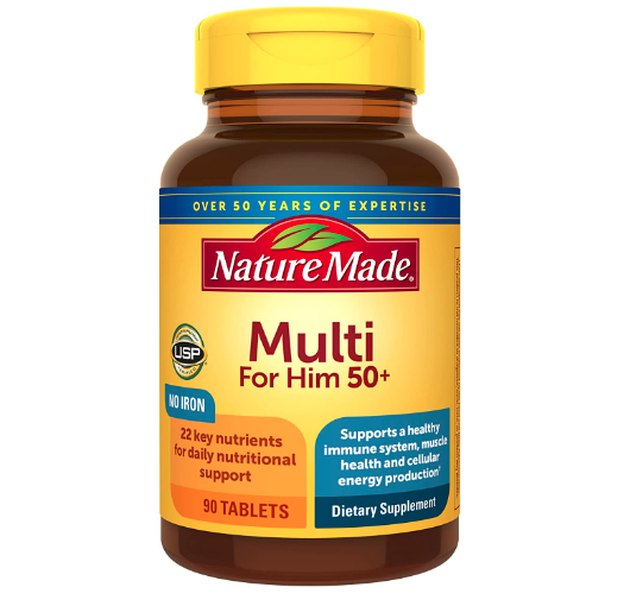
Nature Made Multi for Him 50+
This multivitamin will help you max out your RDA of vitamin D, as well as providing calcium.
Supplement Facts
- Serving size: 1 tablet
- Amount per serving and percent DV
- Vitamin A: 750 mcg, 83% DV
- Vitamin C: 180 mg, 200% DV
- Vitamin D: 25 mcg, 125% DV
- Vitamin E: 27 mg, 180% DV
- Vitamin K: 80mcg, 67% DV
- Thiamin: 1.5 mg, 125% DV
- Riboflavin: 1.7 mg, 131% DV
- Niacin: 20 mg, 125% DV
- Vitamin B6: 6 mg, 353% DV
- Folate: 665 mcg (400 mcg folic acid), 167% DV
- Vitamin B12: 25 mcg, 1,042% DV
- Biotin: 30 mcg, 100% DV
- Pantothenic acid: 10 mg, 200% DV
- Calcium: 160 mg, 12% DV
- Iodine: 150 mcg, 100% DV
- Magnesium: 100 mg, 24% DV
- Zinc: 15 mg, 136% DV
- Selenium: 105 mcg, 191% DV
- Copper: 2 mg, 222% DV
- Manganese: 4 mg, 174% DV
- Chromium: 120 mcg, 343% DV
- Molybdenum: 75 mcg, 167% DV
- Other ingredients: cellulose gel, modified food starch, maltodextrin, croscarmellose sodium, hypromellose, dibasic calcium phosphate, magnesium stearate, silicon dioxide, gelatin, polyethylene glycol
- Does not contain: dyes, artificial flavors or gluten
"As with older women, older men also have an increased risk of osteoporosis," Famularo says. Vitamin D plays an important role in helping keep bones strong and improving calcium absorption, according to the National Osteoporosis Foundation.
4. Best Gummy: SmartyPants Men’s Formula Daily Gummy Multivitamin
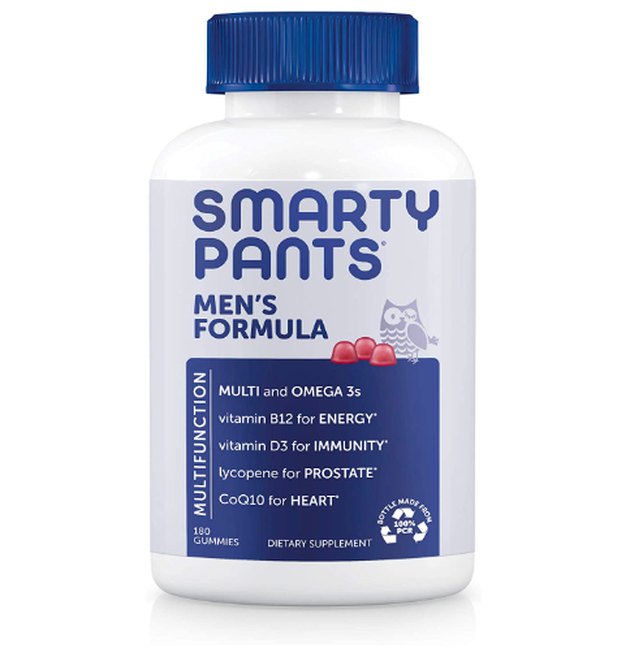
Smarty Pants Men's Formula
If you'd prefer to avoid swallowing vitamins, try a gummy multi instead.
Supplement Facts
- Serving size: 6 gummies
- Amount per serving and percent DV
- Vitamin A: 270 mcg, 30% DV
- Vitamin C: 45 mg, 50% DV
- Vitamin D: 40 mcg, 200% DV
- Vitamin K: 36 mcg, 30% DV
- Thiamin (vitamin B1): 0.12 mg, 10% DV
- Riboflavin (Vitamin B2): 0.26 mg, 20% DV
- Niacin (Vitamin B3): 4 mg, 25% DV
- Vitamin B6: 1.7 mg, 100% DV
- Vitamin E: 9 mg, 60% DV
- Folate: 400 mcg, 100% DV
- Vitamin B12: 4 mcg, 167% DV
- Biotin: 15 mcg, 50% DV
- Choline: 12 mg, 2% DV
- Zinc: 11 mg, 100% DV
- Selenium: 14 mcg, 25% DV
- Iodine: 150 mcg, 100% DV
- Other nutrients with no established daily value
- Fish oil: 510 mg
- Total omega-3 fatty acids: 162 mg
- Lycopene: 8 mg
- Coenzyme Q10: 60 mg
- Inositol: 1 mcg
- Vitamin K2: 16 mcg
- Other ingredients: organic cane sugar, organic tapioca syrup, gelatin, pectin, citric acid, natural flavors, colors added (organic black carrot juice concentrate, organic maqui berry juice concentrate, organic turmeric), organic sunflower oil, organic carnauba wax
- Does not contain: GMOs, synthetic colors, artificial flavors and preservatives, yeast, wheat, milk, eggs, soy, gluten, peanuts, tree nuts, shellfish and salicylates
If you struggle to swallow large pills, a chewable option is ideal — except that manufacturing gummy vitamins is a tricky task, according to the Center for Science in the Public Interest. That means the amount listed on the nutrition panel doesn't always match what's really in the gummy. However, independent testing suggests Smarty Pants is a reliable and nutritionally accurate gummy vitamin.
5. Best Daily: One A Day Men's 50+ Healthy Advantage Multi-Vitamins
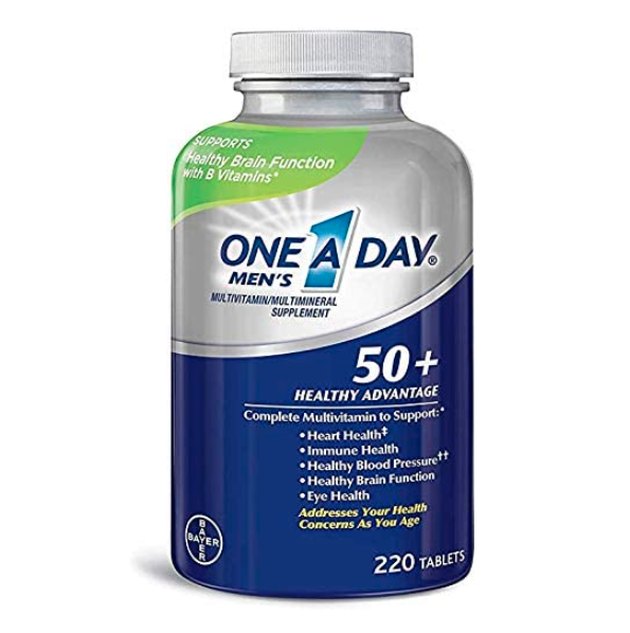
One A Day Men's 50+ Healthy Advantage
This daily multi offers vitamin D, calcium and magnesium, which are all important for men over 50.
Supplement Facts
- Serving size: 1 tablet
- Amount per serving and percent DV
- Vitamin A: 940 mcg, 104% DV
- Vitamin C: 120 mg, 133% DV
- Vitamin D: 17.5 mcg, 88% DV
- Vitamin E: 11.4 mg, 76% DV
- Vitamin K: 20 mcg, 17% DV
- Thiamin: 4.5 mg, 375% DV
- Riboflavin: 3.4 mg, 262% DV
- Niacin: 20 mg, 125% DV
- Vitamin B6: 6 mg, 353%, DV
- Folate: 665 mcg (400 mcg folic acid), 166%, DV
- Vitamin B12: 25 mcg, 1,042% DV
- Biotin: 30 mcg, 100% DV
- Pantothenic acid: 15 mg, 300% DV
- Calcium: 120 mg, 9% DV
- Iodine: 150 mcg, 100% DV
- Magnesium: 110 mg, 26% DV
- Zinc: 24 mg, 218% DV
- Selenium: 117 mcg, 213% DV
- Copper: 2.2 mg, 244% DV
- Manganese: 4.2 mg, 183% DV
- Chromium: 180 mcg, 514% DV
- Molybdenum: 90 mcg, 200% DV
- Other nutrients with no established daily value
- Lycopene: 370 mcg
- Lycopene: 370 mcg
- Other ingredients: calcium carbonate, magnesium oxide, microcrystalline cellulose, ascorbic acid, croscarmellose sodium, zinc oxide, dl-alpha-tocopheryl acetate, cholecalciferol, chromium chloride, cupric oxide, cyanocobalamin, FD&C blue No. 1 lake, FD&C blue No. 2 lake, hydroxypropyl methylcellulose, phytonadione, polyethylene glycol, pyridoxine hydrochloride, silicon dioxide, stearic acid, titanium dioxide (color)
- Does not contain: artificial sweeteners and flavors, eggs, dairy, fish, shellfish, soy, wheat and high fructose corn syrup
Just as the name indicates, taking these multivitamins is a once-a-day occasion. That's helpful, as some multis require you to take them several times a day, making it easy to accidentally skip doses.
6. Best for Vitamin B12: Centrum Silver Men 50+
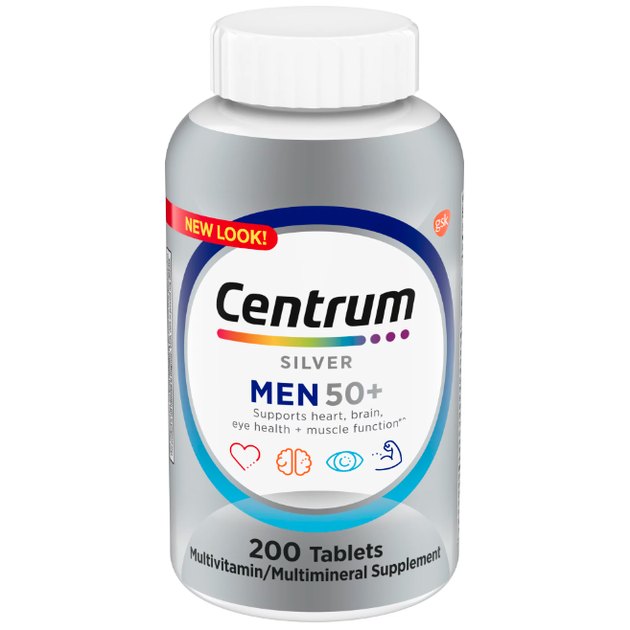
Centrum Silver Men 50+
This multivitamin has far more than your RDA of vitamin B12.
Supplement Facts
- Serving size: 1 tablet
- Amount per serving and percent DV
- Vitamin A: 1,050 mcg, 117% DV
- Vitamin C: 120 mg, 133% DV
- Vitamin D3: 25 mcg, 125% DV
- Vitamin E: 27 mg, 180% DV
- Vitamin K: 60 mcg, 50% DV
- Thiamin: 1.5 mg, 125% DV
- Riboflavin: 1.7 mg, 131% DV
- Niacin: 20 mg, 125% DV
- Vitamin B6: 6 mg, 353% DV
- Folate: 500 mcg (300 mcg folic acid), 125% DV
- Vitamin B12: 100 mcg, 4,167% DV
- Biotin: 30 mcg, 100% DV
- Pantothenic Acid: 10 mg, 200% DV
- Calcium: 210 mg, 16% DV
- Phosphorus: 20 mg, 2% DV
- Iodine: 150 mcg, 100% DV
- Magnesium: 75 mg, 18% DV
- Zinc: 15 mg, 136% DV
- Selenium: 21 mcg, 38% DV
- Copper: 0.5 mg, 56% DV
- Manganese: 4 mg, 174% DV
- Chromium: 60 mcg, 171% DV
- Molybdenum: 50 mcg, 111% DV
- Chloride: 72 mg, 3% DV
- Potassium: 80 mg, 2% DV
- Other nutrients with no established daily value
- Lutein: 300 mcg
- Lycopene: 600 mcg
- Other ingredients: microcrystalline cellulose, modified corn starch, maltodextrin, corn starch, crospovidone, BHT, blue 2 lake, gelatin, hypromellose, medium-chain triglycerides, red 40 lake, sodium ascorbate, talc, tocopherols and yellow 6 lake.
- Does not contain: GMO ingredients or gluten.
Vitamin B12 is needed to make red blood cells. Not getting enough can lead to vitamin B12 deficiency anemia, which can cause weakness, fatigue, numbness and tingling in your hands and feet and weight loss, per John Hopkins Medicine. This multivitamin has over 4,000 percent of your daily B12, making it easy to meet your needs.
What to Look for in a Multivitamin
Everyone needs a variety of essential nutrients on a daily basis, but your body may not absorb certain nutrients as well when you're older. Here are some of the vitamins and minerals that are especially important for men over 50, according to the National Institute on Aging.
Calcium and Vitamin D
Together, calcium and vitamin D help maintain the health of your bones, according to Johns Hopkins Medicine.
Men between 51 and 70 need 1,000 milligrams of calcium each day; if you're older than 70, you need 1,200 milligrams per day, per the National Institutes of Health (NIH). Adults also need 15 to 20 micrograms of vitamin D per day, according to the NIH.
Vitamin B12
It's more challenging for older adults to absorb vitamin B12 because of the amount of hydrochloric acid needed in the stomach to begin the absorption process, an acid that naturally declines with age.
People over 50 should rely on fortified foods like nutritional yeast and some cereals as well as supplements to get enough vitamin B12, per the NIH. The RDA for this vitamin is 2.4 micrograms. The amount in supplements varies, but your body only absorbs a small percentage, according to the NIH.
Vitamin B6
Kidney disease, autoimmune disorders and alcohol use can all limit the amount of vitamin B6 you're able to absorb, and your needs increase as you age. Adult men over 50 need 1.7 mg per day, per the NIH.
This vitamin is essential for many reactions in the body and not getting enough can lead to anemia, itchy rashes, scaly lips, cracks in the corners of your mouth or a swollen tongue.
Magnesium
Magnesium is an essential nutrient that is important for muscle and nerve function, as well as blood sugar regulation, according to the NIH, and men need 400 to 420 milligrams of this mineral per day. Older adults are more likely to get too little magnesium, per the NIH.



How to Know if You Need a Multivitamin
Most adults don't need to take a multivitamin and can get their essential vitamins and minerals from food, according to Harvard Health Publishing.
But as you age, eating enough nutrient-rich food to meet your needs can be a challenge. Multivitamins can be helpful if you have a limited diet or have trouble getting enough calories, according to the Cleveland Clinic.
Diseases and conditions can also prompt the need to take a multi. "Any health condition that prevents consuming a healthy diet might be a rationale to take a multivitamin supplement — cancer, recent pneumonia and any other illness that might prevent adequate intakes," Famularo says.
Multivitamins are also particularly useful for older adults who are eating less because of changes in taste and smell or who take medications that affect hunger levels or foods' flavor, per the U.S. National Library of Medicine.
- U.S. National Library of Medicine: "Nutrition for Older Adults"
- Harvard Health: "Do You Need a Daily Supplement?"
- National Institute on Aging: "Vitamins and Minerals for Older Adults"
- NIH: "Magnesium Fact Sheet for Consumers"
- Harvard Health: "Should You Take 'Senior' Multivitamins?"
- Mayo Clinic: "Take Vitamin Supplements With Caution: Some May Actually Cause Harm"
- ConsumerLabs: "Multivitamin and Multimineral Supplements Review"
- NIH: "Iron"
- National Osteoporosis Foundation: "Calcium and Vitamin D"
- Academy of Nutrition and Dietetics: "How Many Calories Do Adults Need?"
- NIH: "Calcium"
- NIH: "Vitamin D"
- NIH: "Vitamin B12"
- Linus Pauling Institute: "Micronutrients for Older Adults"
- Michigan Medicine: "Getting Enough Potassium"
- NIH: "Magnesium"
- Michigan State University Extension: "Are you absorbing the food you eat?"
- NIH: "Vitamin B6"
- Academy of Nutrition and Dietetics: "Nutrition for Older Men"
- John Hopkins Medicine: "Vitamin B12 Deficiency Anemia"
- CSPI: "Don’t rely on a gummy multivitamin if you can swallow a tablet"
- Johns Hopkins Medicine: "Vitamin D and Calcium"
- Cleveland Clinic: "Do Multivitamins Work? Who Should and Shouldn’t Take Them"