















































What Foods Are High in Estrogen and What Can They Do to the Female Body?

What Foods Are High in Estrogen and What Can They Do to the Female Body?
Photo Credit Brand X Pictures/Brand X Pictures/Getty Images

Foods do not contain estrogen, however many plants possess chemically similar compounds called phytoestrogens. When eaten in the human diet, phytoestrogens can bind to estrogen receptors and weakly mimic the effects of estrogen in some tissues while blocking the effects of estrogen in others. This twofold result is the subject of much scientific research. There are two major classes of phytoestrogens in the diet -- isoflavones and lignans. A variety of legumes, grains and vegetables contain these phytoestrogens.

Phytoestrogen Foods

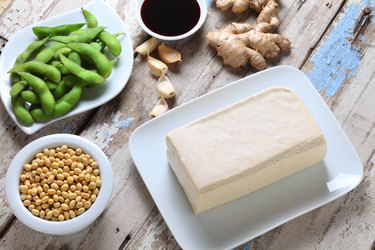
According to the Linus Pauling Institute, soybeans and soy products, such as tofu, tempeh and soymilk, are the richest sources of isoflavones in the human diet. Isoflavones are also found in smaller amounts in a variety of beans, peas, lentils, grains and vegetables. Linus Pauling Institute cites flaxseeds as the richest source of lignans, with ground flax being the best choice for maximum absorption. Other sources of lignans include sesame seeds, curly kale, broccoli, apricots, cabbage, Brussels sprouts, strawberries and rye bread.

Role of Estrogen

Estrogenic hormones play a vital role in the growth and development of female sexual characteristics and the reproductive process. Estrogen also regulates bone growth and cholesterol levels. As females go through menopause, estrogen production in the body decreases. Phytoestrogen foods are used by some women as an alternative to hormone replacement therapy to reduce side effects of menopause, such as hot flashes.

Research

Phytoestrogens are currently the focus of considerable scientific research. The extent to which they enhance or block estrogenic effects in the body is not yet fully understood. The Linus Pauling Institute explains that phytoestrogens that enhance estrogenic effects could help maintain bone density and improve cholesterol levels. Phytoestrogens which block estrogenic effects in reproductive tissue could help reduce the risk of hormone-associated cancers such as breast cancer, uterine cancer and prostate cancer.

Safe Consumption

The American Dietetic Association confirms that research is still being done to determine how much phytoestrogen is needed in the body and how phytoestrogens interact with other hormones. The National Cancer Institute reports that soy foods, as part of a healthy diet and in moderate amounts, are safe to consume. Consider limiting processed soy foods, such as soy-based meat substitutes, which may contain higher doses of soy isoflavones than natural sources. Natural foods containing phytoestrogens can be part of a well-balanced diet and are worth eating in moderation for their potential health benefits.

References

Article reviewed by Tina Boyle Last updated on: Aug 24, 2011

Must see: Photo Galleries