Anita_Bonita/iStock/Getty Images
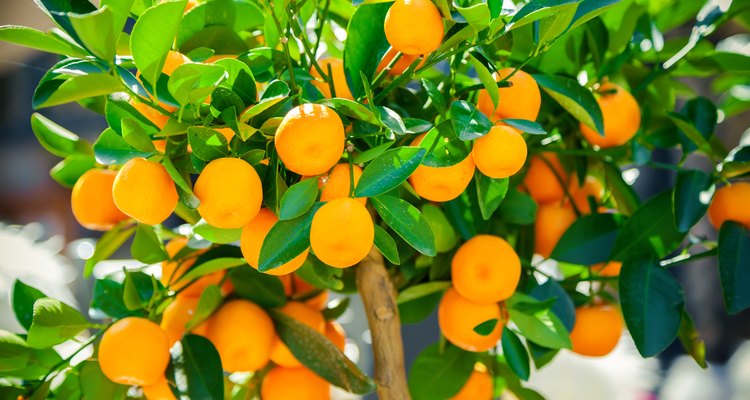
Fiber is an important part of a healthy diet. Fruits and vegetables are excellent sources of fiber, including the tangerine. Tangerines have a similar resemblance to oranges, but are smaller and slightly flat. You can eat tangerines plain as a snack, as a garnish for added zest in meat dishes, as an add-in for vegetable and fruit salads or in fruit smoothies.
Origin of the Tangerine
The tangerine is a member of the mandarin orange family and differs from an average mandarin orange because its skin color has a darker reddish-orange color. Tangerines were first introduced into the United States as an import to Florida from a port in Morocco known as Tangier, where the nick-name “tangerine” was coined. Tangerines, which come from small, thorny trees, have a thin, tough skin which is easy to peel. The segments of a tangerine separate fairly easily and the taste is sweet and tangy.
Tangerine Nutrition Information
One medium tangerine has 45 calories, 11 g of carbohydrates and 2 g of dietary fiber. Some vitamins and minerals in a tangerine include vitamin A, vitamin C, potassium, magnesium, calcium, thiamin, niacin and magnesium. Tangerines are also low in saturated fat, cholesterol and sodium.
Health Benefits of Fiber
Peertrainer.com explains that foods like tangerines that are high sources of fiber may help to reduce high cholesterol levels and improve the health of the arteries and heart. The fiber in tangerines may also help to regulate blood sugar levels, making it a beneficial snack for people with diabetes. Fiber helps create bulk in the bowels, which stimulates muscle contraction in the intestines, which promotes the regularity of bowel movements in the body. In addition, this improves the health of the colon and may protect the colon from dangerous chemicals that play a role in colon cancer development.
Health Benefits of Tangerines
Tangerines are a good source for obtaining phytonutrients and antioxidants. Phytonutrients and antioxidants are parts of a food that can help fight against chemicals in the body that cause damage to healthy cell structure, which are linked to the development of disease and some cancers. Tangerines are also high in vitamin C, which helps improve the immune system.
Other Fiber Sources
Like tangerines, fruits and other plant-based foods are good sources of fiber because of the part of their cellular structure that is not digestible in the body. For example, 1/2 cup of bran cereal contains 10 g of fiber, 1/2 cup of cooked peas provides 5.2 g of fiber, 1/2 cup of kidney beans provides 4.5 g of fiber, one unpeeled apple supplies 3.9 g of fiber and one potato provides 3.8 g of fiber.
Related Articles

Peeling the Spiny Chayote Squash

Bok Choy Nutrition

How to Make a Fruit Reduction

Different Types of Fruits & Vegetables

Information About the Orange Fruit

Types of Greek Fruits & Vegetables

How to Blanch Tomatillos

How to Juice a Daikon Radish

How to Julienne Jicama

List of Tropical Fruits

Is an Orange Healthy to Eat for Your ...

Low Carb Peanut Butter Snacks

Difference Between Clover & Orange ...

What Effects Do Oranges Have on the ...

Can You Eat Clementines With the Peel?

How to Eat a Quince
Grapefruit Skin Benefits

How to Preserve Mangoes

Why Are Fruits Important?

How to Steam a Banana
References
Writer Bio
Alexis Jenkins writes to motivate others in areas of health including nutrition, fitness training and improving lifestyle choices. She graduated with a Bachelor of Science in health science from Brigham Young University-Idaho.
Photo Credits
Anita_Bonita/iStock/Getty Images