
Thigh Hurts After Kicking a Ball
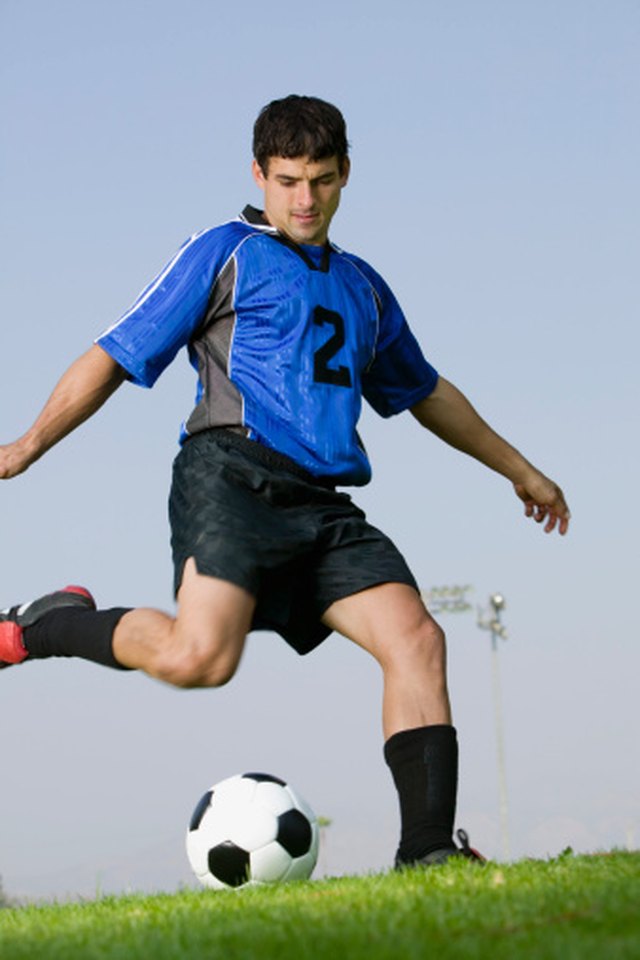
If your thigh hurts after kicking a ball, you may be suffering from a strained groin muscle or a quadriceps strain. A groin strain is felt in the inner thigh, while a quadriceps strain will be felt in the front of the thigh. A proper warmup and cool-down can help prevent thigh injuries related to soccer and other sports. If pain continues long after you're done kicking and after you've rested your leg, you may need to see a doctor to determine whether your injury or condition requires treatment.
Groin Strain
The adductor longus are muscles in the inner thigh, also known as the groin, and their main job is to pull the leg up, as in the action involved in kicking a ball. If you strain your adductor muscles while kicking a ball, you may feel a sharp pain on the inner thigh, indicating a possible tear in the muscles where they connect to the tendons. Pain that comes on gradually in the groin may be a sign of chronic adductor strain, and kicking a ball and running may simply be aggravating a long-standing injury.
Quadriceps Strain
The quadriceps are made up of four muscles in the front of the thigh, and though they are among the biggest and strongest muscles in the body, they are still vulnerable to sports injuries. Just kicking a ball with a shortened stride or over-striding while playing sports can strain or even tear the quadriceps. Quadriceps injuries that are complicated by muscle strains in the back or hips can take longer to heal.
Prevention
Before you play a sport that involves kicking a ball, whether it's soccer or American football or even kickball, you should stretch your leg muscles and warm up with some light jogging. Stretching after you play can also help keep your muscles from tightening up. Pay attention to how your muscles feel during and after kicking and running. If you frequently feel sore, you may be developing chronic muscle strain in the thighs, which should be evaluated with an MRI. Get any injury checked out sooner, rather than later, to help prevent further damage and discomfort.
Treatment
Initial treatment for all thigh strains involves rest and ice. If the pain subsides with that conservative treatment, then you may start walking or jogging lightly to test out how your muscles respond. If the muscle strains are actually more serious muscle tears and the pain does not improve with rest, surgery may be required to repair the torn muscles or tendons.
Writer Bio
James Roland started writing professionally in 1987. A former reporter and editor with the "Sarasota Herald-Tribune," he currently oversees such publications as the "Cleveland Clinic Heart Advisor" and UCLA's "Healthy Years." Roland earned his Bachelor of Science in journalism from the University of Oregon.