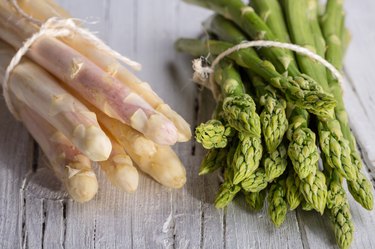
The two most common types of asparagus are the white and green varieties. So, what's the difference?
The obvious distinction between the two is the color. Green asparagus has chlorophyll, a pigment that makes it green, while white asparagus doesn't. This is due to how they're grown: Green asparagus is grown in the sunlight, so it produces chlorophyll. White asparagus is covered, so it doesn't produce chlorophyll.
Video of the Day
Video of the Day
The white stalks also have a more mild taste. Green asparagus can be described as having a grassy or earthy taste, so if you don't really like it, give white asparagus a try.
Despite their differences in appearance and flavor, both white and green types of asparagus have a similar nutrition profile and health benefits.
Nutritional Differences
Green vegetables like asparagus are known for being a rich source of nutrients like fiber, vitamins and minerals. So, how does the white variety compare?
One serving of asparagus is equivalent to about 2/3 cup or five large spears. The nutrition facts vary depending on the variety, serving size and whether the vegetable is cooked or raw.
There aren't any significant nutritional differences between green and white asparagus. See how the two compare below.
Per 100 g | Green asparagus | White asparagus |
|---|---|---|
Calories | 19 | 15 |
Protein | 2.14 g | 1.54 g |
Fat | 0.65 g | 0 g |
Carbohydrates | 2.46 g | 2.31 g |
Fiber | 1.6 g | 1.5 g |
Health Benefits of Green and White Asparagus
1. They're a Rich Source of Fiber
No matter the variety — green, white or even purple — asparagus is a great source of dietary fiber.
Fiber supports your gut health, helps lower cholesterol levels, improves blood sugar levels and keeps you fuller for longer, according to the Mayo Clinic.
An estimated 5 percent of Americans meet the requirements for fiber, leaving an estimated 95 percent falling short of this vital nutrient, according to July 2016 research in Advances in Nutrition.
Adults should aim for 22 to 34 grams of fiber per day depending on age and gender, according to the 2020-2025 Dietary Guidelines for Americans.
2. Green Asparagus Has More Antioxidants
Asparagus is high in antioxidants like vitamin E and flavonoids, which help fend off oxidative stress in the body known to cause damage.
Eating antioxidant-rich foods like asparagus is associated with a reduced risk of diseases like cancer and heart disease, according to Harvard T.H. Chan School of Public Health.
But the levels of antioxidants vary based on the variety and color. Green asparagus contains the highest levels of antioxidants while white asparagus offers the lowest levels of antioxidants, according to a July 2016 study in Acta Scientiarum Polonorum, Technologia Alimentaria.
3. They're Heart-Healthy
One cup of cooked asparagus provides 76 percent of your daily value for vitamin K, according to the USDA. A diet rich in vitamin K is linked to lower rates of heart disease, according to Harvard Health Publishing.
People with high intakes of vitamin K were observed to have a 21 percent lower risk of being hospitalized for heart disease, according to an August 2021 study in the Journal of the American Heart Association.
Summary
Green asparagus has more antioxidants than white, but both are heart-healthy and great sources of fiber, vitamin K and other nutrients. While green asparagus is more common, white asparagus has a milder taste and is a fun way to mix things up.
- USDA FoodData Central: “ROLAND, WHITE ASPARAGUS”
- USDA FoodData Central: “Asparagus, canned, drained solids”
- University of Arizona: “Food as Medicine Spotlight: Health Benefits of Asparagus”
- Advances in Nutrition: “Perspective: Closing the Dietary Fiber Gap: An Ancient Solution for a 21st Century Problem”
- USDA: “2020-2025 Dietary Guidelines for Americans”
- Acta Scientiarum Polonorum, Technologia Alimentaria: “Antiradical capacity and polyphenol composition of asparagus spears varieties cultivated under different sunlight conditions”
- Mayo Clinic: “Dietary fiber: Essential for a healthy diet”
- Harvard T.H. Chan School of Public Health: “Antioxidants”
- MyFoodData: “Nutrition Facts for Asparagus (Cooked)”
- Harvard Health Publishing: "Diets rich in vitamin K linked to lower heart disease risk"
- Journal of the American Heart Association: “Vitamin K Intake and Atherosclerotic Cardiovascular Disease in the Danish Diet Cancer and Health Study”