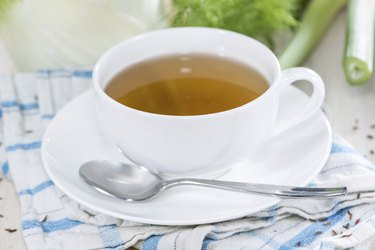
Fennel tea, a fragrant beverage made from the leaves or seeds of the fennel plant, has been used extensively in naturopathic medicine for hundreds of years. Historically, midwives and herbalists recommended the herb as a holistic intervention for disorders affecting the female reproductive system. In modern naturopathy, fennel remains a popular treatment option for complications of pregnancy and lactation. Although fennel is safe when used in quantities normally found in food, medicinal doses of fennel tea have not been proved safe for preganant or nursing women.
GRAS Status
Video of the Day
Fennel tea and its active constituent compounds are classified as GRAS, or generally recognized as safe, by the Food and Drug Administration. An independent safety review by the Flavor and Extract Manufacturers' association determined that anethole, the active medicinal compound found in fennel, is safe when used in moderate amounts found in food. Extensive animal tests indicate that foods containing anethole are ultimately harmless to human beings. However, teas made from fennel may contain high doses of anethole that exceed the recommended daily intake. These large doses could theoretically cause unpleasant or dangerous side effects.
Video of the Day
Estrogenic Effects
Fennel tea appears to appreciably alter levels of estrogen, a female reproductive hormone involved in conception, pregnancy and lactation. A 1980 study published in the "Journal of Ethnopharmacology" suggested that fennel's estrogenic properties stem from the compounds anethole, photoanethole and dianethole, which it shares with similar-tasting herbs such as licorice and anise. All of these botanical medicines have been used to increase breast milk production, promote menstruation and induce labor in pregnant women. In the 1930s, scientists investigated fennel's hormone-altering compounds for use in the synthesis of artificial estrogen.
Effects on Pregnancy
Fennel tea's hormone-altering effects may induce and facilitate childbirth when pregnancy has gone past term. However, like other botanical medicines, fennel tea is only considered safe when used under the guidance of a qualified midwife or obstetrician. No studies have investigated fennel tea's safety when it is used in medicinal quantities during pregnancy. In theory, it could cause preterm labor if used prematurely during pregnancy. Fennel tea may also cross the placenta and disrupt a developing baby's endocrine system. Do not use fennel tea during pregnancy without consulting your health care provider.
Lactation Effects
After pregnancy, some mothers use fennel tea to promote breast milk production. Renowned lactation consultant Kelly Bonyata recommends fennel tea as a method for enhancing let-down, the reflex that causes nursing women to expel milk in response to nipple stimulation. However, she notes that large doses may actually decrease milk production. A report in the "Journal of Pediatric Surgery" noted that babies exposed to large amounts of fennel tea have developed thelarche, or premature breast development. This alarming condition could also theoretically occur when compounds in fennel cross into a nursing mother's breast milk. Nursing mothers should consult a pediatrician or lactation consultant before using fennel tea.
- Food and Chemical Toxicology; The FEMA GRAS Assessment of trans-Anethole Used as a Flavouring Substance; P. Newberne et al.
- Journal of Ethnopharmacology; Fennel and Anise as Estrogenic Agents; M.Albert-Puleo
- Journal of Pediatric Surgery; A Striking and Frequent Cause of Premature Thelarche in Children -- Foeniculum Vulgare; Z.Türkyilmaz et al.