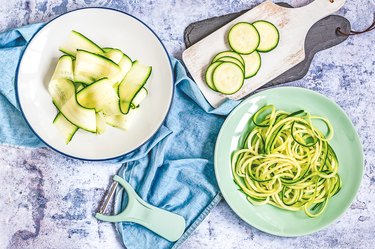
Zucchini is a type of summer squash that is deliciously found in a variety of dishes (think vegetable sautés and classic zucchini bread). It provides several beneficial vitamins and can improve and protect the health of your heart, eyes and digestive system. Zucchini may also help you reach or maintain a healthy weight.
Archaeologists have traced zucchini's origins to as early as 7,000 BCE in Mexico, where it was an essential part of the diet consisting of beans, corn and squashes, per the Yuma County Cooperative Extension. This veg has stood the test of time and can lend impressive nutrients to your dish.
Video of the Day
Video of the Day
Use zucchini as a base for pasta sauce (aka "zoodles"), in your baked goods or as a standalone snack with dip. This vegetable has the bonus of being quite versatile and complementary in flavor to a number of other healthy foods.
Zucchini Nutrition Facts
One cup of sliced zucchini is equal to a single serving. One cup of sliced zucchini contains:
- Calories: 19
- Total fat: 0.4 g
- Cholesterol: 0 mg
- Sodium: 9 mg
- Total carbs: 3.5 g
- Dietary fiber: 1.1 g
- Sugar: 2.8 g
- Added sugar: 0 g
- Protein: 1.4 g
Zucchini Macros
- Total fat: One cup of sliced zucchini has 0.4 grams of total fat, which includes 0.1 grams of polyunsaturated fat, 0.01 grams of monounsaturated fat, 0.1 grams of saturated fat and 0 grams of trans fat.
- Carbohydrates: One cup of sliced zucchini has 3.5 grams of carbs, which includes 1.1 grams of fiber and 2.8 grams of naturally occurring sugars.
- Protein: One cup of sliced zucchini has 1.4 grams of protein.
Vitamins, Minerals and Other Micronutrients
- Vitamin C: 22% of your Daily Value (DV)
- Vitamin B6: 11% DV
- Manganese: 9% DV
- Riboflavin (B2): 8% DV
- Vitamin A (IU): 8% DV
- Copper: 7% DV
- Folate (B9): 7% DV
- Potassium: 6% DV
- Magnesium: 5% DV
- Pantothenic acid (B5): 5% DV
- Thiamin (B1): 4% DV
- Vitamin K: 4% DV
- Phosphorus: 3% DV
- Zinc: 3% DV
- Niacin (B3): 3% DV
Health Benefits of Zucchini
Zucchini can help you reach your daily value of several different vitamins, particularly vitamin C. This variety of summer squash can also benefit your eyes, heart and digestion, and may help you maintain a healthy weight.
1. Zucchini Packs Plenty of Vitamins
By tossing zucchini into a salad or roasting it with other vegetables, you level up the amount of nutrition in your dish. "Zucchini is rich in many nutrients, including vitamin C, vitamin A, manganese, potassium and magnesium," says Kasey Hageman, RDN.
Vitamin C
In particular, a cup of sliced zucchini provides nearly a quarter of your daily value of vitamin C, which acts as an antioxidant to help protect your cells from damage caused by free radicals (formed during digestion or by environmental factors like cigarette smoke or air pollution), per the National Institutes of Health (NIH).
Vitamin C also improves the absorption of iron from plant-based foods, which is a good reason to eat zucchini along with leafy greens like spinach or kale. It also helps the immune system work properly, and is required for the production of collagen, a structural protein that helps wounds heal and keeps skin taut.
In fact, vitamin C improved the perception of skin health and actual skin health — including appearance, roughness, wrinkling and elasticity — in a March 2015 review in the journal Nutrition Research. However, more research is needed in representative populations to pinpoint the exact effect of dietary intake of vitamin C on skin.
The vitamin C content in your skin and your body's production of collagen naturally decrease as you age, per the Oregon State University Linus Pauling Institute.
That decrease in collagen plays a role in wrinkles and crepey skin, and may also cause issues like weakening muscles, osteoarthritis, joint pain or even gastrointestinal problems due to the thinning of your digestive tract lining, per the Cleveland Clinic. Besides aging, a poor diet is a top reason for having too little collagen in the body.
Vitamin B6
You'll also find 11 percent of your DV of vitamin B6 in a cup of sliced zucchini. Vitamin B6 is important for keeping the nervous system and immune system healthy, per the Mayo Clinic.
Manganese
Meanwhile, the manganese in zucchini will help your body make energy and protect cells from damage, and your body will use it for strong bones, blood clotting, reproduction and a healthy immune system, per the NIH.
2. Zucchini May Help Protect Your Eyes
This summer squash is rich in nutrients that can protect your vision and eye health. "Zucchini is high in antioxidants, specifically, carotenoids like lutein, zeaxanthin and beta-carotene," says Hageman.
Your body converts beta-carotene into retinol (vitamin A), which is important for normal vision. Meanwhile, lutein and zeaxanthin are transported to the macula of the eye, where they absorb up to 90 percent of blue light and help maintain visual function, per the Oregon State University Linus Pauling Institute.
Because they may prevent a significant amount of blue light from reaching underlying structures that play a role in vision, lutein and zeaxanthin protect against oxidative damage caused by light. This oxidative damage is believed to play a part in the development of age-related macular degeneration, a leading cause of blindness.
In fact, a higher intake of lutein and zeaxanthin through a wide variety of fruits and vegetables rich in carotenoids may lower the risk of advanced age-related macular degeneration, per a December 2015 study of more than 100,000 participants in the journal JAMA Ophthalmology.
3. Zucchini Is Good for Weight Loss
The unique makeup of zucchini can help you achieve or manage a healthy weight. "One cup of zucchini contains just 17 calories, is rich in water and contains fiber," Hageman says. "That combination helps you feel full and increases satiety, leading you to eat fewer calories overall."
Zucchini is 95 percent water, which means you'll get plenty of hydration — but not a lot of calories — from it. Because their water and fiber add volume to your dishes, you can eat the same amount as other types of food but for fewer calories. Like most fruits and vegetables, zucchini is naturally low in fat and calories while still being filling.
Eating more fruits and non-starchy vegetables, including summer squash, was inversely associated with long-term weight gain in a September 2015 meta-analysis in PLOS Medicine. The researchers note that the findings support the benefits of eating more fruits and vegetables for preventing long-term weight gain and obesity, a major risk factor for type 2 diabetes, cardiovascular diseases, cancer and several other health conditions.
To lose weight, you must take in fewer calories than your body uses. The key is to substitute higher-calorie foods with fruits and vegetables — for instance, swapping refined flour pasta with zucchini noodles for dinner.
"Eating zucchini noodles in place of pasta is a very simple way to increase your non-starchy vegetable intake and decrease overall caloric intake," Hageman says. "Zucchini noodles are very filling and are a great way to change up pasta dishes."
4. Zucchini Can Benefit Your Heart
With every cup of sliced zucchini, you'll get a gram of fiber — but don't be deceived by the seemingly small amount. When it comes to fiber, every gram adds up to contribute to good heart health.
Fiber is a crucial part of a healthy diet that lowers cholesterol levels, but currently, Americans are only getting 10 to 15 grams of dietary fiber per day on average, per Harvard Health Publishing. To put that in perspective, the recommended daily amount is 25 grams to 38 grams.
Eating fiber-rich foods reduced the incidence of coronary heart disease, stroke, type 2 diabetes and colon cancer by 16 to 24 percent in a February 2019 meta-analysis of nearly 250 studies in The Lancet. For every additional 8 grams of dietary fiber per day, total deaths and incidence of coronary heart disease, type 2 diabetes and colon cancer fell by 5 to 27 percent.
Dietary fiber includes the portions of plant foods you can't digest or absorb, per the Mayo Clinic. In addition to benefiting heart health by lowering low-density lipoprotein (or "bad") cholesterol levels, and possibly by reducing blood pressure and inflammation, a high-fiber diet also helps to control blood sugar levels, achieve a healthy weight, maintain bowel health and help you live longer.
Zucchini also provides potassium, which can lessen the effects of sodium and help manage high blood pressure, per the American Heart Association. When you eat more potassium, you lose more sodium through urine, and it also helps to lower tension in blood vessel walls. A cup of sliced zucchini offers 6 percent of your daily value.
This vegetable's high levels of vitamin C (22 percent DV per cup) may also benefit your ticker: Although the evidence has been mixed, prospective cohort studies indicate that higher vitamin C circulating in the body is associated with lower risks of coronary heart disease, stroke and hypertension, per the Oregon State University Linus Pauling Institute.
5. Zucchini May Aid in Digestion
This summer squash, like many other water-rich vegetables, may help to keep your digestive system humming. "Zucchini contains soluble and insoluble fiber, which aids in digestion," says Hageman. "Its water content also helps with overall hydration and digestion, helping food pass more easily through the gastrointestinal tract."
Dietary fiber increases the size and weight of your stool, and also softens it, making it easier to pass and preventing constipation, per the Mayo Clinic. A high-fiber diet rich in vegetables like zucchini might also lower your risk of developing hemorrhoids or diverticular disease (small pouches in your colon).
You may also lower your risk of developing type 2 diabetes by eating a healthy diet that includes insoluble fiber. In those who have diabetes, fiber (and particularly soluble fiber) can slow down the absorption of sugar and benefit blood sugar levels.
Zucchini Health Risks
Allergies
If you suffer from ragweed allergies in the late summer or fall, you may also experience oral allergy syndrome (OAS) — or pollen fruit syndrome (PFS) — when you eat zucchini.
Your immune system can sometimes confuse the proteins found in some fruits and vegetables with those found in pollen. As a result, eating a given food can cause an allergic reaction or make existing symptoms worse, per the American Academy of Allergy, Asthma & Immunology.
In particular, those who react to ragweed may experience symptoms like an itchy mouth or throat when eating zucchini, banana, cucumber or melon. You should speak to your doctor if:
- Your OAS symptoms cause significant discomfort in your throat
- Your OAS symptoms progressively get worse
- Your OAS symptoms are caused by cooked fruits and vegetables, like sautéed zucchini
- You develop systemic reactions after eating raw fruits or vegetables such as hives, vomiting or difficulty breathing
Drug Interactions
There are currently no known drug interactions associated with zucchini. Be sure to discuss any medication and food interactions with your health professional.
Eating Raw Zucchini
In general, raw zucchini is perfectly safe to eat – but be wary if it's extremely bitter. "This is an indicator that the zucchini is high in cucurbitacins, which are compounds that can be toxic," Hageman says. "In this case, it's best to spit it out and dispose of the entire zucchini."
Because there's also a risk of contamination from harmful bacteria with raw zucchini, be sure to follow best vegetable-washing practices when preparing it, per the U.S. Food & Drug Administration:
- Wash your hands for 20 seconds with warm water and soap before and after handling fresh zucchini.
- Gently rub or use a clean vegetable brush to scrub zucchini while holding it under plain running water.
- To further reduce bacteria, dry the zucchini with a clean cloth or paper towel.
Zucchini Recipes
Related Reading
Zucchini Preparation and Helpful Tips
This staple vegetable can be used in both savory dishes and sweeter baked goods like zucchini bread or muffins. Here's how to buy, store and prepare zucchini to get the most out of it.
Pick the right zucchini. When choosing zucchini from the supermarket, look for firm and slender zucchini with a bright green color. It shouldn't have wrinkled skin or soft spots, per the University of Nebraska-Lincoln Extension Service.
For best quality, zucchini should be harvested when it is young, tender and about 6 to 8 inches long and 2 inches in diameter. Larger zucchini can become tougher and develop more seeds, but these varieties can be used for zucchini bread.
Store and prepare it properly. Store zucchini in the refrigerator's crisper drawer, and wash right before using it. For best quality, consume your zucchini within three to four days, per the University of Nebraska-Lincoln Extension Service.
There is no need to peel zucchini, and in fact, it may be healthier not to. "The highest levels of antioxidants are found in its skin, so it is best to eat the skin and flesh together," Hageman says.
Use it to make a quick meal. Zucchini can be easily incorporated into healthy dishes, per the University of Nebraska-Lincoln Extension Service.
For example:
- Slice raw zucchini and add it to lettuce and pasta salads.
- Cut zucchini into sticks to serve with dip.
- Sauté sliced zucchini in oil over medium heat for 5 minutes until crisp, then toss into pasta sauce.
- Slice and marinate zucchini with balsamic vinegar before grilling it alongside asparagus, green onions, mushrooms and eggplant.
Alternatives to Zucchini
There are several other vegetables you can eat in place of zucchini but what's most important is that you eat a wide variety of produce throughout the day (aim for fruits and vegetables in a variety of colors).
Try yellow squash or cucumber as a simple replacement for zucchini.
- Yuma County Cooperative Extension: "Zucchini"
- My Food Data: "Zucchini"
- National Institutes of Health: "Vitamin C"
- Nutrition Research: "Can dietary intake influence perception of and measured appearance? A Systematic Review"
- Oregon State University Linus Pauling Institute Micronutrient Information Center: "Vitamin C and Skin Health"
- Cleveland Clinic: "The Best Way You Can Get More Collagen"
- Mayo Clinic: "Vitamin B-6"
- National Institutes of Health: "Manganese"
- Oregon State University Linus Pauling Institute Micronutrient Information Center: "α-Carotene, β-Carotene, β-Cryptoxanthin, Lycopene, Lutein, and Zeaxanthin"
- JAMA Ophthalmology: "Intakes of Lutein, Zeaxanthin, and Other Carotenoids and Age-Related Macular Degeneration During 2 Decades of Prospective Follow-up"
- U.S. Centers for Disease Control and Prevention: "How to Use Fruits and Vegetables to Help Manage Your Weight"
- PLOS Medicine: "Changes in Intake of Fruits and Vegetables and Weight Change in United States Men and Women Followed for Up to 24 Years: Analysis from Three Prospective Cohort Studies"
- Harvard Medical School: "Should I be eating more fiber?"
- The Lancet: "Carbohydrate quality and human health: a series of systematic reviews and meta-analyses"
- Mayo Clinic: "Dietary fiber: Essential for a healthy diet"
- American Heart Association: "How Potassium Can Help Control High Blood Pressure"
- Oregon State University Linus Pauling Institute Micronutrient Information Center: "Vitamin C"
- American Academy of Allergy, Asthma & Immunology: "Oral Allergy Syndrome (OAS) or Pollen Fruit Syndrome (PFS)"
- U.S. Food & Drug Administration: "7 Tips for Cleaning Fruits, Vegetables"
- University of Nebraska-Lincoln Extension Service: "What to Do with Zucchini"