Are Carrots Fattening?
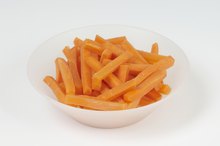
As low-calorie foods go, carrots are among the best choices because they provide a multitude of essential vitamins, minerals and nutrients in an extremely light package. While dishes that feature carrots can be fattening if they're prepared with a lot of rich, high-fat ingredients, snacking on fresh carrots definitely won't bust your diet.
Nutrition Facts
As the U.S. Department of Agriculture's nutrition database reports 1 cup of chopped raw carrots has about 50 calories, 1 gram of protein, 0.3 grams of fat, 12 grams of carbohydrates, 3.6 grams of fiber and 6 grams of natural sugar. A single medium carrot that weighs about 60 grams has approximately 25 calories, 0.5 grams of protein, 6 grams of carbohydrates, 1.7 grams of fiber and 3 grams of sugar. Their low-calorie and no-fat content makes them a healthy addition to any diet.
Nutritional Profile
Carrot Nutrition Information
Learn More
Both raw and cooked carrots have a very low energy density value. A report from the Centers for Disease Control and Prevention states that foods with low energy density values are best for losing weight and keeping it off because they have low calorie counts but high fiber and water contents, which help you stay full for long periods. According to the CDC, carrots are also one of the best food sources of vitamin A. Getting enough of this vitamin helps promote healthy growth, skin, eyesight and immunity. When cooked, a carrot's amount of vitamin A that can be absorbed by the body increases. While 1/2 cup of raw carrots fulfills 150 percent of the recommended daily allowance for vitamin A, 1/2 cup of cooked carrots fulfills 270 percent of the RDA.
Preparation
The way you prepare carrots makes a significant difference in whether they can make you gain weight. Whereas raw carrots are quite low in calories, "Cooking Light" magazine reports that a single slice of carrot cake with cream cheese frosting has more than 320 calories, 10 grams of fat and 40 milligrams of cholesterol, and a slice of carrot soufflé has about 190 calories, 5 grams fat and 90 milligrams of cholesterol. Even sautéing plain carrots in oil can make a difference, since 1 tablespoon of olive oil adds about 120 calories and 13.5 grams of fat to a serving of carrots.
Considerations
How Many Calories in Carrot Sticks?
Learn More
If you're watching your weight, it's wise to be mindful of how many calories you're eating every day, as well as the foods you're choosing. For example, if you eat a big carrot salad as your dinner but then have a thick slice of chocolate cake, you could still end up consuming more calories than you would have with a typical meal and no dessert. Eating an extra serving of carrots is not likely to promote weight gain, but if you regularly eat more calories than you burn, you will gain weight over time.
Related Articles

Carrot Nutrition Information
Learn More
How Many Calories in Carrot Sticks?
Learn More
Are Mangoes Good for Dieting?
Learn More

Nutritional Value of Carrots and Celery
Learn More
400 Calorie Meal Ideas
Learn More

The Disadvantages of Bananas
Learn More
Are Carrots Good Snacks?
Learn More

Kim Kardashian Ate This Salad Every Day for an Entire Year
Learn More
Can Carrots Raise Your Blood Sugar?
Learn More
Calories in Green Salads
Learn More
References
Writer Bio
Carly Schuna is a Wisconsin-based professional writer, editor and copy editor/proofreader. She has worked with hundreds of pieces of fiction, nonfiction, children's literature, feature stories and corporate content. Her expertise on food, cooking, nutrition and fitness information comes from a Level 1 personal training certification and years of in-depth study.