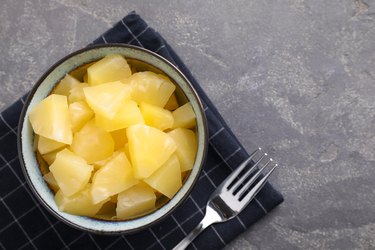
Juicy tropical pineapple chunks make a delicious addition to sweet and savory recipes, and you don't have to buy a whole fruit if you know you're not going to use the entire thing. As it turns out, canned pineapple is just as healthy as fresh pineapple, and there aren't many major nutritional differences.
One thing you'll have to watch out for on your canned pineapple nutrition label is the sugar and where it comes from. Some canned pineapple is preserved in sugar-sweetened syrup, which the ingredients list will tell you.
Video of the Day
Video of the Day
Tip
Canned pineapple can be a healthy and cost-effective addition to many diets, but it may be high in sugar and carbohydrates for people with blood sugar conditions, such as type 2 diabetes.
Talk to your doctor if you have a blood sugar issue before adding canned pineapple or fresh pineapple to your diet in large quantities.
Canned Pineapple Nutrition
Pineapples contain health-promoting antioxidants as well as digestive enzymes that may support gut health. On top of that, they're a nutritious source of carbohydrates and naturally occurring sugar, which your body uses for energy.
According to the USDA, 1 cup of canned pineapple packed in water (chunks, sliced or crushed) has:
- Calories: 79
- Total fat: 0 g
- Saturated fat: 0 g
- Trans fat: 0 g
- Cholesterol: 0 mg
- Sodium: 2 mg
- Total carbs: 20 g
- Dietary fiber: 2 g
- Sugar: 19 g
Canned pineapple also provides a significant amount of vitamins, like:
- Vitamin C (about 21% of your daily needs per 1-cup serving)
- Vitamin B1 (thiamin): 19%
- Vitamin B6: 11%
A 1-cup serving will also give you some important minerals, like:
- Manganese: 120% daily needs
- Copper 29%
- Magnesium: 11%
- Potassium: 7%
Is Canned Pineapple Healthy?
Some people question if canned pineapple is good for you, but according to health experts, you're better off eating canned pineapple, or any other canned fruit or produce, than none at all, per the Produce for Better Health Foundation.
In fact, eating canned pineapple and other canned produce items is a great way to get more of the nutrients many of us are lacking in our diets. When compared, they're not so different.
Fresh Pineapple vs. Canned
Most Americans don't eat enough fruits and veggies in their diet and tend to be deficient in the nutrients they offer, per the USDA 2020 to 2025 Dietary Guidelines for Americans.
The good news is, nutrition research shows canned produce has just as many nutrients (sometimes even more) when compared to fresh varieties, per the Produce for Better Health Foundation.
Canned Pineapple vs. Fresh Pineapple Nutrition (amount per 1-cup serving)
Nutrient | Canned | Fresh |
|---|---|---|
Calories | 79 | 83 |
Sugar | 19 grams | 16 grams |
Magnesium | 11% Daily Value (DV) | 5% DV |
Manganese | 120% DV | 67% DV |
Iron | 5% DV | 3% DV |
Potassium | 7% DV | 4% DV |
Copper | 29% DV | 20% DV |
Vitamin C | 21% DV | 88% DV |
Thiamin (Vitamin B1) | 19% DV | 11% DV |
Vitamin B5 | 5% DV | 7% DV |
As you can see, some varieties of canned pineapple may actually have more of certain nutrients than their fresh counterparts. That's because canned fruit is often preserved at peak freshness.
Not to mention, including more canned pineapple and other canned fruit in your diet is a great way to save money on eating more nutritiously — canned produce can cost as much as a fifth of the cost of fresh produce, per the Produce for Better Health Foundation.
The Bottom Line
Fruits like pineapple are full of important nutrients your body needs. Whether you eat your pineapple fresh or from a can, you're getting the nutritional benefits of the fruit.
If you're eating a low-sugar diet, fresh pineapple is a better choice than canned pineapple packed in syrups or sweetened with added sweeteners. Check the nutrition label for the amount of sugar, and the ingredients list to find out if sweeteners like corn syrup have been added.
Although most people get enough vitamin C in their diets, fresh pineapple is a healthier choice if your diet doesn't include many vitamin C-rich foods such as fruits and vegetables.
- USDA National Nutrient Database: Pineapple, Raw, All Varieties
- USDA National Nutrient Database: Pineapple, Canned, Juice Pack, Drained
- Office of Dietary Supplements: Vitamin C
- MedlinePlus: Niacin
- Office of Dietary Supplements: Folate
- Office of Dietary Supplements: Calcium
- USDA: Canned Pineapple
- USDA: 2020 to 2025 Dietary Guidelines for Americans