What does fact checked mean?
At Healthfully, we strive to deliver objective content that is accurate and up-to-date. Our team periodically reviews articles in order to ensure content quality. The sources cited below consist of evidence from peer-reviewed journals, prominent medical organizations, academic associations, and government data.
- American Heart Association: About Cholesterol
- MayoClinic.com; Grapefruit Juice: Beware of the Dangerous Medication Interactions; Katherine Zeratsky, R.D., L.D.; November 2010
The information contained on this site is for informational purposes only, and should not be used as a substitute for the advice of a professional health care provider. Please check with the appropriate physician regarding health questions and concerns. Although we strive to deliver accurate and up-to-date information, no guarantee to that effect is made.
Cholesterol Medication & Cranberry Juice Reactions
The cranberry is a fruit Native Americans used to treat bladder and kidney infections, while early English settlers found it effective for digestive problems, blood disorders and loss of appetite, according to University of Maryland Medical Center. Although some people have concerns about adverse interactions between cranberry juice and cholesterol medications, the opposite may be true. Cranberries might just prove beneficial for cholesterol, while its counterpart, grapefruit juice, may be the fruit of concern.
Understanding Cholesterol
Your body has two primary types of cholesterol -- low-density lipoprotein, LDL, and high-density lipoprotein, HDL. LDL is known as your "bad" cholesterol. In excess amounts, it collects along the walls of your arteries, increasing your risk of atherosclerosis. This disease hardens your arteries, restricting the flow of blood to your heart and brain, increasing your risk of heart attack and stroke. HDL is your "good" cholesterol and helps prevent your LDL from building in your arteries, explains the American Heart Association 1. Your LDL must be low, while your HDL must be high.
- Your body has two primary types of cholesterol -- low-density lipoprotein, LDL, and high-density lipoprotein, HDL.
- HDL is your "good" cholesterol and helps prevent your LDL from building in your arteries, explains the American Heart Association 1.
Cholesterol Medications
The Effects of Grapefruit on Synthroid
Learn More
The primary treatment for poor cholesterol levels is dietary changes, but some people require the addition of cholesterol medications. Doctors tend to prescribe statins because of their efficacy and lack of side effects. The American Academy of Family Physicians explains atorvastatin and simvastatin interact adversely with juice, but it is grapefruit juice, not cranberry 2. The AAFP adds that you can enjoy all other fruit juices, as no evidence exists to show these juices interact with cholesterol medications.
- The primary treatment for poor cholesterol levels is dietary changes, but some people require the addition of cholesterol medications.
- The AAFP adds that you can enjoy all other fruit juices, as no evidence exists to show these juices interact with cholesterol medications.
Dangers of Grapefruit Juice
Grapefruit and their products contain a natural chemical that interfere with the break down of certain medications, such as simvastatin and atorvastatin. The grapefruit causes larger amounts of the medication to stay in your body for a longer period of time, explains Mayo Clinic nutritionist Katherine Zeratsky 3. This can increase the severity of the side effects accompanying these drugs, such as muscle pain and weakness. Over time, this can result in the breakdown of muscular cells and tissue.
- Grapefruit and their products contain a natural chemical that interfere with the break down of certain medications, such as simvastatin and atorvastatin.
- This can increase the severity of the side effects accompanying these drugs, such as muscle pain and weakness.
Benefits of Cranberry
Can I Drink Grapefruit Juice With Wellbutrin?
Learn More
Cranberry and cranberry juice may prevent atherosclerosis by inhibiting the oxidation of LDL cholesterol, according to the Cranberry Institute. Kimberly Beauchamp of the Bastyr Center for Natural Health notes that cranberry juice may also increase your HDL cholesterol. Beauchamp states that men drinking 1 cup of cranberry juice diluted with 1 cup of placebo juice every day for four weeks saw an 8 percent increase of their HDL cholesterol levels.
Related Articles

The Effects of Grapefruit on Synthroid
Learn More
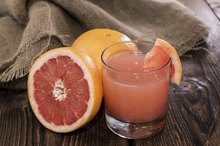
Can I Drink Grapefruit Juice With Wellbutrin?
Learn More
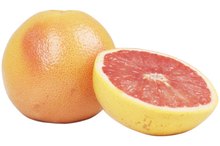
Can You Eat a Grapefruit With Hydrochlorothiazide?
Learn More
Grapefruit & Celexa
Learn More
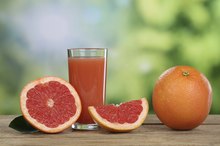
Does Drinking Grapefruit Juice Lower Blood Pressure?
Learn More
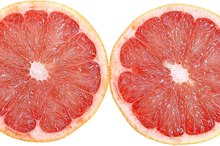
Does Grapefruit Stabilize Your Blood Glucose?
Learn More

Does Grapefruit Juice Affect Ramipril?
Learn More
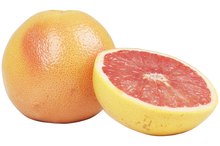
Grapefruit & Augmentin
Learn More
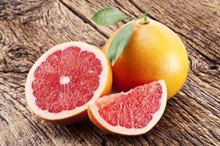
Can You Eat Grapefruit While Taking Crestor?
Learn More
Side Effects of Grapefruit Seed Extract
Learn More
References
- American Heart Association: About Cholesterol
- American Academy of Family Physicians: Medicine Interactions With Grapefruit: What You Should Know
- MayoClinic.com; Grapefruit Juice: Beware of the Dangerous Medication Interactions; Katherine Zeratsky, R.D., L.D.; November 2010
- Cranberry. National Institutes of Health. https://nccih.nih.gov/health/cranberry. Published November 30, 2016.
- Lee IT, Chan YC, Lin CW, et al. "Effect of cranberry extracts on lipid profiles in subjects with type 2 diabetes." Diabetes Med. 2008;25:1473-1477.
- McKay DL, Blumberg JB. "Cranberries and cardiovascular disease risk factors." Nutr Rev. 2007;65:490-502.
- Novotny JA, Baer DJ, Khoo C, Gebauer SK, Charron CS. Cranberry Juice Consumption Lowers Markers of Cardiometabolic Risk, Including Blood Pressure and Circulating C-Reactive Protein, Triglyceride, and Glucose Concentrations in Adults. Journal of Nutrition. 2015;145(6):1185-1193. doi:10.3945/jn.114.203190.
- Ruel G, Pomerleau S, Couture P, et al. "Low calorie cranberry juice supplementation reduces plasma oxidized LDL and cell adhesion molecule concentrations in men." Brit J Nutr. 2008;99:352-359.
Writer Bio
Based in Jamestown, Pa., Hannah Rice Myers has more than 10 years of experience as a freelance writer, specializing in the health industry. Many of her articles have appeared in newspapers, as well as "Curing Epilepsy: Hope Through Research." Rice Myers received her master's degree in nursing from Upstate Medical University in 2001.