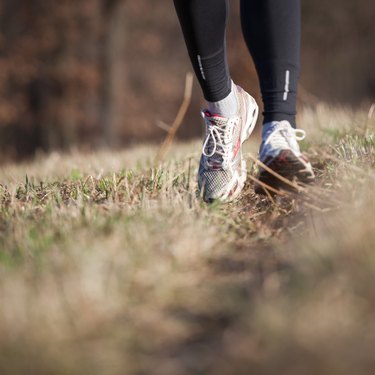
Runners commonly complain about developing blisters on their feet, particularly on the toes, soles, insides and heels of the feet. Blisters are liquid-filled bumps that develop when the combination of heat, friction and sweat repeatedly irritate the surface of the skin. Shoes that do not fit well, socks that don't protect the skin, and very sweaty feet are all factors that can cause blisters while running, especially on the inside of the foot.
A Running Shoe's Fit
Video of the Day
To reduce your risk of developing blisters on the inside of the foot while you run, make sure your foot fits snug inside the shoe. Too much or too little space increases your foot's chance to rub against the side of the shoe. Never go on extended runs with new shoes. Slowly break your shoes in by wearing them for an hour or so throughout the day; keep your runs brief until your feet feel comfortable and snug in the shoes.
Video of the Day
Shopping for Running Shoes
When buying running shoes, shop in the middle of the day when your feet experience a natural swelling. Wear socks that you will wear during your runs to help gauge proper shoe width and size. Measure both feet and purchase shoe sizes accordingly. Try both shoes on and make sure there are no factory defects inside the wall of the shoe that interfere with the placement and comfort of your foot. If you need orthopedic inserts, choose carefully; a properly fitted insert can prevent blisters, while one that raises your arch too high can rub and cause blisters.
Wearing the Right Socks
Wear clean, dry, breathable socks when you run. While cotton socks may be comfortable for daily wear, they also absorb and hold moisture, which contributes to blisters. Among the latest choices in running socks are knee high compression socks, toe socks and a variety of padded socks intended to cushion your foot. Compression socks help with circulation, while toe socks reduce friction, preventing blisters from developing between your toes. Padded socks provide additional cushioning during long runs. Some socks are designed to fit your left or right foot. A better fitting sock reduces friction between your foot and the shoe, helping prevent blisters.
Blister Prevention Tips
Wear socks that are in good condition; if your socks have holes, the edges may rub against your foot and cause a blister. Consider bringing extra pairs of socks that you can switch into immediately after your workout. Apply moleskin on the insides of the foot where you are prone to develop blisters. Try reducing friction by applying a lubricant or talcum powder to blister-prone areas on the feet.
If You've Developed a Blister
Cover a small blister with an adhesive bandage; cover a large blister with a porous, plastic-coated gauze pad that absorbs moisture. While blisters usually heal on their own, you can alleviate blister pain or pressure by using a sterilized needle to puncture the blister near its edge to drain the fluid without disturbing the overlying skin. Apply antibiotic cream on the blister and cover it with a bandage. Contact your doctor if the blister develops pus, redness, increasing pain, warm skin or other signs of infection.