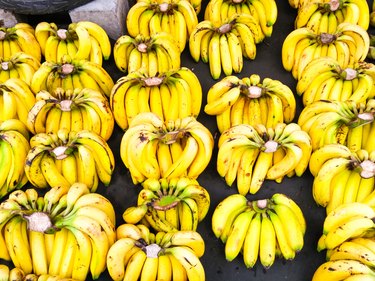
Portable and easily digested, bananas make low-calorie, nutrient-dense snacks. These tropical fruits are often recommended for their high amounts of potassium, a dietary mineral necessary for the proper functioning of the body's electrical system. Whether you prefer bananas firm and barely yellow or soft and fully ripened, you'll get the same amount of potassium from your snack.
The Importance of Potassium
Video of the Day
Potassium is one of the body's essential minerals. It plays a vital role in regulating electrical impulses at the cellular level that in turn control muscle movement, nerve impulses and heart function. As the Linus Pauling Institute explains, low potassium, a condition called hypokalemia, causes muscle cramps and weakness, intestinal problems and fatigue, and can even be fatal if it leads to cardiac arrhythmia. Potassium intake helps in the prevention of stroke, osteoporosis, high blood pressure and kidney stones.
Video of the Day
Bananas and Potassium
Raw bananas are an excellent dietary source of potassium. Small bananas contain 362 milligrams of potassium, while medium bananas have 422 milligrams of the mineral. Large bananas provide 487 milligrams of potassium, more than 10 percent of the daily recommended amount of 4,700 milligrams for healthy adults. Extra-large bananas, 9 inches or longer, have a whopping 544 milligrams of potassium in them. Potassium dissolves in water, so using bananas in recipes may reduce the available amount of potassium.
Potassium and Ripeness
According to registered dietitian Joanne Larsen, the amount of potassium in bananas does not change during the ripening process. Potassium levels are the same, whether the banana is green or fully ripe.
Precautions
Some drugs and medical conditions interfere with the body's ability to use potassium. While it's important for healthy individuals to include potassium-rich foods such as bananas in their diet, your doctor may restrict your intake of such foods if your medical condition warrants it. Always follow your doctor or dietician's instructions carefully. Never take potassium supplements without consulting your doctor first, regardless of your medical condition.
- Ask the Dietitian: Potassium; Joanne Larsen
- Linus Pauling Institute: Micronutrient Information Center - Potassium
- Huntsman Cancer Hospital: Low-Potassium Diet
- USDA National Nutrient Database: Bananas, Raw
- Medline Plus: Potassium in Diet
- Academy of Nutrition and Dietetics: What Foods are Good Sources of Potassium other than Bananas and Orange Juice?