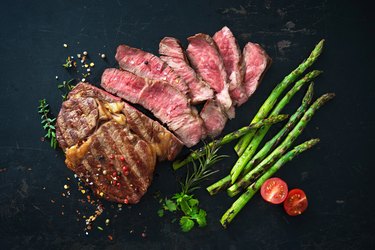
The optimum amount of protein per meal for muscle building — about 30 grams, according to one study — is sometimes quoted as the maximum amount you can absorb, but the two are not related. Rapidly absorbed protein boosts muscle protein synthesis after exercise, but one way or another, one protein is in your body, protein will be mostly absorbed.
Dietary Protein Absorption
Video of the Day
Before your body can absorb proteins, digestive enzymes in your stomach and small intestine break them apart into amino acids. As amino acids come into contact with the lining of your small intestine, transporters carry them through the intestinal lining, where two things can happen: They can gain access to your bloodstream or they can be used by tissues in your gut. Whichever path they take, proteins are now successfully absorbed. More than 90 percent of all the protein you consume is absorbed, reports the European Food Information Council.
Video of the Day
Protein Absorption Rate
Amino acids are absorbed at the rate of 1.3 grams to 10 grams an hour, according to a report published in the International Journal of Sport Nutrition and Exercise Metabolism. A large percentage is absorbed because partially digested food is in the small intestine for hours. In addition to your overall health, several factors influence the absorption rate. Protein drinks are absorbed more rapidly than protein consumed with fiber-containing foods because fiber slows down nutrient absorption. Protein hydrolysates, which are proteins broken into smaller pieces of amino acids, are absorbed more quickly than whole proteins. Protein absorption is fast-paced for whey protein, while casein is digested at a moderate rate.
Body Protein for Muscles
When researchers studied the effect of protein-rich meals on muscle protein synthesis, they found that eating 113 grams of lean beef boosted muscle protein synthesis by 50 percent. A larger portion of beef failed to increase protein production in muscles. Your muscles won't use more than 30 grams of protein consumed at one meal, according to the researcher's report in an issue of the Journal of the American Dietetic Association. Another study published in the American Journal of Physiology concluded that 35 grams of whey protein at one meal resulted in greater protein absorption and muscle protein synthesis than portions of 10 grams or 20 grams.
Daily Recommendations for Protein Intake
Your daily protein needs depend on your health and activity level. Women should consume 46 grams of protein daily, and men need 56 grams, as long as they're not involved in athletic activities. For power and endurance athletes, protein recommendations range from 84 grams to 119 grams daily for men and 66 grams to 94 grams for women, according to the Academy of Nutrition and Dietetics. If you're trying to build muscles, you'll stimulate 24-hour muscle protein synthesis by consuming your protein at several meals throughout the day, reports a study that was published in the Journal of Nutrition in June 2014.
- American Journal of Clinical Nutrition: Rapid Aminoacidemia Enhances Myofibrillar Protein Synthesis and Anabolic Intramuscular Signaling Responses After Resistance Exercise
- Institute of Medicine: Dietary Reference Intakes for Energy, Carbohydrate, Fiber, Fat, Fatty Acids, Cholesterol, Protein, and Amino Acids
- European Food Information Council: Nutrient Bioavailability — Getting the Most Out of Food
- International Journal of Sport Nutrition and Exercise Metabolism: A Review of Issues of Dietary Protein Intake in Humans
- American Journal of Clinical Nutrition: Ingestion of a Protein Hydrolysate Is Accompanied by an Accelerated In Vivo Digestion and Absorption Rate When Compared With Its Intact Protein
- Journal of the International Society of Sports Nutrition: International Society of Sports Nutrition Position Stand: Protein and Exercise
- Journal of the American Dietetic Association: Moderating the Portion Size of a Protein-Rich Meal Improves Anabolic Efficiency in Young and Elderly
- Academy of Nutrition and Dietetics: Protein and the Athlete: How Much Do You Need?
- Journal of Nutrition: Dietary Protein Distribution Positively Influences 24-Hour Muscle Protein Synthesis in Healthy Adults
- American Journal of Physiology: Endocrinology and Metabolism: Amino Acid Absorption and Subsequent Muscle Protein Accretion Following Graded Intakes of Whey Protein in Elderly Men