
Hip Dislocation Exercises
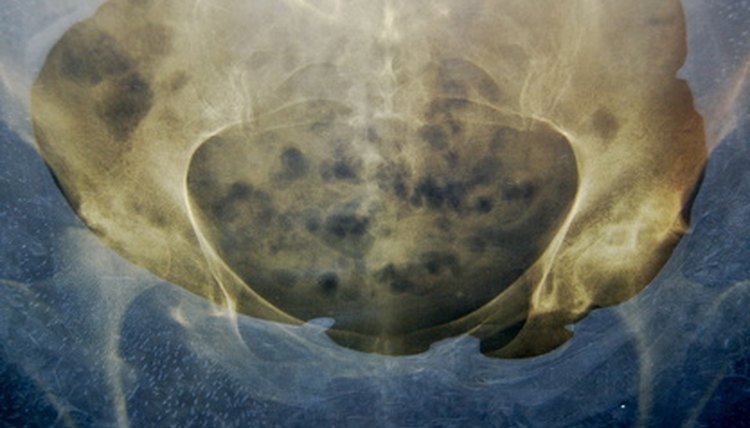
Hip dislocation happens when your thighbone, or femur, slips out of your hip bone, according to the American Academy of Orthopedic Surgeons. Hip dislocation exercises focus on strengthening and stretching your surrounding muscles. The intent is to return you a functioning lifestyle. Recovery can take an average of two to three months. Performing the exercises daily will speed your recovery process.
Hip Abductions
Strengthen your hip muscles by doing hip abductions. Stand behind a sturdy chair, according to the American Academy of Orthopaedic Surgeons. Hold onto the back of the chair with both hands. Place your feet shoulder-width apart. Slowly lift your injured leg sideways, away from your body. Keep your knee straight. Hold this position for three seconds. Slowly return your leg to the original position. Repeat this exercise 10 times. Do this exercise three times throughout the day.
Resistive Hip Abductions
Use an exercise band or tubing to strengthen your hip muscles. The exercise band will increase your strengthening intensity by providing increased resistance. Find a sturdy chair or use a table for this exercise. Tie an exercise band around the chair or table's leg. Place your injured leg into the band. Place the band around your affected ankle, according to the American Academy of Orthopaedic Surgeons. Stand so your unaffected side is closest to the table or chair. Hold onto the chair or table with the hand on your unaffected side. Slowly lift your injured leg away from you, to the side. Hold this position for three seconds. Slowly return your leg to the original position. Repeat this exercise 10 times.
Upright Knee Raises
Strengthen your muscles by doing standing knee raises. Use both hands to hold onto the back of a sturdy chair. Stand with your body facing the chair, according to the American Academy of Orthopaedic Surgeons. Slowly lift your injured leg from the floor. Gently bend your knee. Lift your leg toward your upper body. Do not lift your knee any farther than waist level. Hold this position for three seconds. Slowly return your leg to the original, standing position. Repeat this exercise 10 times. Shoot for a goal of performing this exercise four times daily.
Hip Flexion and Extensions
Stretch your hip and leg muscles by doing hip flexions, or leg swings. This exercise can be done either on land or in the water. If done in water, get into waist or chest-deep water. Stand with your unaffected side against the pool's side. If done on land, find a sturdy chair and stand with your unaffected side against the chair. Hold onto the pool's side or chair back with the hand on your unaffected side. Slowly lift your affected leg from the surface. Swing your leg forward, away from you. Hold this position for five seconds, if possible. Slowly swing your leg backward. Hold this position for five seconds. Slowly return your leg to the original position. Repeat this exercise 10 times. Only your hip will be moving during this exercise. Do not move your upper body or neck.
References
Resources
Writer Bio
Crystal Welch has a 30-year writing history. Her more than 2,000 published works have been included in the health and fitness-related Wellness Directory, Earthdance Press and Higher Source. She is an award-winning writer who teaches whole foods cooking and has written a cookbook series. She operates an HON-code-certified health-related blog with more than 95,000 readers. Welch has a B.B.A. from Eastern Michigan University.