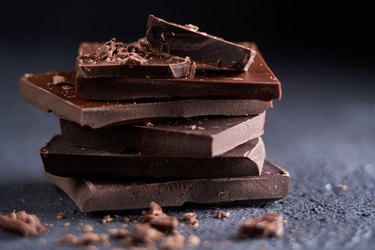
A bit of chocolate can add richness to desserts and even elevate your mood — but that's not all it can do. Chocolate also contains antioxidants, caffeine and nutrients that can fight fatigue. In moderation, it's not a bad idea to reach for chocolate to combat the afternoon slump.
Video of the Day
Video of the Day
Components of Chocolate
When you feel the need for a pick-me-up, your first choice may be coffee. But the high amount of caffeine in a cup of coffee can leave you jittery and unable to sleep later in the day.
Whereas 8 ounces of coffee may contain nearly 100 milligrams of caffeine, according to the USDA, dark chocolate contains just 43 milligrams per 100 grams (about 3 1/2 ounces), the USDA reports. (The same amount of milk chocolate contains 20 milligrams of caffeine, according to the USDA.) This may be enough to get you through the afternoon without disrupting your sleep later.
Another reason chocolate may boost energy: It contains sugar. Your body quickly absorbs the simple sugars in chocolate and turns them into glucose, your cells' preferred source of energy, explains the American Heart Association (AHA). For this reason, any sugary foods, not just chocolate, may help you rebound from feeling tired.
However, you'll want to be careful about how much sugar you take in at once, whether from chocolate or any other sweet food. Overdoing it could lead to a severe spike and drop in blood sugar, leaving you even more sluggish than before, AHA explains.
Energy-Boosting Nutrients
Besides caffeine and sugar, chocolate holds several unique nutrients that can add some oomph to your day. For one thing, dark chocolate contains a significant amount of iron, with 19 percent of your daily value in 100 grams, says the USDA. That's a definite plus because iron creates oxygen-rich red blood cells, says the National Heart, Lung, and Blood Institute. Anemia due to iron deficiency can make you feel tired or week.
You may have also heard that chocolate contains antioxidants, the compounds that "clean" cells of harmful damage. It's true that chocolate has numerous flavonols and polyphenols that qualify as antioxidants, and some of them contribute to your energy reserves.
According to a June 2017 study in the journal Frontiers in Immunology, cocoa polyphenols release nitric oxide, which dilates blood vessels, allowing for better blood flow. This increases oxygen and nutrients in the muscles, which could make you feel less lethargic.
Another antioxidant, theobromine, may also be instrumental in boosting energy. It not only gives dark chocolate its signature bitter taste, but theobromine also stimulates the central nervous system. A February 2015 study in the journal Frontiers in Pharmacology reported that theobromine increases alertness, without the side effects of caffeine.
Choosing Chocolate for Energy
Some chocolate products have been marketed with claims that they'll perk you up through a combination of added nutrients or other ingredients. The Coconut Boost chocolate bar, Snickers and various chocolate milk energy boosters have all been marketed specifically to fuel your daily activities with extra stamina.
Know, though, that the added bells and whistles may only add more sugar and fat. Instead, consider keeping it simple by choosing a good quality dark chocolate. "Dark chocolate is a much better source of health-promoting antioxidants than milk chocolate," says Anne Danahy, RDN, a registered dietitian and nutritionist based in Scottsdale, Arizona.
"Many people also find that dark chocolate satisfies that chocolate craving with a much smaller portion than milk chocolate, which can be a plus. Milk chocolate has a significant amount of added sugar to tone down the bitterness of the cocoa," Danahy says.
Other Energy-Boosting Foods
Though chocolate may help keep fatigue at bay, it's only one of many foods that can do so. A variety of nutrients are responsible for the body's balance of energy, and "a well-balanced diet with adequate amounts of lean proteins and 'slow carbs' can help maintain energy levels," says Danahy. "Slow carbs are complex carbs like whole grains and vegetables. They're digested more slowly than sugary foods so you have a steadier supply of glucose to fuel your cells."
Finally, if you struggle with fatigue on an ongoing basis, talk with your doctor to determine if there's an underlying cause of tiredness that needs more than an energy-boosting food, or a diet change, to be fixed.
Read more: The 10 Best Organic Chocolate Bars
- USDA: “Beverages, Coffee, Brewed, Prepared With Tap Water”
- USDA: “Chocolate, Dark, 45-59% Cacao Solids”
- USDA: “Candies, Milk Chocolate”
- Frontiers in Immunology: “Cocoa and Dark Chocolate Polyphenols: From Biology to Clinical Applications”
- Frontiers in Pharmacology: “The Relevance of Theobromine for the Beneficial Effects of Cocoa Consumption”
- Anne Danahy, MS, RDN, registered dietitian and nutritionist, Scottsdale, Arizona
- American Heart Association: "Carbohydrates"
- National Heart, Lung, and Blood Institute: "Anemia"