
Is There Creatine in N.O.-XPLODE?
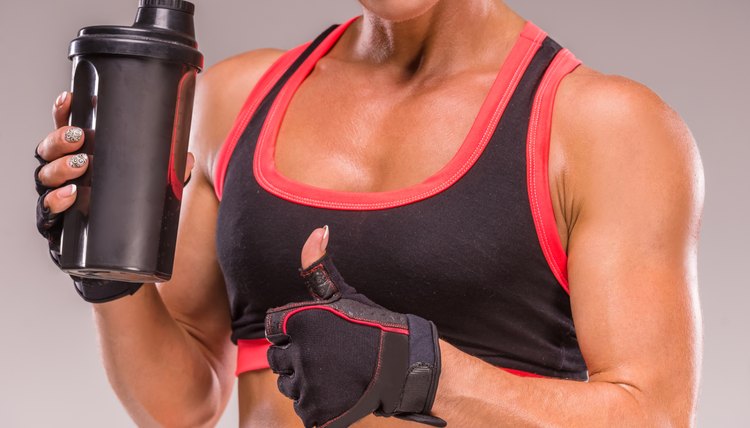
According to the National Strength and Conditioning Association, creatine is a nitrogenous organic compound that can be synthesized in your body or consumed in foods such as meat and fish. Approximately 95 percent of your body's creatine is stored in skeletal muscle. It has become a widely used supplement for those who want to improve muscular strength and power and is an ingredient in BSN's N.O.-XPLODE.
Ingredients in N.O.-XPLODE
The ingredient list for N.O.-XPLODE includes carbohydrates, vitamins B6 and B12, folate, calcium, phosphorous, magnesium, sodium, potassium and the manufacturer's proprietary blend, which includes creatine in four different forms. The serving size is one scoop and each scoop has 25 calories. The proprietary blend is approximately 18 grams, but the ingredient list does not specify how much of that total is creatine.
Creatine in the Body
Creatine is essential in the form of creatine phoshpate, or CP, for energy metabolism because it aids in the formation of ATP for energy use during exercise. It is especially important during short-duration, high-intensity exercise. A certain amount of creatine is stored in skeletal muscle for this purpose and as it is depleted, your ability to perform high-intensity exercise decreases. The National Strength and Conditioning Association, known as the NSCA, reports that during a six-second bout of maximal exercise, skeletal creatine is reduced between 35 and 57 percent from resting levels.
Creatine Supplementation
Because of the widespread use of creatine by athletes ranging in skill level from high school to professional, it is one of the most studied supplements. Creatine supplementation is reported to increase the concentration in skeletal muscle by approximately 20 percent, according to the NSCA. There have been significant increases in strength and power when subjects use creatine as directed. It appears that there is a maximum saturation in your skeletal muscle, so taking more than the recommended dosage does not create bigger improvements, notes the NSCA and a 2002 study led by Jon YeanSub Lim, published in "The Sport Journal."
N.O.-XPLODE Recommendations
The manufacturer of N.O.-XPLODE, Bio-Engineered Supplements and Nutrition -- known as BSN -- advises that you do not exceed three scoops of the product per day. It is designed for people between 18 and 50 who want to support their performance during resistance training or other types of fitness training. To assess your tolerance, BSN advises dissolving one scoop of the product in 5 to 6 ounces of cold water and drink. Wait 30 minutes and see how you feel. If you feel fine, repeat the process one more time. Once you know your tolerance on training days, consume one to three scoops dissolved in 5 to 18 ounces of water 30 to 45 minutes before you exercise. On non-training days, consume one scoop dissolved in water. The product should be consumed on an empty stomach.
Exercise
This product is meant to be taken before training as a way to improve the effectiveness of your workouts. Taking creatine without a fitness program will not increase muscular strength or size. Also keep in mind that N.O.-XPLODE is a supplement and even though outside studies have been done on creatine, the statements made by the company have not been evaluated by the Food and Drug Administration, so use caution when taking this or any supplement.
References
- Cooper Institute: Creatine Supplements: Friend or Foe for Exercise Performance?
- Kreider, R. B. International Society of Sports Nutrition position stand: safety and efficacy of creatine in exercise, sport, and medicine. Journal of International Society of Sports Nutrition. 2017; 14: 18.
- MedlinePlus. Creatine.
Writer Bio
Bethany Kochan began writing professionally in 2010. She has worked in fitness as a group instructor, personal trainer and fitness specialist since 1998. Kochan graduated in 2000 from Southern Illinois University with a Bachelor of Science in exercise science. She is a Certified Strength and Conditioning Specialist, Certified Personal Trainer, Medical Exercise Specialist and certified YogaFit instructor.