
The Dangerous Effects of Gymnastics for Developing Children
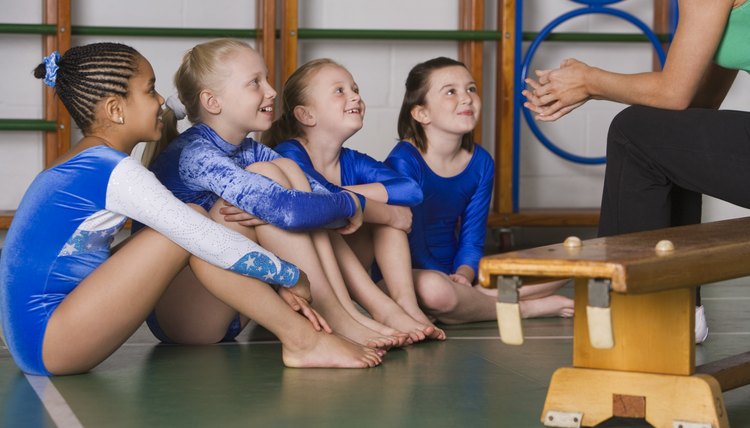
Gymnastics is a highly challenging sport. Many children aspire to be Olympic gymnasts, but only a few will ever make it. The current methods for teaching gymnasts are extremely demanding and at advanced levels, require that children give up many areas of their lives. This can have extremely negative consequences on developing children.
Stunted Growth
Girls in gymnastics are especially vulnerable to delayed puberty. These girls frequently get their periods very late, or stop menstruating for an extended time. Both boys and girls are susceptible to stunted growth due to over training, excessive dieting and the extreme stress that is associated with gymnastics, Ryan explains in her book, "Little Girls In Pretty Boxes."
Eating Disorders
Gymnastics coaches frequently pressure their team members to lose weight. Young women are especially vulnerable to pressure to lose weight. The curvy body of a teenage woman is generally considered undesirable in gymnastics, according to Ryan. Consequently, girls may develop eating disorders such as bulimia and anorexia, in attempts to lose weight. Eating disorders affect every system of the body and may cause endocrine, cardiovascular, respiratory and other problems, according to pediatrician William Sears.
Injuries
Gymnastics is a high-impact sport, and one misstep can cause serious injuries. Broken bones and serious sprains are common among gymnasts. The textbook "Biology: Life on Earth With Physiology" explains that broken bones can alter growth in some cases. When children break bones along a bone's growth plate, the bone may stop growing. Breaks that do not heal correctly can cause crooked posture, difficulty moving and long-term pain.
Psychological Problems
The culture of gymnastics, according to Ryan, pushes participants to achieve perfection at all costs. Many gymnasts become isolated from friends and family because they spend all of their time training. The abrasive, aggressive training methods used by many coaches can negatively affect a child's self esteem. Some serious gymnasts opt to leave school to pursue gymnastics. This decision can have major effects on a child's education and future career prospects. However, parents should note that moderate gymnastics involvement, such as taking a class or two, training a few hours every week or trying to learn gymnastics with friends, is unlikely to harm a child, according to sports writer Joan Ryan.
References
- "Little Girls In Pretty Boxes"; Joan Ryan; 2000
- "Biology: Life on Earth with Physiology"; Gerald Audesirk, et al.; 2008
- "The Portable Pediatrician"; William Sears, M.D., et al.; 2011
- "Child Psychology: Development in a Changing Society"; Robin Harwood, et al.; 2008
Writer Bio
Brenna Davis is a professional writer who covers parenting, pets, health and legal topics. Her articles have appeared in a variety of newspapers and magazines as well as on websites. She is a court-appointed special advocate and is certified in crisis counseling and child and infant nutrition. She holds degrees in developmental psychology and philosophy from Georgia State University.