
If you don't normally drink alcohol, there's no good reason to start now.
In fact, health experts say there isn't a safe level of drinking alcohol, as alcohol use is the seventh leading risk factor for deaths globally, according to a landmark August 2018 study in The Lancet.
Video of the Day
Video of the Day
But if you like to kick back with a glass of wine or a cold beer every now and then, there are safer ways to drink — and the first step is to curb your intake.
The Centers for Disease Control and Prevention (CDC) recommends people assigned female at birth (AFAB) limit their intake to one alcoholic drink per day and people assigned male at birth (AMAB) only have up to two drinks. What does that look like exactly? Here's a breakdown from the CDC:
- 12 ounces of beer (5 percent alcohol content)
- 8 ounces of malt liquor (7 percent alcohol content)
- 5 ounces of wine (12 percent alcohol content)
- 1.5 ounces or a shot of 80-proof distilled spirits or liquor, such as gin, rum, vodka and whiskey
One way to approach alcohol is to think about why you want to drink. Will it help you relax and feel good? Or will it make your anxiety worse? Are you using it to cope with personal issues going on in your life?
"Pace yourself and make sure you are mindful of your motivations for drinking. If you are drinking to avoid feelings or out of boredom, it can be helpful to engage in another healthier activity or call a friend," Alana Kessler, RD, functional and holistic nutrition and wellness expert, tells LIVESTRONG.com.
How alcohol affects someone depends on the person, so if you do drink, make sure to limit yourself to the appropriate amount of drinks per day and be mindful of how it affects you.
"Pace yourself and make sure you are mindful of your motivations for drinking. If you are drinking to avoid feelings or out of boredom, it can be helpful to engage in another healthier activity or call a friend."
Your liver metabolizes alcohol, but it can metabolize only a small amount at a time, so any excess alcohol continues to circulate throughout your body, per the CDC. Whether you're sipping on a martini or brandy, the effects of alcohol will largely depend on the amount you take in and not so much on the type of alcohol you drink.
In small amounts, alcohol can uplift your mood, but as you drink more, it can impair your vision, motor skills, memory and judgment.
All that said, here are some pros and cons of alcohol. Remember, the benefits don't outweigh the disadvantages of drinking alcohol — so, again, don't start drinking if you haven't been.
Tip
If you feel like you're drinking too much, are on prescription medications or are getting treated for any health conditions, it's important to talk to your doctor about safe alcohol use for you, per the CDC.
Benefits of Drinking Alcohol in Moderation
There are many reasons why people drink alcohol — in fact, there are potential benefits of alcohol if you drink in moderation. Here's how alcohol can help the body:
1. It's Linked to Better Heart Health
Some types of alcohol are better protectants than others — red wine, for instance, has a high concentration of polyphenols called resveratrol that are linked to helping prevent coronary heart disease, according to the Mayo Clinic.
"The flavonoids and antioxidants in wine can be beneficial for the heart and blood vessels, as well as for people with type 2 diabetes. People with diabetes can produce a lot of free radicals because of poor sugar metabolism," Kessler says.
However, these health-supporting properties have shown to be beneficial only when you drink less alcohol. For example, a February 2017 study in The Lancet Public Health found that drinking in moderation does not appear to worsen blood pressure. But for those who drink more than two drinks per day, reducing alcohol can improve blood pressure.
High cholesterol is also major risk factor for stroke and heart disease, particularly non-high-density lipoproteins, or LDL cholesterol, which can build up inside your arteries and affect cardiovascular health, per the CDC. High-density lipoproteins (HDL cholesterol), on the other hand, is known as the "good" cholesterol as it helps your body get rid of LDL.
And an April 2017 review in the American Journal of Clinical Nutrition found that moderate drinking led to slower decreases in HDL cholesterol levels, depending on the type of beverage.
2. It's Linked to Lower Diabetes Risk
This health benefit of alcohol may come as a surprise, but moderate drinking might help lower your risk for type 2 diabetes, according to a September 2016 review in the American Journal of Public Health.
Per the research, people AFAB who drink one to two drinks per day have 40 percent lower risk of developing this disease compared to people who don't drink alcohol. Drinking 15 grams of alcohol per day was also linked to potentially improving insulin sensitivity, which can help prevent diabetes.
A 12-year follow-up August 2017 study in Scientific Reports similarly found that light to moderate alcohol intake may have protective effects.
On the other hand, though, it's important to note that both studies showed an increased risk for diabetes with higher alcohol consumption. For instance, the Scientific Reports research found that drinking more than 30 grams of alcohol per day may up your risk for diabetes.
Tip
If you have diabetes, it's still best to talk to your doctor about what amount of alcohol is safest for you before drinking.
3. It's Linked to Helping Prevent Other Chronic Diseases
When coupled with a well-balanced diet like the Mediterranean Diet, for instance, low-to-moderate wine intake can help improve insulin sensitivity and reduce inflammation.
A November 2019 review in Nutrients suggests that the polyphenols in red wine can help prevent chronic diseases associated with oxidative stress.
The review also highlights how low-to-moderate wine intake is tied to helping decrease total cholesterol in people with dyslipidemia, high cholesterol in postmenopausal people, blood pressure in people with type 2 diabetes and insulin resistance in those with metabolic syndrome.
Furthermore, a small May 2012 study in The American Journal of Clinical Nutrition suggests that red wine may provide some prebiotic benefits and might help promote gut-friendly bacteria.
4. It's Tied to Better Cognitive Function
Another health benefit of moderate alcohol use is that it may be tied to better brain health in older adults.
A June 2020 study in JAMA Network Open of 19,887 people with a mean age of about 62 years old found that low to moderate drinking (which equated to 8 drinks per week for people AFAB and less than 15 drinks per week for people AMAB) was significantly associated with consistently high cognitive function and a lower rate of cognitive decline.
And here's where it gets even more interesting: Compared to people who never drink, those who drink low to moderate amounts of alcohol were less likely to have a low total cognitive function, mental status, word recall and vocabulary.
It's worth noting that the majority of the participants in this study were people AFAB. The study authors also acknowledge that people who are healthier at baseline may be more likely to participate in social activities where alcohol is present, which may affect the link between alcohol intake and health status (a bias that applies to a lot of research about alcohol's effects).
A September 2016 review in the American Journal of Public Health likewise found that people AFAB who have up to one drink per day are less likely to experience cognitive decline. They also face a lower risk of sudden cardiac death, hypertension, stroke and all-cause mortality compared to those drinking more than one serving of alcohol daily.
However, other evidence is conflicting.
For instance, a June 2017 study in the BMJ found that light drinking has no advantages over abstinence. Furthermore, the risk of right-sided hippocampal atrophy (which can contribute to Alzheimer's disease and impaired memory) is three times higher in adults who drink moderately.
And, per the Alzheimer's Society, some studies may not be accurate because they don't differentiate between former drinkers and lifetime non-drinkers.
People who formerly had alcohol use disorder, for example, may have already experienced brain damage to some degree compared to people who have never drank. That may in part be because drinking heavily can lead to thiamine deficiency, which can damage the memory-making centers of your brain, per the National Institute of Alcohol Abuse and Alcoholism (NIAAA).
This lack of thiamine from heavy drinking can also lead to Wernicke-Korsakoff syndrome, a degenerative brain disorder that damages cognitive function, according to the National Institute of Neurological Disorders and Stroke.
5. Beer, Specifically, Might Help Your Gut
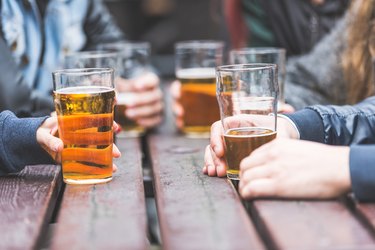
In terms of other alcohol, research shows that beer may also have some health benefits.
For instance, a November 2019 study of the health benefits of alcohol in Metabolites suggests that as a fermented drink, beer contains polyphenols, such as ferulic acid, xanthohumol, catechins, epicatechins and proanthocyanidins, that may help support the gut microbiome.
However, more research is needed to understand the health benefits of beer in regards to polyphenols and how they interact with the gut.
Is Beer a Diuretic?
A diuretic is any substance that increases your body's urine production.
Alcohol works as a diuretic in part by stimulating the bladder. Alcohol also suppresses a pituitary gland hormone that is responsible for inhibiting the diuretic effect. This makes your kidneys unable to reabsorb as much liquid as usual, according to Alcohol Health & Research World. So, yes, alcohol makes you pee more.
6. It Could Prevent Gallstones Naturally
Occasional alcohol use may also protect against gallstones by reducing stone formation and increasing gallbladder motility, per the American Journal of Public Health review. Drinking 5 or more grams of alcohol per day was linked to a 40 percent lower risk of symptomatic gallstones.
But again, moderation is the key here — heavily drinking is not a preventative measure for gallstones.
The Disadvantages of Drinking Alcohol Heavily
On the other hand, there are disadvantages of drinking alcohol. Here are the reasons why you should not drink alcohol heavily:
1. It Can Cause Liver Damage
The disadvantages of alcohol use appear when you turn moderate drinking to heavy or binge drinking.
"Heavy alcohol consumption can tax the liver because the liver is the organ that filters alcohol. If the liver has to filter alcohol, it can produce metabolites that are harmful to your health and can cause diseases like fatty liver, hepatitis and cirrhosis," Kessler says.
2. It Can Harm Your Digestive Tract
Another disadvantage of alcohol in the human body is that it has been shown to damage the entire gastrointestinal tract. Ethanol can cause direct damage to the esophagus, intestine and stomach, in addition to the liver and pancreas, according to an October 2014 review in the World Journal of Gastroenterology.
3. It's Tied to Cancer
Here's another reason why you shouldn't drink alcohol heavily: Research has linked it to a number of cancers, including breast, liver and colon cancers, according to the American Cancer Society.
Alcohol may stimulate cancerous tumor growths and promote the progression and aggressiveness of tumors, according to a January 2017 review in Pharmacological Research.
Moreover, drinking more than moderate amounts of alcohol is associated with an elevated risk of colon cancer, especially those with a family history of the disease, per a January 2012 study in The American Journal of Clinical Nutrition.
4. It's Linked to Heart Problems
There are advantages and disadvantages of drinking wine — after all, sipping it in moderation may contribute to heart health. But chronic excessive drinking (wine or otherwise) can up your risk for heart conditions like high blood pressure, heart disease, heart failure and stroke, according to the CDC.
That's because alcohol can increase blood pressure and heart rate and contribute to obesity, all of which and can damage the heart. This is especially the case if you drink frequently and in high amounts.
"Heavy drinking for [people AMAB] is equal to 15 or more drinks a week, and for [people AFAB], it's eight or more drinks per week," Kessler says.
5. It's Associated With Osteoporosis
Another reason not to drink heavily is that it's linked to an increased risk for osteoporosis, particularly in young people AFAB, according to a June 2018 study in the Journal of Studies on Alcohol and Drugs.
While osteoporosis — which is characterized by low bone mineral density — is usually more apparent in older adults, drinking too much alcohol in early adulthood can inhibit young adults from reaching their peak bone mass.
6. It's Tied to Weight Gain
Another con of alcohol is that drinking too much can lead to weight gain, given that it serves up seven calories per gram and offers little, if any, nutrients along with it, according to Harvard Health Publishing.
To put that into perspective, one shot of liquor has around 97 to 116 calories (before you pour in caloric mixers!) while a glass of wine can boast about 120 to 165 calories, per the U.S. National Library of Medicine (NLM). Drinking too much can easily pack on the calories and lead to weight gain.
And the big disadvantage of alcohol when it comes to weight gain is that having overweight or obesity can put you at a high risk for heart disease, diabetes, high blood pressure and other comorbid illnesses, according to the CDC.
Related Reading
7. It Lowers Your Inhibitions
Another disadvantage of drinking alcohol is that it can cloud your judgment, paving the way for potentially destructive decisions, according to the CDC. That's because drinking can lead to:
- Poor judgment
- Reduced reaction time
- Loss of balance
- Motor skills
- Slurred speech
Per the CDC, this impaired function can lead to immediate risks such as:
- Car accidents
- Violent behavior
- Risky sexual behavior
8. It Can Cause Alcohol Poisoning
Here's why not to drink alcohol in excess: It can cause alcohol poisoning, a medical emergency that can be fatal resulting from high blood alcohol levels, according to the CDC.
9. It Can Dehydrate You
Drinking alcohol actually promotes dehydration, according to the CDC. Because alcohol increases your urine production, your body begins to eliminate more liquid than you're taking in through drinking. That's why this is one of the reasons not to drink alcohol: The more you drink, the greater your risk of becoming dehydrated.
Not only does alcohol make you pee more frequently, but you can lose additional fluids due to diarrhea, vomiting and increased sweating associated with excessive alcohol.
Tip
Prevent dehydration by drinking at least one 8-ounce glass of water in between each alcoholic beverage, per the NLM.
10. It Can Cause a Hangover
If you've ever woken up with a pounding headache after a night at the bars, you've likely experienced this disadvantage of drinking alcohol. Per the Mayo Clinic, a hangover can lead to symptoms like:
- Fatigue
- Weakness
- Thirst
- Dry mouth
- Headaches
- Muscle aches
- Nausea, vomiting or stomach pain
- Poor or decreased sleep
- Sensitivity to light and sound
- Dizziness
- Shakiness
- Difficulty concentrating
- Mood disturbances like depression, anxiety and irritability
- Rapid heartbeat
Hangovers should resolve on their own, but for some, the aftereffects of drinking are among the top reasons not to drink alcohol.
What Causes Dizziness After Drinking Alcohol?
Your blood sugar levels drop after drinking alcoholic beverages and that can lead to physical symptoms, including dizziness, stomach discomfort, nausea, headache and anxiety, per the Mayo Clinic.
What's more, alcohol is dehydrating, and having multiple drinks can lead to a loss of electrolytes. If you don't replace the fluids by drinking water or electrolyte-enriched drinks, you'll likely feel light-headed after drinking.
11. It Can Lead to Nutrient Deficiencies
Chronic, excessive alcohol intake can cause malnutrition, especially if your nutrient intake is already low. Here's a breakdown of what minerals and vitamins are depleted by alcohol. If you have any of these deficiencies, then it may be a sign you shouldn't drink alcohol, so talk to your doctor about the best treatment for you.
Thiamine: Excessive drinking is notorious for causing deficiency in thiamine, or vitamin B1, which is found mainly in whole or enriched grains, beans and seeds. Alcohol appears to reduce its absorption, per the NIAAA.
Adequate thiamine is crucial for carbohydrate metabolism and the formation of ATP, the body's energy. Chronic alcoholism can result in a severe form of beriberi (thiamine deficiency disease) called Wernicke-Korsakoff syndrome, a form of psychosis accompanied by memory loss and brain shrinkage. Very high doses of thiamine might treat this condition, at least to some degree, in the early stages.
Folate: This B vitamin is required for normal DNA synthesis in all cells, and the maturation of red blood cells and good sources include fruits, vegetables and legumes.
Folate deficiency causes a disorder called megaloblastic anemia. In early pregnancy, a deficiency can interfere with the formation of the embryo's spinal cord. Per the Harvard T.H. Chan School of Public Health, excessive alcohol intake blocks its absorption and interferes with its activation in the body. Alcohol-induced folate deficiency may also be related to certain cancers, especially of the breast and colon, and to liver damage.
Magnesium: Excessive alcohol intake depletes magnesium, an extremely important mineral that has hundreds of roles in the cells, including those of the neuromuscular and cardiac systems.
Leafy green vegetables, avocados, beans, seeds and nuts are good sources. High alcohol intake is a major cause of magnesium depletion from the body's tissues, according to a March 2020 study in Alcohol and Alcoholism.
12. It Can Lead to Pregnancy and Birth Problems
Drinking even in the short-term increases the risk for miscarriage or stillbirth for people who are pregnant, according to the CDC. It also puts fetuses at higher risk for fetal alcohol spectrum disorders, which can lead to developmental delays, learning disabilities and vision or hearing problems, per the CDC.
13. It Can Contribute to Alcohol Dependence
Chronic heavy drinking can contribute to alcohol use disorder and alcohol dependence, according to the CDC.
Per the Mayo Clinic, symptoms can include:
- Not being able to limit the amount of alcohol you drink, despite possibly wanting to
- Spending a lot of time drinking, seeking out or recovering from alcohol use
- Craving alcohol
- Alcohol gets in the way of successfully performing at work, school or home
- Continuing to drink even though it's causing problems
- Using alcohol in unsafe situations, like while driving
- Developing a tolerance to alcohol
- Having withdrawal symptoms like nausea, sweating and shaking when you don't drink
14. It Can Affect Mental Health
Yet another reason why you shouldn't drink heavily is because it can contribute to mental health issues like depression and anxiety, per the CDC.
While alcohol may temporarily relieve feelings of depression, it can actually make things worse in the long run. In fact, there is a mutual relationship between depression and alcohol misuse, according to the University at Buffalo. This can lead to a cycle where people use alcohol to ease their symptoms, but the alcohol fuels the negative emotions that contribute to depression.
Effects of Binge Drinking
When it comes to drinking, the law of averages doesn't apply.
As mentioned above, there are pros and cons of drinking alcohol, so long as you don't exceed one drink a day for people AFAB and up to two for people AMAB. However, the same benefit doesn't apply to saving up all those weekday drinks and drinking six to seven drinks on one weekend night.
This habit is known as binge drinking, per the CDC, and it's the riskiest pattern of consumption. When you binge drink, the health effects are much like those of a heavy drinker.
The Dietary Guidelines for Americans define binge drinking as downing more than five drinks in two hours if you're a person AMAB and four drinks in two hours if you're a person AFAB.
Excessive drinking and binge drinking can lead to stroke, per the American Heart Association. Binging can also lead to fetal alcohol syndrome for people who are pregnant, cardiomyopathy, cardiac arrhythmia and sudden cardiac death. The rates of high blood pressure increase and you're more likely to have a stroke.
Binge drinking is also associated with up to a 50 percent increase in breast cancer risk compared to low-average drinking, per a September 2017 study in the American Journal of Epidemiology.
Related Reading
How to Enjoy Alcohol the Healthy Way
First off (and we cannot stress this enough) avoid binge drinking and try to sip a glass of water in between each alcoholic drink.
To help you choose healthier alcoholic drinks, Kessler shares some of her favorite cocktail and drink ideas below.
When choosing prosecco or champagne, go for extra-brut, ultra brut or brut nature, which indicate that it's lower in sugar. Use fresh ingredients like raspberries, cucumber slices and fresh herbs to enhance the flavor of your drink without adding sugar.
For a healthier mixer, go for club soda, seltzer or flavored waters with no added sugar instead of fruit juices and sodas. If you're a beer fan, opt for light beer to cut down on calories and carbs.
"If you're at a party, commit to having two drinks and never drink on an empty stomach. It can be helpful to eat a little snack before drinking as well," Kessler says. Check out these low-sugar cocktail recipes for more ideas:
- Tequila, club soda and lime
- Mezcal with a slice of orange
- Mix seltzer with your wines and add ice for a longer-lasting drink
- Mayo Clinic: "Red Wine and Resveratrol: Good for Your Heart?"
- Centers for Disease Control and Prevention: "Fact Sheets — Alcohol Use and Your Health"
- American Heart Association: "Alcohol and Heart Health"
- The Lancet: "Alcohol Use and Burden for 195 Countries and Territories, 1990–2016: A Systematic Analysis For The Global Burden of Disease Study 2016"
- Centers for Disease Control and Prevention: "Alcohol and Public Health Frequently Asked Questions"
- The Lancet Public Health: "The Effect of a Reduction in Alcohol Consumption on Blood Pressure: A Systematic Review and Meta-Analysis"
- Nutrients: "The Fluid Aspect of the Mediterranean Diet in the Prevention and Management of Cardiovascular Disease and Diabetes: The Role of Polyphenol Content in Moderate Consumption of Wine and Olive Oil"
- The American Journal of Clinical Nutrition: "Influence of Red Wine Polyphenols and Ethanol on the Gut Microbiota Ecology and Biochemical Biomarkers"
- Metabolites: "A New Perspective on the Health Benefits of Moderate Beer Consumption: Involvement of the Gut Microbiota"
- Pharmacological Research: "Cellular and Molecular Mechanisms Underlying Alcohol-Induced Aggressiveness of Breast Cancer"
- The American Journal of Clinical Nutrition: "Alcohol Consumption and the Risk of Colon Cancer by Family History of Colorectal Cancer"
- American Journal of Epidemiology: "Lifetime Alcohol Intake, Binge Drinking Behaviors, and Breast Cancer Risk"
- World Journal of Gastroenterology: "Alcoholic Disease: Liver and Beyond"
- Journal of Studies on Alcohol and Drugs: "Heavy Episodic Drinking Is Associated With Poorer Bone Health in Adolescent and Young Adult Women"
- JAMA Network Open: "Association of Low to Moderate Alcohol Drinking With Cognitive Functions From Middle to Older Age Among US Adults"
- Centers for Disease Control and Prevention: "LDL and HDL Cholesterol: "Bad" and "Good" Cholesterol"
- American Journal of Public Health: "Key Findings on Alcohol Consumption and a Variety of Health Outcomes From the Nurses’ Health Study"
- American Journal of Clinical Nutrition: "Longitudinal study of alcohol consumption and HDL concentrations: a community-based study"
- Scientific Reports: "Association between alcohol consumption pattern and the incidence risk of type 2 diabetes in Korean men: A 12-years follow-up study"
- BMJ: "Moderate alcohol consumption as risk factor for adverse brain outcomes and cognitive decline: longitudinal cohort study"
- Alzheimer's Society: "Alcohol and dementia"
- Harvard Health Publishing: "Should alcoholic drinks come with calorie labels?"
- U.S. National Library of Medicine: "Calorie count - Alcoholic beverages"
- Centers for Disease Control and Prevention: "Adult Obesity Causes & Consequences"
- Centers for Disease Control and Prevention: "Heat Stress: Hydration"
- Mayo Clinic: "Hangovers"
- Centers for Disease Control and Prevention: "Basics about FASDs"
- Mayo Clinic: "Alcohol use disorder"
- University at Buffalo: "Alcohol and Depression"
- Harvard T.H. Chan School of Public Health: "Alcohol: Balancing Risks and Benefits"
- NIAAA: "Alcohol Hangover"
- U.S. National Library of Medicine: "Hangover treatment"
- NIAAA: "The Role of Thiamine Deficiency in Alcoholic Brain Disease"
- Alcohol and Alcoholism: "Lower Serum Magnesium Concentrations are associated With Specific Heavy Drinking Markers, Pro-Inflammatory Response and Early-Stage Alcohol-associated Liver Injury"
- U.S. Department of Agriculture and U.S. Department of Health and Human Services: "2020-2025 Dietary Guidelines for Americans"
- American Cancer Society: "Alcohol Use and Cancer"
- National Institute of Neurological Disorders and Stroke: "Wernicke-Korsakoff Syndrome Information Page"
- National Institutes of Health: Health Risks and Benefits of Alcohol Consumption