
How to Hang a Heavy Bag From a Pull Up Bar
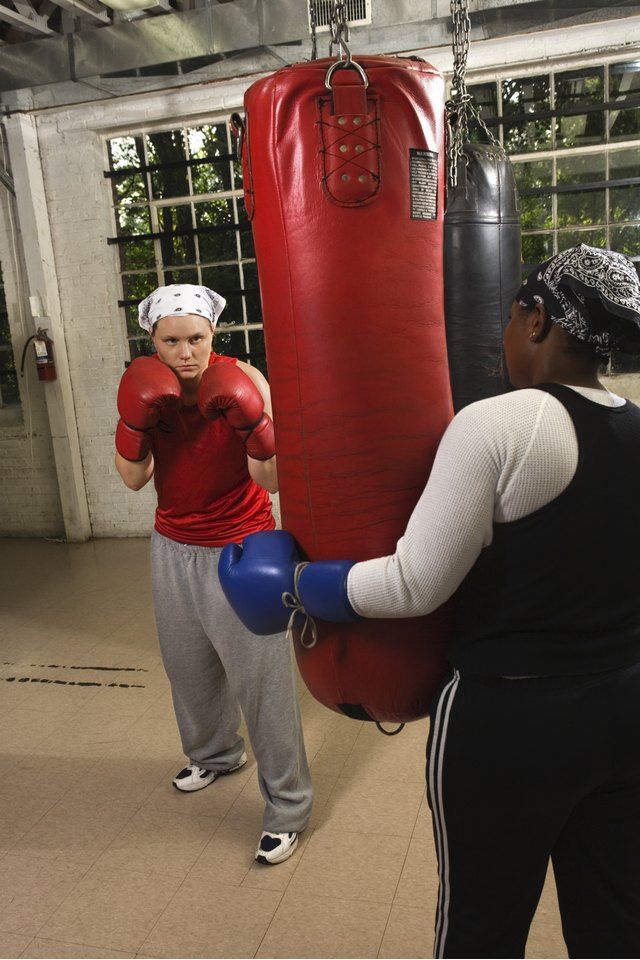
If you're pressed for space but still want to get a workout using a punching bag, you can rig up a quick, space-saving fix. If you already have a pull-up bar, this guide will turn your pull-up bar into a multi-exercise device. A punching bag is good for cardio, improving hand-eye coordination and reaction times. You don't need to be a boxer or have a large room to get the benefits of a punching bag.
Check to ensure the pull-up bar is firmly in place. Hang from the bar by your hands for a few seconds to test the bar stability.
Attach a carabiner clip to each of the metal hanging loops on the top of the punching bag.
Make a loop out of the one car strap and secure the loop around the pull-up bar, feeding the loose end of the strap through one of the carabiner clips. Tighten the strap buckle to secure the strap. Repeat these steps with the other strap and clip.
Adjust the strap buckles as needed to bring the punching bag higher or lower.
Readjust the punching bag after workouts as needed by lifting the bag gently and sliding the straps on the bar left or right to reposition.
Warnings
Be careful when the bag swings back towards you after punching it. Always consult a doctor before starting a new workout routine.
References
Warnings
- Be careful when the bag swings back towards you after punching it.
- Always consult a doctor before starting a new workout routine.
Writer Bio
Maxwell Payne has been a freelance writer since 2007. His work has appeared in various print and online publications. He holds a Bachelor of Science in integrated science, business and technology.