Black Raspberry Benefits
Black raspberries are native to North America 2. The fruit's pigment is used as a dye, and the fruit itself may have many health benefits, including the prevention of serious chronic diseases. Black raspberry supplements are available as capsules, powders, soft gels and extracts. Supplements are not regulated by the FDA, and health claims have not always been scientifically substantiated. Consult a physician prior to taking black raspberry supplements.
If you are experiencing serious medical symptoms, seek emergency treatment immediately.
Antioxidant Properties
Black raspberries have a high concentration of ellagic acid, a powerful antioxidant. Antioxidants destroy free radicals, which are oxygen molecules that damage cells and contribute to chronic conditions like cancer and heart disease. According to the American Cancer Society, the antioxidant properties of ellagic acid have been associated with death of cancer cells in lab tests 1. Ellagic acid is also in strawberries and pomegranates and is strongest in freeze-dried forms of the fruit and extracts. The ACS warns that ellagic acid may interact with certain prescription medications and should be used with caution by pregnant women.
- Black raspberries have a high concentration of ellagic acid, a powerful antioxidant.
- According to the American Cancer Society, the antioxidant properties of ellagic acid have been associated with death of cancer cells in lab tests 1.
Cancer Prevention
Nutritional Value of Black Raspberries
Learn More
In addition to its antioxidant properties, ellagic acid also appears to have cancer prevention characteristics 1. The ACS reports that studies have shown that ellagic acid may help prevent growth of breast cancer cells and help the liver remove cancer-causing substances from the blood 1. According to Ohio State University, black raspberries may have a role in preventing colon cancer. OSU researchers concluded in a 2009 article in Cancer Research Prevention that topical black raspberry extract may have applications for skin cancer prevention 3. The Berry Health Benefits Network says that studies at OSU have also shown an 80 percent reduction in esophageal cancer in mice that ate a diet that was 5 to 10 percent black raspberries 2. OSU is currently conducting human studies regarding the effects of black raspberries on colon and esophageal cancers.
Antitumor Effects
A tumor is a mass of extra cells and can be cancerous when the cells are abnormal and divide uncontrollably. According to the ACS, the ellagic acid in black raspberries may have antitumor properties, based on animal lab studies have found that ellagic acid inhibited tumor growth in the skin, esophagus and lung as well as growth of tumors caused by carcinogens. The ACS also notes that a recent study found that ellagic acid may work against tumors by preventing tumors from forming new blood vessels. The ACS notes that most studies of ellagic acid and tumors are animal studies and more human trials are needed to confirm any results.
- A tumor is a mass of extra cells and can be cancerous when the cells are abnormal and divide uncontrollably.
- The ACS also notes that a recent study found that ellagic acid may work against tumors by preventing tumors from forming new blood vessels.
Other Health Benefits
The Benefits of Black Walnut Extract
Learn More
Black raspberries are high in anthocyanins, the substance that gives them their deep purple color. According to the Berry Health Benefits Network, anthocyanins may have anti-inflammatory properties and protect the blood vessels 2. Research has linked anthocyanins to improved vision, heart health, a decreased risk of high blood pressure and improved memory in older adults. The ACS says ellagic acid may also reduce heart disease, birth defects and liver problems and improve wound healing.
- Black raspberries are high in anthocyanins, the substance that gives them their deep purple color.
- The ACS says ellagic acid may also reduce heart disease, birth defects and liver problems and improve wound healing.
Related Articles
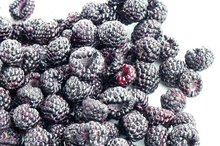
Nutritional Value of Black Raspberries
Learn More

The Benefits of Black Walnut Extract
Learn More
What Are the Benefits of XanGo Juice?
Learn More
Buckthorn Bark Health Benefits
Learn More
Black Walnut Extract Side Effects
Learn More

Benefits of Dried Jujube
Learn More

What are the Causes of Black Tarry Stools?
Learn More

What Are the Health Benefits of Blackberry Wine?
Learn More

Which Fruits Contain Tartaric Acid?
Learn More
Food Sources of Alpha-lipoic Acid
Learn More
References
- American Cancer Society: Ellagic Acid
- “Cancer Prevention Research”; Topical treatment with black raspberry extract reduces cutaneous UVB-induced carcinogenesis and inflammation; F.J. Duncun, et al.; July 2009.
- Raspberries, raw. FoodData Central. U.S. Department of Agriculture. Updated April 1, 2019.
- Managing Dietary Carbohydrates for Better Health. School of Medicine and Public Health University of Wisconsin - Madison.
- Burton-freeman BM, Sandhu AK, Edirisinghe I. Red raspberries and their bioactive polyphenols: Cardiometabolic and neuronal health links. Adv Nutr. 2016;7(1):44-65. doi:10.3945/an.115.009639
- Weiskirchen S, Weiskirchen R. Resveratrol: How much wine do you have to drink to stay healthy?. Adv Nutr. 2016;7(4):706-18. doi:10.3945/an.115.011627
- Washington Red Raspberries. North Carolina Cooperative Extension.
- Wang PW, Cheng YC, Hung YC, et al. Red raspberry extract protects the skin against UVB-induced damage with antioxidative and anti-inflammatory properties. Oxid Med Cell Longev. 2019;2019:9529676. doi:10.1155/2019/9529676
- Basu A, Schell J, Scofield RH. Dietary fruits and arthritis. Food Funct. 2018;9(1):70-77. doi:10.1039/c7fo01435j
- Possible Anaphylaxis to Blueberry: Cross-Reactivity With Other Berries. American Academy of Asthma, Allergy, & Immunology. Updated 2018.
- Home Fruit Gardens: Table 7.1. Recommended Raspberry Varieties for Pennsylvania. Penn State Extension. Updated 2016.
- Huyck L. Using, Storing and Preserving Raspberries. Michigan State University Extension. Updated 2012.
Resources
Writer Bio
Bethany Fong is a registered dietitian and chef from Honolulu. She has produced a variety of health education materials and worked in wellness industries such as clinical dietetics, food service management and public health.