
It's hard to distinguish the good nutrition advice from the bad, especially when there are so many conflicting arguments online —and sometimes, even experts have different opinions. But if you're looking to change your diet to eat better, live healthier and feel happier, you want to make sure you're taking the right steps toward achieving your goals.
This can be a challenge, as there are some diet myths out there that people are still buying into, thinking that they're proven formulas to expedite weight loss and promote clean eating. But these approaches can backfire — in fact, restrictive tendencies and bad eating patterns can lead to self-sabotage and stagnation.
Video of the Day
Video of the Day
To help you comb through all the clutter, we chatted with a few experts to figure out which pieces of nutrition advice should be rejected and what you should do instead. Here are the dieting mistakes you should avoid.
1. The More Fiber the Better
Fiber is super good for you, as it keeps you regular and helps you feel full, so you want to get enough of it in your diet through fiber-rich foods, like beans and legumes, leafy greens, whole grains and fresh fruit with the skin on. However, it's a myth that you should eat as much fiber as you can each day, as too much can backfire.
"'Eat more fiber' is common dietary advice because major studies show that the majority of people don't eat enough of this nutrient. And fiber is essential for gut, metabolic and cardiovascular health," says Sofia Norton, RD. However, too much of a good thing can lead to some side effects, which can make you super uncomfortable.
"Too much fiber causes bloating, gas, diarrhea, constipation and even bowel obstruction. Keep your intake to a maximum of 70 grams per day to avoid this," Norton says.
For the record, the Dietary Guidelines for Americans recommend women aim for 25 to 28 grams of fiber per day, and men try to get 28 to 33, depending on age.
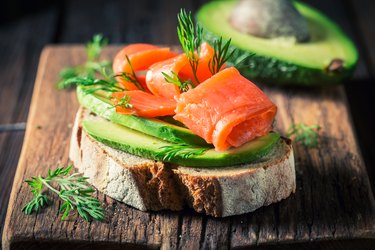
2. Eat Less Fat So You Don't Gain Fat
Fat is no longer the enemy. And while you might not need to hop on the keto diet (where fat makes up about 80 percent of your plate), it is beneficial to eat enough healthy fats, from unsaturated sources and omega 3s especially, as well as moderate amounts of saturated fat to actually lose weight and maintain healthy bodily function.
"For people on the standard American diet, reducing fat intake can help keep their calories in check, their cholesterol levels normal and their metabolic health top-notch," Norton says. "But going to extremes with low-fat eating can lead to overindulging on carbs and nutrient deficiencies according to some research." So, eat enough to feel satiated in the day and to keep your health in check.
Get a more in-depth look at how much fat you should actually be eating each day.
3. Cut Back on Carbs
Again, keto or low-carb dieting might be great for some people, but it's not a one-diet-fits-all sort of thing. That's why some experts want the "carbs are evil" myth to go out the window, as some carbs, when enjoyed in moderation, are packed with good nutrients to fuel you.
It comes down to what types of carbs you're eating and how much.
"You might want to think twice before giving all carbs a bad rap," says Bonnie Balk, RD, a dietitian for Maple Holistics. "Simple carbs (cookies, pastries, sodas, candy, etc.) are digested quickly and spike our blood sugar fast, making them a good group to avoid. But complex carbs (whole grains, starchy veggies, beans and peas) are loaded with fiber and nutrients and can aid in weight loss," she says. The bottom line: You can still live well by eating carbs!

4. Don't Eat Too Late at Night
You don't need to stop eating at 6 p.m. to lose weight or live healthfully. It comes down to total calories; and while you might have less opportunity to burn calories at night and when sleeping than earlier in the day, you can surely have a snack before bed without it leading to weight gain.
"It is a myth that all food turns to fat after a certain hour of the day. If you're (truly) hungry, you should eat," says Dana Angelo White, RD, a dietitian and nutrition consultant. "Now, it can't be a high-calorie, junk food free-for-all, but a sensible snack can help more than hurt," she says.
Healthy options include yogurt, cottage cheese, nut butter on toast or some avocado and whole-grain crackers.
5. If You Exercise, You Can Eat Whatever You Want
Hitting the weight room or taking strength-training classes helps build muscle and keep fat off, but you can't let your diet slide, as exercise alone can't make you healthy. And you don't necessarily even need to workout to lose weight or feel better, as long as your diet improves, too.
What you eat can protect your heart and help with weight management, or it can add excess calories and sugar to derail all your fitness gains.
"Diet quality always matters!" White says. "While you can certainly partake in the occasional splurge, you need to fuel your workouts with healthy foods. Stick to lean proteins, healthy fats and whole grains, and keep added sugars low."

6. Agave, Coconut Sugar and Maple Syrup Are Different Than Sugar
For some reason, these more natural sources of sugar get a better reputation than refined table sugar, as many bloggers use them for "healthy" makeovers of baked goods. We hate to break it you, but sugar is sugar. Your body does not care if it comes from honey or soda.
"To be fair, you may pick up a few extra vitamins or minerals from unrefined sugar sources, but calorie for calorie, your waistline views them all the same way," says Lauren Harris-Pincus, RDN, author of The Protein-Packed Breakfast Club. "Instead, focus on minimizing all added sugars."
The American Heart Association recommends keeping the total to 24 grams per day for women (6 teaspoons) and 36 grams per day (9 teaspoons) for men.
If you don't like artificial sweeteners, there are naturally derived options like stevia, erythritol, allulose and monk fruit, Harris-Pincus says, which don't spike blood sugar and are healthier for weight loss.
Read more: 10 Foods You Don't Realize Are Packed With Sugar
7. Skipping Breakfast Will 'Save' Calories
Some people hear about 16:8 intermittent fasting for weight loss — where you fast for 16 hours each day and eat your meals within the other eight-hour window — and think, "That basically just means skipping breakfast." But nixing the first meal of the day is not a magic formula for weight loss.
"While there is emerging evidence that time-restricted eating during an eight- to 12-hour window can have some health benefits, intermittent fasting does not seem to result in any more weight loss than a traditional calorie-restricted diet," says Harris-Pincus. "The studies that show the most benefit have the eating window shifted earlier in the day, so if you like this approach, make sure to include breakfast within about two hours of waking up and aim for an eating window from 9 a.m. to 5 p.m. or at the latest 10 a.m.to 6 p.m.," she says.
The body doesn't process and metabolize food as well in the evening as it does in the morning, since it slows down to prepare for sleep, so avoiding extra calories at night might be better than skipping them early in the morning if you are following a fasting plan.
Was this article helpful?
150 Characters Max
0/150
Thank you for sharing!
Thank you for your feedback!