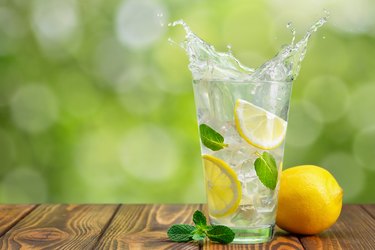
Do you start your day with a glass of lemon water? Many believe that a squeeze of lemon juice in the morning is a fix for countless health concerns. But is there any evidence that lemon is good for the bladder and kidneys? The answer may surprise you.
Drinking lots of water with fresh lemon or lemon concentrate can be good for your bladder and kidneys because it helps to reduce your risk of kidney stones and bladder infection.
Video of the Day
Video of the Day
In fact, according to the National Kidney Foundation (NKF), drinking more water is the single best thing you can do to prevent kidney stones. Water helps dilute your urine and prevents calcium and uric acid from building up and forming these stones. Putting lemon in your water provides an extra bonus because lemons have citric acid, and having more citric acid in your urine also helps prevent stones from forming.
Unlike many other foods and beverages that have a wellness aura without scientific fact, there is merit to adding lemons to your diet.
Even though lemon juice is acidic, when it's metabolized in your body, it raises the pH, or alkalizes urine. That's another reason lemon is good for your bladder and kidneys. Urine that's too acidic is more likely to produce kidney stones. The NKF advises drinking lemon juice concentrate mixed with water to help maintain a healthy pH and citrate level in your urine.
Because fresh lemon juice is also a good source of vitamin C, you're getting this important nutrient, too. The juice of one whole lemon has 18 milligrams of vitamin C, about 30 percent of the Daily Value, yet it has only about 10 calories, according to the USDA.
Getting adequate vitamin C may also help prevent, though not treat, bladder infections, per Johns Hopkins Medicine.
Your kidneys filter waste from your blood and store it as urine in your bladder. There's no need to cleanse your bladder per se, but it's important to drink enough water throughout the day for good bladder health, according to the National Institute on Aging. That helps flush out any bacteria, which can lead to a urinary tract infection, sometimes called a bladder infection — and that extra boost of vitamin C could be beneficial.
How Much Should You Drink?
Aim to drink 3 to 4 liters of water (1 gallon) each day to prevent kidney stones, says Chicago-based Melissa Prest, DCN, RDN, doctor of clinical nutrition with the National Kidney Foundation of Illinois and spokesperson for the Academy of Nutrition and Dietetics. Most people find lemon water more refreshing, so it helps them drink more, she says.
Prest prefers fresh lemon or lemon concentrate over powdered lemonade mixes, not only because they're free of added sugar, but also for the citric acid content. "Fresh lemon juice is highest in citrate at about 1.44 gram per ounce, and lemon juice concentrate has 1.10 gram of citrate per ounce," she says. "Lemonade, on the other hand, only has about 0.03 gram of citrate per ounce."
The NKF advises drinking a total of 4 ounces of lemon juice concentrate mixed with water each day to help prevent kidney stones.
Is Lemon Water Good for Bladder Inflammation?
For most healthy people, there's no evidence that lemon water irritates the bladder.
But some people with a condition called interstitial cystitis (IC) might experience bladder irritation from certain foods or beverages, including lemon juice, according to the Cleveland Clinic. IC causes chronic inflammation or swelling of the bladder walls. If you have IC, drinking lemon juice might indeed irritate your bladder and cause symptoms like pain in your lower abdomen or urinary frequency.
However, Prest says that there's no hard evidence that lemon juice or any other food actually increases symptoms of IC. She recommends working with a dietitian to identify trigger foods before completely eliminating lemons and other good-for-you-foods from your diet.
- USDA: “Lemon Juice, 100%, Freshly Squeezed”
- National Kidney Foundation: “Kidney Stone Diet and Prevention”
- Melissa Ann Prest, DCN, MS, RDN, CSR, LDN, doctor of clinical nutrition, National Kidney Foundation of Illinois; spokesperson, Academy of Nutrition and Dietetics, Chicago, Illinois
- F1000 Research: “Effect of Citrus-Based Products on Urine Profile: A Systematic Review and Meta-Analysis”
- National Institute on Aging: “13 Tips to Keep Your Bladder Healthy”
- Cleveland Clinic: “Bladder Irritating Foods”
- Johns Hopkins Medicine: “Urinary Tract Infections”
Is this an emergency? If you are experiencing serious medical symptoms, please see the National Library of Medicine’s list of signs you need emergency medical attention or call 911.