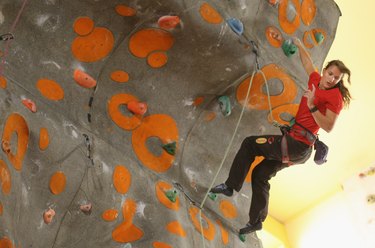
It's well known that regular physical activity leads to a longer life and a lower risk of many diseases, but if you find yourself bored by the typical gym workouts or jogging around the block, you may want to try a different approach to physical fitness. Rock climbing is an increasingly popular sport that provides a total-body workout without the monotony of pacing on a treadmill.
Physical Activity Guidelines
Video of the Day
Aerobic exercise is a major contributor to improved cardiovascular health, and nearly all adults should strive for at least 150 minutes of moderate-intensity or 75 minutes of vigorous aerobic exercise each week, according to the U.S. Department of Health & Human Services. Regular aerobic exercise burns calories, helping you keep your weight within a healthy range. It also reduces your risk of high blood pressure, Type 2 diabetes and heart disease.
Video of the Day
Climbing for Cardiovascular Health
Rock climbing increases your heart and respiratory rates, making it a good choice for a cardio workout. A 1997 study published in the "British Journal of Sports Medicine" found that the heart rate and energy expenditure levels of 14 experienced climbers while climbing on an indoor wall were similar to running at a moderate pace of between eight and 11 minutes per mile. A 2007 study published in the "Journal of Undergraduate Kinesiology Research" from the University of Wisconsin found that rock climbing met the American College of Sports Medicine's guidelines for heart rate and energy expenditure. This study included college-aged participants with limited climbing experience. Intensity levels from rock climbing depend on the type and difficulty of surface climbed and how quickly you climb. Both indoor and outdoor rock climbing provide a total-body aerobic workout for most participants, particularly if rest periods are limited between climbing bursts.
Other Benefits of Scaling Boulders
A 155-pound individual burns an average of 298 calories for every 30 minutes of rappelling while climbing, putting it on par with running 5 mph or playing hockey, according to Harvard Medical School. Aiming for at least 10,000 steps per day is a worthy fitness goal for most adults to improve cardiovascular health and lose or maintain weight. Purdue University estimates that rock climbing equates to 244 steps per minute, putting it slightly above the 222 steps per minute estimated by running a 10-minute mile. In addition to the calorie-burning power of climbing, rock climbing provides an effective strength-training workout. Climbing engages most major muscles in the body, helping improve strength and endurance.
Cautious Climbing
If you're new to rock climbing, it's important to take lessons or attend a climbing course by an experienced instructor to learn proper safety precautions and basic climbing techniques. Talk to your doctor about any health concerns before beginning any new exercise and listen to your body. Most beginners need a day or two break between climbing sessions to allow their muscles to recover. Skip rock climbing if you're pregnant. Even experienced climbers can slip, so choose a cardio workout with minimal chance for injury if you're expecting.
- U.S. Department of Health & Human Services: Physical Activity Guidelines for Americans
- Alive: Rock Climbing
- British Journal of Sports Medicine: Energy Expenditure and Physiological Responses During Indoor Rock Climbing
- Journal of Undergradate Kinesiology Research: Physiological Responses and Health Benefits of Indoor Rock Climbing in College-Aged Individuals
- Harvard Health Publications: Calories Burned in 30 Minutes for People of Three Different Weights
- Sports Medicine: How Many Steps/Day Are Enough? Preliminary Pedometer Indices for Public Health
- Purdue University: Convert Activity Into Steps