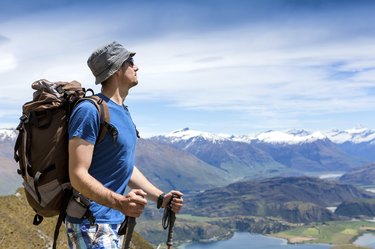
Hiking and running are both excellent forms of exercise. Each provides cardiovascular and pulmonary benefits, and works major muscle groups so that you improve your stamina, endurance, strength and muscle tone. You use many of the same muscles for each activity, but at different intensities. A strong core is crucial for both.
Quadriceps
Video of the Day
Quadriceps -- the muscles at the fronts of the thighs -- are the primary muscles used for both hiking and running. The quads are large muscles, organized in discrete portions that stay interconnected throughout the tops of the legs. Hiking and running engage all portions of the quadricep muscles to propel the body forward during steps or strides. The quads extend (straighten) the knee in both activities.
Video of the Day
Hamstrings
The hamstrings work in conjunction with the quadriceps, and flex (bend) the knee. The hamstrings pull the quadriceps back as you shift your weight during hiking and running. Hikers are more likely to rely on the hamstrings than runners. Running involves a jumping motion that is less strenuous to the hamstrings than the planted, or on-the-ground, extension of the hamstrings during hiking.
Calves
The muscles of the calves are instrumental to both activities. When hiking, the calves may undergo changing levels of use. If you're hiking on flat terrain, the natural flexion and extension of walking is less strenuous than if you're carrying a heavy pack uphill. Even without a pack, hiking uphill works your calves harder than walking on flat land. Certified strength and conditioning specialist Courtenay Schurman recommends performing calf stretches regularly before, during and after hiking to avoid injury. When running, the calves are secondary to the thighs and assist in flexing the ankle and knee for proper landing, which aids in shock absorption. As with hiking, running uphill will work your calves harder than running on flat land.
Glutes
The glutes are the three muscles of the backside. They extend into the hips and are used to support your trunk during both activities. When you run, the glutes keep you erect in conjunction with the hip flexors. During hiking, they may have to do more work because they help support your body weight plus the weight of your pack. Walking or running uphill works your glutes more than moving on flat ground.
Other Hip Muscles
Keeping the hips limber and flexible is important for avoiding injury when performing either activity. These muscles, which include hip flexors, abductors and adductors, support hip flexion while hiking and running. When you hike, they support the glutes and lower back to avoid strain and absorb shock. When you run, they perform the same functions; however, they require more suppleness and strength because the impact of running on your joints is much greater than when hiking.
Abs
The abdominal muscles are used for core strength to support both activities. When you run, they work with the glutes to keep you upright. When you hike, they still assist with posture, and may work additionally to carry your pack if you have one. Strong abdominal muscles will help you avoid back injury during running and hiking.