
More than 31 million people in the U.S. live with some type of eczema, according to the National Eczema Foundation. Otherwise known as atopic dermatitis, eczema affects all ages and races.
There is no cure for eczema, so treatment focuses on managing the symptoms of the disorder, which include inflammation, itchiness and cracking of the skin.
Video of the Day
Video of the Day
Along with working with your doctor to manage your condition, here are 13 natural remedies for eczema that may help soothe your skin and ease symptoms. Plus, keep scrolling for five supposed home remedies for eczema that you should probably avoid.
1. Apply Moisturizers With Glycerin
People with eczema are missing key agents in their skin's barrier that keep it intact and well-moisturized, which means that treating and preventing eczema flare-ups starts with replacing moisture in the skin.
"Moisturizers are the cornerstone in treatment for eczema," Rachel Laarman, MD, a pediatric dermatologist with Helen DeVos Children's Hospital, tells LIVESTRONG.com.
Dr. Laarman explains that even with mild cases of eczema, using a thick moisturizer — in the form of a cream, ointment or oil — will help hydrate the skin and improve the skin barrier, which is key in both providing immediate relief and preventing future outbreaks.
According to a June 2020 review in the American Journal of Clinical Dermatology, moisturizer should be applied twice a day for the best results. The paper notes that twice-daily moisturizing improves the skin barrier, reduces the number of eczema flare-ups and increases the amount of time between flare-ups.
As far as the best eczema treatment cream, a 2017 review in the Cochrane Database of Systematic Reviews found some evidence for moisturizers that contain glycerol (sometimes called glycerin), but the strongest evidence was to use the moisturizer alongside any medications your doctor prescribes.
Moisturizing Creams With Glycerin to Try
- CeraVe Moisturizing Cream ($16.08; Amazon)
- Curel Hydra Therapy Wet Skin Moisturizer ($10.49; Amazon)
- Cetaphil Rich Hydrating Cream for Face ($15.94; Amazon)
- Belei by Amazon Daily Hydrating Duo for Face ($46.83; Amazon)
2. Keep Showers Short
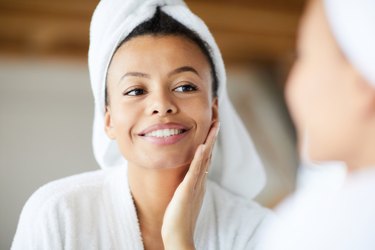
A smart bathing strategy can help prevent skin from drying out, and when used with moisturizer, it can help "lock in" H2O where it's lacking.
Dr. Laarman recommends bathing daily — either a bath or shower — with lukewarm (not hot) water, for only 5 to 10 minutes maximum. Also, minimize soap use — she suggests using soap only on the face, underarms and groin area.
"I do not recommend using soap all over the skin, as this can strip the skin and increase dryness," she says.
Lastly, when getting out of the shower or bath, lightly pat your skin dry and apply any medicated moisturizer your doctor has prescribed to problem areas, then rub regular moisturizer all over. The National Eczema Association calls this technique the "soak and seal," because it can help seal in the moisture your skin needs.
Tip
Dr. Laarman suggests sticking to dye-free, fragrance-free soap and moisturizer whenever possible, as added fragrances can irritate the skin and make eczema worse.
3. Add Coconut Oil
Coconut oil may be helpful for some people with mild eczema on the hands, feet or other parts of the body because it has antibacterial properties, Dr. Laarman says. Coconut oil can help kill stapholycoccal aureus, she says, which is a bacteria commonly found on the skin that can increase inflammation and cause skin infections in people with atopic dermatitis.
A January 2014 study in the International Journal of Dermatology found that applying virgin coconut oil daily to the skin helped with the symptoms of mild eczema more than mineral oil.
4. Apply Sunflower Oil
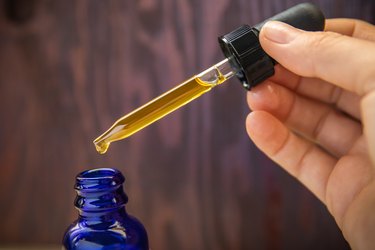
Sunflower oils have been shown to reduce some eczema symptoms, especially itch, when used on the skin.
A July 2015 review in Evidence-Based Complementary and Alternative Medicine states that sunflower seed oil has anti-inflammatory and barrier-restoring effects on the skin, and it can improve skin hydration.
And a January 2019 study in the International Journal of Pharmacy and Pharmaceutical Sciences found that using 20 percent sunflower seed oil on children's skin helped increase their skin's moisture levels and decreased the symptoms of eczema.
However, this was a very small study (only 20 children were included), and the sunflower oil didn't work better than a common moisturizing cream used as the control. So the researchers note that the oil can be used as an alternative treatment for mild eczema, but it's not necessarily better than other moisturizers.
Tip
While coconut and sunflower oils can be helpful for mild eczema, Dr. Laarman notes that from a practical standpoint, oils can rub off a little easier than ointments, so they may need to be reapplied more often to be effective.
5. Try Creams With Colloidal Oatmeal
According to a March 2020 double-blind study in Clinical, Cosmetic and Investigational Dermatology, 1 percent colloidal oatmeal cream protects the skin barrier, moisturizes and has anti-inflammatory and soothing properties, all of which can help ease eczema symptoms.
Also, as a January 2021 study in the same journal explains, colloidal oatmeal acts as a skin prebiotic, meaning it helps encourage beneficial bacteria and microbiome diversity on the skin, which can be helpful in reducing inflammation for skin conditions like eczema.
However, Dr. Laarman notes that some people are sensitive to colloidal oatmeal, so it should only be used if it helps improve your symptoms and stopped if you notice that it makes them worse.
Some doctors also caution against using colloidal oatmeal in babies and small children who don't eat oats because of the theoretical risk of developing an oat allergy. This is based on an older paper in Allergy, from November 2007, and while there isn't much other research to support the link, many doctors err on the side of caution and suggest other eczema treatments for young children.
Colloidal Oatmeal Products to Try
- Gold Bond Ultimate Eczema Relief ($9.34, Amazon)
- Aveeno Eczema Therapy Itch Relief Balm ($16.44, Amazon)
- CeraVe Eczema Relief Creamy Oil ($17.99, Amazon)
6. Keep Stress Under Control

There is a strong link between stress and eczema, according to the National Eczema Foundation.
Stress causes a physical inflammatory response in the body, revving up the urge to itch, which then further irritates the skin and breaks it down. This causes eczema to get worse, making it a vicious cycle, according to a January 2012 paper in Acta Dermato-Venereologica. (This itch-scratch cycle was later confirmed in an April 2019 review in Dermatology Practical & Conceptual.)
That's why managing stress can be extremely helpful in controlling eczema symptoms. There are many different kinds of stress management techniques that can be used, depending on the severity of the eczema and if the person is a child or adult.
One July 2019 trial in Cognitive Behavioral Therapy found that adults with eczema who went through 10 weekly sessions of cognitive behavioral treatment saw significant improvements in symptoms like itching and inflammation as well as their general anxiety levels.
Other techniques that can help manage stress include the following, says Dr. Laarman:
- Seeing a therapist when you have significant stressors around skincare or major life changes
- Meditation
- Prayer
- Mindfulness
- Regular exercise
Related Reading
7. Get Better Sleep
Along with stress, poor sleep can contribute to eczema symptoms.
Eczema flares and sleep work as a "two-way stress" because eczema can interrupt sleep (for both the person with symptoms, as well as caregivers), and interrupted sleep and the resulting stress can make eczema worse, per an August 2018 paper in the Journal of Allergy and Clinical Immunology. Sleep disturbances are also linked to other mental health disorders, such as anxiety and depression.
So, improving your quality of sleep is key when you have eczema. In the paper above, the authors suggest these specific strategies:
- Stick to a bedtime routine that includes applying moisturizer
- Avoid screen time two hours before sleeping
- Keep a dark sleeping environment
- Practice mindfulness meditation and progressive muscle relaxation therapy
- Control dust mites in the sleeping area (use protective pillow and mattress cases, run an air purifier with a HEPA filter and wash sheets in hot water once a week)
- See a sleep medicine specialist as needed
8. Apply Cold Packs
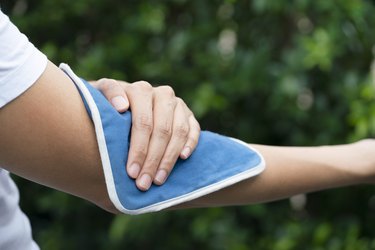
As a super-simple home remedy for eczema, Dr. Laarman says using a cold pack directly on the skin can help temporarily relieve some of the itchiness.
Try These Products
- Chattanooga ColPac Reusable Gel Ice Pack ($21.02, Amazon)
- TheraPearl Reusable Hot and Cold Therapy Pack With Gel Beads ($7.57, Amazon)
9. Take a Diluted Bleach Bath
Although it might sound intimidating, diluted bleach baths — bathing in bleach, in other words — can actually help improve the symptoms of eczema, according to the Mayo Clinic.
To draw a bleach bath, mix 1/4 cup of unscented household bleach with a full tub of warm water and soak either your whole body (from the neck down) or just the affected areas for about 10 minutes. When you get out, gently pat your skin dry with a towel and apply moisturizer.
The Mayo Clinic notes that you shouldn't take a bleach bath more than three times a week, and that this approach is most effective when it's combined with other treatments for eczema. It should also be used only for more severe cases of eczema, and you should talk to your doctor before trying it.
10. Bathe With Baking Soda
Baking soda can help soothe itching caused by eczema, according to the National Eczema Association.
To take a baking soda bath, add 1/4 cup of the ingredient to a warm bath. You can also mix it with just enough warm water to form a paste, and apply that to your skin to help stop your urge to scratch.
This treatment isn't right for everyone, though, especially if you have any open wounds. Talk to your doctor before trying this treatment.
11. Add Apple Cider Vinegar (With Caution)

Apple cider vinegar has long been used as a home remedy for eczema, but ACV can't "heal" eczema — and whether it's truly effective at easing symptoms is up for debate.
There is some evidence that apple cider vinegar can help balance the skin's pH levels, according to Flushing Hospital Medical Center. And that matters because people with eczema usually have a higher skin pH level, according to a May 2015 article in the Journal of Clinical Medicine.
But one September 2019 study in Pediatric Dermatology actually found that not only was there no significant difference in symptoms after taking an apple cider vinegar bath in children with eczema, but that it actually caused more skin irritation for many of the children.
However, that was a very small study with only 22 participants, and many doctors, including Dr. Laarman, still recommend apple cider vinegar baths to help manage eczema.
If your doctor recommends you try an ACV bath, Dr. Laarman suggests mixing 1 cup apple cider vinegar into a full tub and soaking in it for five minutes a few times per week.
Tip
Try exposing just a small patch of skin to apple cider vinegar before treating larger areas, per the National Eczema Association, to see if it helps or irritates your skin.
12. Try Wet Wraps
Although they can be challenging to use, Dr. Laarman recommends wet wraps in her practice.
A June 2014 study in the Journal of the American Academy of Dermatology found that wet wraps were an effective option for children with severe eczema, at least in the short term. The study was a randomized, double-blind, placebo-controlled trial done over four weeks, and the children involved had improved symptoms during that time.
In wet wrap therapy, a thick layer of medicated moisturizer or ointment is placed on the skin, then covered by damp, tight-fitting clothing and finally, a layer of dry clothing. This is all worn for a minimum of one to two hours or overnight.
This method improves skin hydration, helps medication better penetrate the skin and makes it so the wearer physically can't scratch their skin — all of which can help ease severe eczema symptoms, according to Rady Children's Hospital San Diego.
13. Consider Acupressure
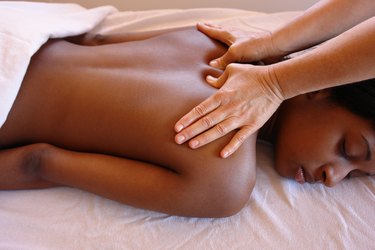
Acupressure is an alternative medicine technique that applies manual pressure to specific points on the body — much like acupuncture, but without the needles. Acupressure may help with the itchiness and lichenification (when the skin becomes thick and leathery) associated with eczema, according to a March 2012 pilot trial in Acupuncture in Medicine. However, larger studies are needed to confirm this.
"I think at best we can say that acupressure may help some people with itching/scratching control, which can help reduce the severity of an eczema flare," Dr. Laarman says.
What About Probiotics?
While your diet may affect your eczema symptoms (foods that trigger eczema flares are different from person to person), probiotic foods and supplements don't seem to help the condition.
A November 2018 review of 39 randomized controlled trials in the Cochrane Database of Systematic Reviews concluded that probiotics make little or no difference in improving eczema symptoms or severity.
What About Manuka Honey?
Manuka honey has antibacterial properties, which is why some people believe it can be used as a home remedy for eczema. But there hasn't been enough research yet to know for sure that honey can help with the itching, redness or inflammation of eczema.
One small study, published June 2017 in Immunity, Inflammation and Disease, had 14 adults with eczema apply manuka honey to their affected skin overnight for seven consecutive days and found that their symptoms improved. The authors noted, though, that the results need to be confirmed by randomized and controlled clinical trials.
What About Flaxseed Oil?
Flaxseed oil is rich in omega-3 fatty acids, which may help tamp down inflammation — that's why some people take it to treat inflammatory diseases like eczema, according to the Mayo Clinic.
However, there's not enough research to support flaxseed oil as a treatment for eczema. One animal study, published January 2017 in Evidence-Based Alternative and Complementary Medicine, found that mice with eczema-like skin lesions who took flaxseed oil for three weeks had decreased redness, swelling and itching. But this is just one small study, and we can't necessarily say the same would happen in humans.
What About Olive Oil?
There are many benefits to including olive oil in your diet, but it shouldn't be used on the skin as a remedy for eczema.
Olive oil contains oleic acids, which can disrupt the skin's natural barrier, according to the National Eczema Association. For this reason, steer clear of moisturizers with olive oil as an ingredient.
What About Vitamins and Supplements?
Overall, the European Academy of Dermatology and Venereology notes that there is some preliminary evidence that taking vitamins may be useful in treating eczema. However, the data is limited, and Dr. Laarman says she personally does not recommend vitamin supplementation for eczema treatment if someone doesn't have a diagnosed vitamin deficiency.
Vitamin C
Research connecting vitamin C and eczema is lacking, but one July 2017 study in Nutrients found that people with skin inflammation had lower levels of vitamin C in their bodies than those without skin inflammation. According to the study, this means there is potential benefit to vitamin C beyond the pathological setting.
A more recent systematic review, however, published June 2019 in The Journal of Alternative and Complementary Medicine, found only a weak association between vitamin C and eczema.
Foods high in vitamin C include:
- Red and green bell peppers
- Kiwis
- Broccoli
- Brussels Sprouts
- Strawberries
- Oranges
Vitamin E
A November 2015 study of 42 people with mild to moderate eczema that was published in the Journal of Research in Medical Sciences found that vitamin E helps to keep the skin moisturized and also eases the itching sensation that comes with eczema. That makes vitamin E a common ingredient in many topical supplements and moisturizers made for eczema that can be applied directly on the skin.
If you decide to supplement, the National Institute of Health recommends 15 milligrams of vitamin E per day for adults. You can also increase vitamin E through your diet by eating:
- Sunflower seeds
- Almonds
- Peanuts and peanut butter
- Boiled broccoli and spinach
Vitamin B12
If you're looking to use vitamin B12 as a natural remedy for eczema, Dr. Laarman recommends you stick to using it as a topical emollient and not taking an oral supplement.
Oral supplementation of B12 for eczema has not been studied well, she explains, so she doesn't recommend it in her practice. Putting vitamin B12 on the skin, on the other hand, has shown more promise for reducing redness and itching, as well as the overall severity of eczema symptoms.
For example, a 2018 study in the Journal of the European Academy of Dermatology and Venereology found that a topical preparation containing 0.07 percent vitamin B12 in avocado oil had some mild benefit for improving eczema symptoms, although the evidence wasn't strong enough to recommend it for routine use just yet.
Gamma Linoleic Acid
Gamma linoleic acid, also known as GLA, is an essential fatty acid. It can be found naturally in many plant oils, and also in supplements including blackcurrant seed oil, evening primrose oil and borage oil. It is possible to buy it as a standalone supplement too.
A January 2014 study of 21 people with the condition, published in Advances in Therapy, suggests GLA might be useful in relieving the symptoms of eczema.
In fact, some experts believe the cause of eczema might have something to do with the body incorrectly metabolizing essential fatty acids, per an April 2013 paper in Advances in Dermatology and Allergology. Gamma linoleic acid supports the metabolism process, so it may reduce the occurrence of eczema.
To be sure, more research needs to be done on GLA before it can be considered a bona fide eczema treatment. For now, talk to your doctor before you consider using GLA supplements.
Fish Oil
According to a July 2016 study in Dermatology Practical and Conceptual, a daily supplement of fish oil has shown "encouraging" results in the treatment of eczema. There is a fatty molecule, known as leukotriene B4, which is found in high levels in people with eczema. The occurrence of eczema might have something to do with the way the body metabolizes essential fatty acids, and fish oil inhibits that fatty molecule.
Still, this one study is by no means conclusive. You should talk to your doctor before using fish oil for eczema.
- National Eczema Foundation: "Eczema Stats"
- American Journal of Clinical Dermatology: “Efficacy of Nonprescription Moisturizers for Atopic Dermatitis: An Updated Review of Clinical Evidence”
- Cochrane Database of Systematic Reviews: "Emollients and Moisturisers for Eczema"
- National Eczema Foundation: "Bathing and Eczema"
- American College of Allergy, Asthma and Immunology: "Eczema (Atopic Dermatitis)"
- International Journal of Dermatology: “The effect of topical virgin coconut oil on SCORAD index, transepidermal water loss, and skin capacitance in mild to moderate pediatric atopic dermatitis: a randomized, double-blind, clinical trial”
- International Journal of Pharmacy and Pharmaceutical Sciences: “The Beneficial Effect of 20% Sunflower Seed Oil Cream on Mild Atopic Dermatitis in Children”
- European Academy of Dermatology and Venereology: “Consensus‐based European Guidelines for Treatment of Atopic Eczema (atopic dermatitis) in Adults and Children: Part II”
- Clinical, Cosmetic and Investigational Dermatology: “The Efficacy of Colloidal Oatmeal Cream 1% as Add-on Therapy in the Management of Chronic Irritant Hand Eczema: A Double-Blind Study”
- Clinical, Cosmetic and Investigational Dermatology: “Prebiotic Colloidal Oat Supports the Growth of Cutaneous Commensal Bacteria Including S. epidermidis and Enhances the Production of Lactic Acid”
- Acta Dermato-Venereologica: “Psychoneuroimmunology of Psychological Stress and Atopic Dermatitis: Pathophysiologic and Therapeutic Updates”
- Cognitive Behavioral Therapy: “Exposure-Based Cognitive Behavior Therapy for Atopic Dermatitis: An Open Trial”
- Journal of Allergy and Clinical Immunology: “Sleep disorders and atomic dermatitis: A 2-way street?”
- Acupuncture in Medicine: “Effectiveness of acupressure on pruritus and lichenification associated with atopic dermatitis: a pilot trial”
- Pediatric Dermatology: “Apple Cider Vinegar Soaks [0.5%] as a Treatment for Atopic Dermatitis Do Not Improve Skin Barrier Integrity”
- Mayo Clinic: "Eczema bleach bath: Can it improve my symptoms?"
- National Institute of Health: "Vitamin E"
- Journal of Research in Medical Sciences: The Official Journal of Isfahan University of Medical Sciences: Effects of Oral Vitamin E on Treatment of Atopic Dermatitis: A Randomized Controlled Trial”
- Dermatology Practical and Conceptual: “Diet and Eczema: a Review of Dietary Supplements for the Treatment of Atopic Dermatitis”
- Cochrane Database of Systematic Reviews: "Probiotics for Treating Eczema"
- Advances in Therapy: "Gamma-Linolenic Acid Levels Correlate with Clinical Efficacy of Evening Primrose Oil in Patients with Atopic Dermatitis"
- Evidence-Based Complementary and Alternative Medicine: "Alternative, Complementary, and Forgotten Remedies for Atopic Dermatitis"
- Flushing Hospital Medical Center: "Home Remedy: Apple Cider Vinegar for Eczema"
- Journal of Clinical Medicine: "The Importance of Acidification in Atopic Eczema: An Underexplored Avenue for Treatment"
- National Eczema Association: "Get the Facts: Apple Cider Vinegar"
- Immunity, Inflammation and Disease: "Honey is potentially effective in the treatment of atopic dermatitis: Clinical and mechanistic studies"
- Evidence-Based Alternative and Complementary Medicine: "Therapeutic Effects of Fermented Flax Seed Oil on NC/Nga Mice with Atopic Dermatitis-Like Skin Lesions"
- National Eczema Foundation: "Alternative eczema treatments from natural oils to elimination diets"
- Allergy: "Oat sensitization in children with atopic dermatitis: prevalence, risks and associated factors"
- Dermatology Practical & Conceptual: "The Itch-Scratch Cycle: A Review of the Mechanisms"
- Rady Children's Hospital San Diego: "Wet Wraps"
- The Journal of Alternative and Complementary Medicine: "Micronutrients in Atopic Dermatitis: A Systematic Review"
- Advances in Dermatology and Allergology: "Supplementation with long chain polyunsaturated fatty acids in treatment of atopic dermatitis in children"
- Nutrients: "The Roles of Vitamin C in Skin Health"
Is this an emergency? If you are experiencing serious medical symptoms, please see the National Library of Medicine’s list of signs you need emergency medical attention or call 911.