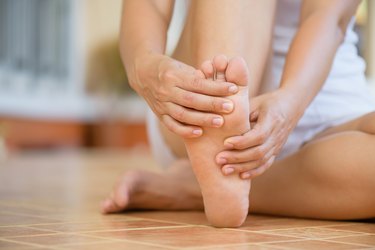
Foot cramps after exercise can be a debilitating experience, particularly if you are engaged in exercises that require you be on your feet the whole time. You might be tempted to stop exercising, but in many cases, the cramps can be prevented by taking precautionary measures. However, if your foot cramps don't go away despite taking preventive steps, consult a doctor to rule out an underlying medical problem.
Tip
Your feet can cramp during or after exercise due to a number of reasons that include lack of proper hydration, poorly fitted shoes and muscle fatigue.
Video of the Day
Mild to Severe Cramps
Cramping in the foot is caused by an involuntary, forceful contraction of the muscle that doesn't subside. Mild cramps last only a few seconds, while more severe cramps can last for several minutes or more. Severe cramps can be painful, and your muscles may get knotted and form a lump under the skin. Anyone can get a foot cramp, but they are relatively common among novice athletes and more experienced athletes who are on their feet a lot.
Video of the Day
Read more: 5 Things You Need to Know About Foot Cramps
Foot Cramps After Exercise
The reason cramps occur is unknown, according to the American Academy of Orthopaedic Surgeons, but several causes have been identified as likely suspects. Commonly cited conditions that lead to cramps include muscle fatigue, lack of proper stretching, dehydration and electrolyte imbalances. Less commonly, medications or an underlying medical disorder are the culprit.
Exercising in a hot environment can lead to excessive sweating, which further contributes to dehydration. If you aren't getting enough electrolytes in your diet, particularly sodium, potassium and magnesium, that can also contribute to getting foot cramps. Shoes that don't offer support for your arches or don't fit right can contribute to the problem as well.
Treating Cramping Feet
If you get a cramp while exercising, stop what you are doing and rest. Remove your shoes, if you are wearing any, and stretch and massage your feet until the cramps go away. Drinking water or a sports drink enhanced with electrolytes can also help. Potassium deficiency is a common problem that leads to cramping, and eating a banana, which contains high amounts of the electrolyte, can help remedy that. If you have foot cramps after exercise, apply heat if the muscles are tight and cold if your muscles are sore or tender.
Read more: Can Low Potassium Cause Foot Cramps?
Preventive Measures for Cramps
To avoid foot cramps, start drinking water the day before vigorous exercise. Drink 1 to 3 cups right before you exercise and stay hydrated during exercise by taking small sips of water. Avoid fully hydrating until you are finished exercising. Eat a diet that contains fruits and vegetables high in mineral content and take a multivitamin to ensure proper electrolyte supply, if approved by your doctor. Warm up before exercising and gently stretch your feet.
According to Runner's World, massaging your cramped foot can help loosen the tight muscles. Massage between the tendons on top of your foot and then move to the arch and whole bottom of the foot. Stretching the muscles of your leg, particularly your calf muscles, can also help. If your feet are sore or you are fatigued, rest and avoid exercising again until you are fully restored and the pain has dissipated.
Purchase new shoes if yours are old and worn out. Placing insoles or other supports in your shoes can offer support for your arches, decreasing fatigue. If you continue to experience foot cramps while exercising, despite taking measures to prevent them, consult a doctor. Discuss any medications you are taking to ensure that cramping is not a side effect.
Is this an emergency? If you are experiencing serious medical symptoms, please see the National Library of Medicine’s list of signs you need emergency medical attention or call 911.