Some bodybuilders are so exact with their diets that they carry around scales to measure their food. That's how important nutrition is for bodybuilding. Planning out your meals in advance with the help of a calorie counter takes some of the guesswork out of eating, which is important if you're following a restrictive diet like the low-carbohydrate ketogenic diet.
Start With Calories and Macronutrients
Video of the Day
Carbohydrates, protein and fat are the three macronutrients in your food. Low-carbohydrate diets help you lose weight and preserve muscle mass, because they're generally high in protein. It's important to retain muscle mass as a bodybuilder — you need as much as possible on stage. As you lose weight before the show, you're more likely to lose muscle mass, but eating enough protein can prevent that. Use a calorie tracker, like MyPlate, to help you keep to your carb, protein and fat goals.
Video of the Day
Bodybuilding and Low-Carb Diets
Low-carbohydrate diets help you lose weight by limiting your food choices to mostly those high in fat and protein, thereby decreasing your calorie intake. Additionally, fat and protein take longer for your body to digest than carbohydrates, which may help you feel full longer so you eat less.
In 2016, a study published by James Madison University followed CrossFit athletes who ate low-carbohydrate diets for six weeks. CrossFit training combines weightlifting with endurance activities, making it somewhat similar to bodybuilding training. The researchers found that athletes who ate a low-carbohydrate diet lost more weight than those who ate a normal amount of carbs, and without affecting their athletic performance.
Higher Protein Intake
Eating a low-carbohydrate diet works as you approach your competition because you need to burn fat by dropping calories. You can't afford to take calories away from your protein intake, because protein helps you preserve muscle. Most protein-rich foods, especially those from animal sources, are rich in fat. That means you'll have a hard time cutting fat out of your diet as well.
That leaves carbohydrates as the best macronutrient to limit. The question is: How much should you leave in? If you feel unusually tired throughout the day and during workouts, you should probably raise your carbohydrate intake.
Read more: Diet Plan for Beginner Bodybuilders
What Makes a Diet Low-Carb
A nutrition review for bodybuilders published in the Journal of the International Society of Sports Nutrition recommends eating 4 to 7 grams per kilogram of body weight in carbohydrates per day. If you weigh 200 pounds, that's 367 to 636 grams of carbs per day.
Eating less than that could be considered a low-carbohydrate diet, but there's no concrete definition of low-carb. As long as you don't feel sluggish, you can keep cutting back on carbs. There's no reason why you can't use a low-carb meal plan when bodybuilding.
Many popular low-carb weight-loss diets limit daily carb intake to about 20 go 60 grams a day. Reducing your carb intake too low as a body builder may force your body to burn your muscle for fuel, so it's essential to find the right balance when going low-carb to lean out and retain muscle.
Calories Per Day
The first step to making a meal plan is figuring out how many calories per day to consume. You can worry about macronutrients later. According to an article from the Journal of the International Society of Sports Nutrition, you should aim to lose O.05 to 1 percent of body weight every week.
For example, if you weigh 200 pounds, you should aim to lose 2 pounds in the first week, and then recalculate every week until competition. If you lose weight more rapidly, you risk losing muscle mass.
To figure out how many calories you should be subtracting, enter your information into MyPlate. You can choose 0.5, 1, 1.5 or 2 pounds of weight loss per week. Select the number that most closely matches your goal for the week, and remember to take things slow.
Macronutrient Breakdown
Once you figure out your calories per day, you can set your macronutrient intake. A low-carb diet should include less than 30 percent of total calories from carbs, according to Current Diabetes Reports. There are 4 calories per gram of protein, so if you're eating 2,000 calories per day, you shouldn't have more than 150 grams of carbohydrates.
It's typical for bodybuilders to obsess over their protein intake, since protein helps build muscle. Eating 1.6 to 2.2 grams of protein per kilogram of body weight is recommended if you're trying to build muscle, according to a 2018 research review published in Nutrients. Clearly, protein is important.
You can eat up to 3.5 grams per kilogram of body weight safely over a short period of time, according to a 2016 study published in Food and Function. For a 200-pound person, that's 318 grams of protein per day. The researchers found that eating over 2 grams per kilogram of body weight for years led to digestive stress, so be careful.
Read more: High Protein Diet Meal Plan for Bodybuilding
The same study says that you shouldn't eat more than 2 grams of protein per kilogram of body weight per day in the long term, but a high-protein diet is fine as you approach your competition. For a 200-pound person, that's 181 grams of protein. That comes out to 727 calories per day. You can eat the remaining amount of calories in your diet by consuming fat.
Low-Carb Bodybuilding Foods
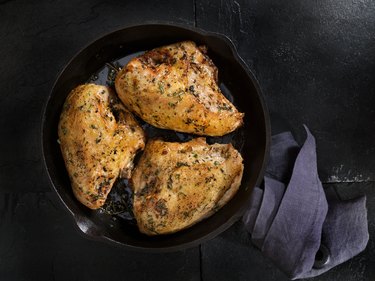
Meat lovers will thrive on a low-carb diet, because they can eat plenty of beef, chicken, pork and seafood. Meat tends to be high in protein and fat and contains almost no carbs.
Fruit and vegetables are an important part of your diet, because they contain essential vitamins and minerals. They also have fiber, which helps your digestive system. Fruits tend to contain more carbohydrates by weight than vegetables, but there are some low-carb fruits. There's typically more fiber in vegetables, which your body can't fully digest.
Sources of Carbohydrates
Other than meat, you can include carbohydrate sources like oatmeal and sweet potatoes to round out your diet. The biggest problem with a diet heavy in meat and vegetables is stomach discomfort. The fiber in veggies and the protein and fat in meat are tough to digest.
It's important to drink water throughout the day to aid digestion, and eat some simple sources of carbohydrates like mashed potatoes to supplement your diet. Vegetables like avocados, oils like olive oil and nuts like almonds are rich in fat and nutrients if you need extra calories to hit your goal for the day.
Track Everything You Eat
Use a food tracking app like MyPlate to monitor the amount of carbohydrates, fat and protein you eat every day, as well as overall calorie count. You can adjust on the fly as the day goes on. As long as you don't eat more than 30 percent of your total calories in the form of carbohydrates, you'll technically be low-carb.
Sample Meal Plan
For the sake of simplicity, this meal plan is geared toward weight loss and muscle gain. It's based on a 2,000-calorie diet, and includes two full days of eating.
Day One
This day of eating includes hearty bodybuilding classics like eggs, bacon and steak, which are packed with protein and fat.
- Breakfast: Eggs and bacon are an iconic food duo, much like peanut butter and jelly. They're also packed with protein, fat and flavor. Start your day with three eggs and two slices of bacon. Cook your eggs any way you like. Throw in a cup of spinach to cook with your eggs for added vitamins and minerals. Have a cup of cooked oatmeal on the side for a carbohydrate boost to start your day. There's also fiber in the oatmeal to keep you full until lunch. Drink a glass of water with your breakfast, and then you'll be ready to start your day.
- Lunch: Salads might not seem like a traditional bodybuilding food, but they're a terrific low-carb option to add fiber, vitamins and minerals to your diet. Throw together a salad with 1 cup of chopped romaine lettuce, five cherry tomatoes, 1/2 cup of chopped cucumbers, 2 tablespoons of crumbled feta cheese and 1 tablespoon of olive oil. Add a 5-ounce piece of baked salmon to your salad to fill you up and add protein. On the side, have a cup of blueberries to increase your carbohydrate intake for the day.
- Dinner: Dinner is the best time of day for a heavy meal. Assuming that you've already trained, you're ready to relax and digest some delicious food. Cook up an 8-ounce piece of New York strip steak. Feel free to season it with spices, salt and pepper. On the side, have 4 ounces of mashed potatoes and 10 spears of asparagus.
- Snack: With a balanced meal plan, you shouldn't feel so hungry during the day that you need a snack. However, it helps to have something easy to eat during the day to keep your energy levels up. Almonds are an ideal snack for low-carb diets because they mostly contain protein and fat. Snack on 24 almonds through the day to bring you to almost exactly 2,000 calories.
Day One Breakdown: Overall, this diet brings you to exactly 1,998 calories. You'll have 126 grams of carbohydrates, 111 grams of fat and 143 grams of protein. While this may seem light on fat, remember that there are 9 calories per gram of fat. That's more than twice the calorie count of protein and carbohydrates.
Day Two
This day is dedicated to the ketogenic diet, which is one of the most popular low-carb diets. A typical keto diet has five to 10 percent of its total calories coming from carbohydrates, which means that you're eating mostly fat and protein. This meal plan is inspired by an article on the ketogenic diet from healthline.com.
Read More: The Benefits of Ketosis
Breakfast: Start the day off with 2 cups of Icelandic yogurt. This gives you a good break from the typical eggs and bacon breakfast in most low-carb diets. Add in 2 tablespoons of organic peanut butter, 1 teaspoon of cocoa powder and a packet of stevia. This breakfast is light and flavorful —
perfect if you're in a rush in the morning.
Lunch: Cut up 8 ounces of beef sirloin and stir fry it with 2 tablespoons of coconut oil for some extra fat. Add a cup of chopped sweet peppers to include some vegetables in your meal. It's difficult to add vegetables when you're eating so few carbohydrates, so enjoy them.
Dinner: Cook up two ground beef burgers. Forget the bun to make this a truly ketogenic meal. Instead of eating two bland beef patties, add the breakfast that you substituted earlier in the day: Top each patty with two eggs and two slices of bacon.
Day Two Breakdown: Coming in just shy of the 2,000-calorie mark, this day of eating will give you 1,995 calories. There are only 45 grams of carbohydrates in the entire day, which is incredibly low for a strength athlete. Fat is very high as a result, at 139 grams. Protein is 142 grams.
Low-Carb Diets and Bodybuilding
The biggest danger of low-carb, high fat and high protein diets is the food you eat. Keto diets tend to be high in red meat, which can lead to high cholesterol and cardiovascular disease, according to an article from Harvard Health.
Daniel Cerone, a New York City-based personal trainer and Master of Human Performance, says that low-carb diets can hurt bodybuilders by decreasing their performance. When you eat less carbohydrates your muscles have less quick energy, which hurts weight lifting performance.
- James Madison University: A low-carbohydrate ketogenic diet combined with six weeks of crossfit training improves body composition and performance
- JISSN: Evidence-based recommendations for natural bodybuilding contest preparation: nutrition and supplementation
- Current Diabetes Reports: Health Effects of Low-Carbohydrate Diets: Where Should New Research Go?
- Food and Function: Dietary protein intake and human health.
- Healthline: The Ketogenic Diet: A Detailed Beginner's Guide to Keto
- Nutrients: Recent Perspectives Regarding the Role of Dietary Protein for the Promotion of Muscle Hypertrophy with Resistance Exercise Training
- Harvard Health: Ketogenic Diet: Is the ultimate low-carb diet good for you?