
What Are the Dimensions of the Olympic Weight Plates?
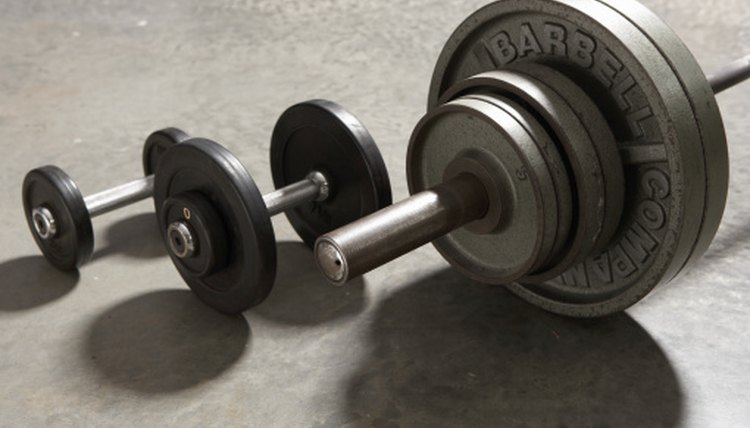
Olympic weight plates are one of two types of weight plates. The other type is standard weights. Olympic weights are used in the sport of Olympic weightlifting. They are often found in commercial gyms and fitness centers. Although the weight plates used in professional weightlifting are standardized, commercial Olympic weight plates are not.
Competition Weights
The specifications for the weight discs used in professional weightlifting are published by the International Weightlifting Federation. Ten different weights are used: .5 kg, 1 kg, 1.5 kg, 2 kg, 2.5 kg, 5 kg, 10 kg, 15 kg, 20 kg and 25 kg. The larger, 15, 20 and 25 kg discs, are covered with rubber and must have a diameter of 450 mm, plus or minus 1 mm. The smaller discs can be made of metal or other materials.
Commercial Weights
The Olympic weight plates used in gyms and sold in sporting goods stores do not necessarily follow the specifications of the IWF. Depending on the manufacturer and brand, these plates come in a variety of diameters and thicknesses. Commercial weights are marked in both pounds and kilograms, but are usually sold by the pound. Seven weight sizes are available: 2.5 lb., 5 lb., 10 lb., 25 lb., 35 lb., 45 lb. and 100 lb.
Olympic Vs. Standard Plates
The common denominator for Olympic weight plates is the center hole, which is 2 inches in diameter. The bore hole on standard weight plates is 1 inch in diameter. Olympic discs must be used with an Olympic barbell, which has 2-inch sleeves, the end part of the bar where the weights slide on. Standard bars have 1-inch sleeves and do not accommodate Olympic weight plates.
Benefits
Olympic plates and bars have several benefits over their standard counterparts. Olympic barbells have rotating sleeves, which turn with the movement of the barbell, allowing the weights to freely move a little. Without this rotation, the pressure of the weight plates transfers to your wrists and forearms. Rotating sleeves eliminates this torque on your joints. Olympic bars are longer and sturdier than standard bars. They are often rated to hold 800 lbs. or more. Standard bars can only handle a fraction of this weight.
References
Writer Bio
Based in Austin, Texas, Jolie Johnson has been in the fitness industry for over 12 years and has been writing fitness-related articles since 2008 for various websites. She received her Bachelor of Arts in English and philosophy from the University of Illinois.