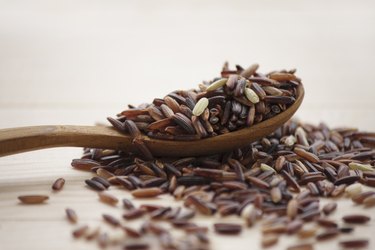
Even though it's a grain and most well-known for carbohydrates, the protein in rice gives it added nutritional benefit.
There's some debate over the nutritional value of white rice because it's considered a refined grain, but you'll get about the same amount of protein in white rice and other types of rice, such as brown rice and wild rice.
Video of the Day
Video of the Day
Here's everything you need to know about the protein in rice.
How Much Protein Do You Need?
The amount of protein you need depends on your age, sex at birth, height, weight and activity levels, according to the USDA. People who are pregnant or breastfeeding may need more protein.
As a rough estimate, between 10 and 35 percent of your daily calories should come from protein, per the Mayo Clinic Health System. If you're eating a 2,000-calorie diet, that's between 200 and 700 calories from protein or 50 to 175 grams.
Protein in White Rice
When rice grains are polished so the bran and germ layers are removed, you get white rice. The bran and germ are full of nutrients, but in most instances, white rice is enriched with vitamins and minerals that have been lost during milling. That said, white rice tends to lack the fiber that you'll find in brown rice and other whole grains.
On average, a cup of cooked white rice (or one serving) gives you 4.3 grams of protein and 205 calories, according to the USDA. It's especially high in B vitamins like folate, and you'll reap the benefits of minerals like manganese, selenium, copper and iron.
You need about six servings of grains per day, at least half of which should be whole grains, per the USDA 2020-2025 Dietary Guidelines for Americans.
Protein in Brown Rice
Brown rice is considered a whole grain, which is a food group most of us don't eat enough of, according to the USDA Dietary Guidelines. Brown rice doesn't undergo the same milling process as white rice, so the hull and germ are left intact — this gives brown rice its impressive nutritional profile.
A 1-cup serving of cooked brown rice has 4.5 grams of protein and 218 calories, which is just a tiny bit more than white rice, per the USDA. Brown rice is particularly high in fiber, giving you 3.5 grams per serving.
On top of all that protein in brown rice, you'll get a good amount of B vitamins and minerals like manganese, magnesium, copper, phosphorous and zinc.
Protein in Wild Rice
The thing is, though it cooks, looks and tastes like rice, wild rice isn't actually rice at all. It actually is the seed of a semi-aquatic grass that grows natively in North America, according to Purdue University.
Because it is similar to rice, wild rice has been harvested and prepared as a grain for hundreds of years, and was originally a staple food for indigenous peoples such as the Ojibway, Menomini and Cree tribes.
Wild rice is a high-protein rice bursting with nutritional value. It tops our list with 6.5 grams of protein and 166 calories per 1-cup serving, according to the USDA. You'll also get 3 grams of dietary fiber.
Wild rice is high in minerals like copper, zinc and manganese, but this rice offers fewer B vitamins than white and brown rice.
Protein in Parboiled Rice
Short for partially-boiled rice, parboiled rice is made by soaking rice grains, steaming them under pressure, then drying, milling and polishing them. Nutrients from the hull back are forced back into the grain which gives parboiled rice nutritional value.
Slightly harder than regular rice, parboiled rice have a golden color and they take a little longer to cook than white rice. You can also buy brown parboiled rice, which is higher in fiber than the white version.
A cup of cooked white parboiled rice has 4.6 grams of protein and 194 calories, per the USDA.
Protein, Amino Acids and Rice
There are many functions of protein in the body. In fact, practically every function relies on protein. During digestions, your system deconstructs large protein molecules, leaving smaller amino acids behind. These amino acids are then used to build muscle and organ tissue, support cell walls and power neurotransmitters for functions that keep your nervous systems running.
There are nine essential amino acids, meaning you need to get them from food because your body can't make them on its own. Rice and most other plant-based foods are incomplete protein sources, which means they don't have all the essential amino acids. Animal proteins like meat eggs and milk, on the other hand, are complete proteins.
Other Options
If you're relying on the protein in rice and other plant-based foods, you'll need to make sure you're having a variety of protein foods throughout the day so you're getting all the amino acids you need. Eating rice with a side of beans or lentils is one option to try.
At the end of the day, if you're looking to add more to your diet, there are so many better high-protein foods to choose from outside of rice. Fish, lean meat, eggs, low-fat dairy, legumes, whole grains and seeds are significantly higher in protein.
- Centers for Disease Control and Prevention: Protein
- USDA MyFoodData: Cooked White Rice
- USDA My Plate: Protein Foods
- Mayo Clinic Health System: Are you getting too much protein?
- USDA: 2020-2025 Dietary Guidelines for Americans
- USDA MyFoodData: Cooked Brown Rice
- USDA Food Data Central: Cooked Parboiled Rice