Herbs for Dissolving a Blood Clot
Blood clotting is a cardiovascular disorder that prevents oxygenated blood from circulating to all systems in the body. Blood clots often form in the pelvic or leg veins and reach the lungs, where they become lodged in a pulmonary artery. Other blood clots travel to the brain and cause the disorder known as a stroke. A clot that blocks blood flow to the heart is called a heart attack. Medications exist to thin the blood and prevent platelet aggregation that causes blood clotting. Alternative treatments are also available to treat this condition. Be sure to discuss herbal treatments with a physician prior to adding them to your health care regimen.
If you are experiencing serious medical symptoms, seek emergency treatment immediately.
Garlic
Garlic has been used medicinally for thousands of years. The herb contains the active compound ajoene, which helps prevent the formation of blood clots, according to Holistic Online's website. The recommended dose of garlic is two to four cloves per day. The use of garlic may contraindicate with blood thinning medications.
- Garlic has been used medicinally for thousands of years.
- The use of garlic may contraindicate with blood thinning medications.
Cat's Claw
How Does Regular Exercise Affect the Arteries & Veins?
Learn More
The medicinal compounds in Cat's Claw are found in the bark and the root of this herb. Cat's claw may prevent blood clots from forming in the bloodstream and increase circulation, according to Holistic Online. Consequently, the herb may prevent serious health disorders related to blood clotting such as stroke and heart attack. The recommended dose of the tincture is 1/4 tsp. to 1/2 tsp., taken two to three times daily, according to the University of Maryland Medical Center 12.
- The medicinal compounds in Cat's Claw are found in the bark and the root of this herb.
- Consequently, the herb may prevent serious health disorders related to blood clotting such as stroke and heart attack.
Ginger
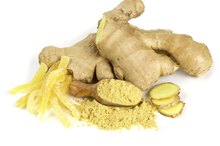
Ginger has been used in Asian traditional medicine for thousands of years. Consuming ginger daily is recommended by the Ayurvedic tradition to prevent heart disease. Ginger's ability to prevent platelet aggregation, or clotting, may protect the body from atherosclerosis, according to the University of Maryland Medical Center 12.
Related Articles

How Does Regular Exercise Affect the Arteries & Veins?
Learn More
Herbs That Lower Blood Pressure Quickly
Learn More
Can Herbs Treat High Platelet Counts?
Learn More
Teas That Will Ease Chest Congestion
Learn More
Ginger for Chest Congestion
Learn More
The Health Benefits of Andrographis
Learn More
Artery Clearing Drugs & Supplements
Learn More
Plavix & Fish Oil
Learn More
Herbal Remedies for Dermatitis Stasis
Learn More
What Herbs to Use for Blocked Fallopian Tubes
Learn More
References
Writer Bio
Based in Richmond, Va., Tara Carson has written articles for editorial and corporate online and print publications for more than 10 years. She has experience as an adjunct professor of nutrition at Northwest Christian University and holds a Bachelor of Science in journalism and nutrition from Virginia Commonwealth University.