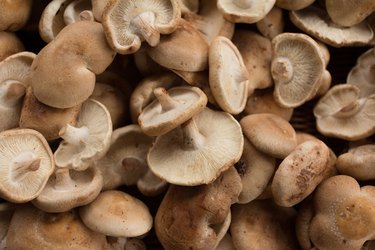
Shiitake mushrooms are among the most popular type of mushrooms to eat, and are packed with nutrients that offer a variety of health benefits. But it's possible to have an unpleasant reaction to the fungus, and knowing how to spot shiitake mushroom side effects can help you determine if it's not the food for you.
So, what is a shiitake mushroom, and how do you ID it? Well, this type of fungus has a broad, brown cap with a thin, curved stem, according to Colorado State University.
Video of the Day
Video of the Day
These mushrooms are rich in beneficial carbohydrates, vitamins and fiber, all of which may help protect against high blood pressure, heart problems and decreased immune function, per February 2016 research in the Saudi Journal of Biological Sciences.
Shiitakes are edible mushrooms that are generally safe to eat (unless you have a known allergy — more on that later), as long as you buy them from the grocery store and avoid wild varieties, according to the Harvard T.H. Chan School of Public Health.
But sometimes, shiitake mushrooms have side effects. Here are some of the potential pitfalls to munching on the mushroom.
Tip
You can also buy shiitake mushroom extract and Japanese mushroom supplements, though it's best to check with your doctor before trying any of these products. That's because the U.S. Food and Drug Administration (FDA) doesn't require supplements to be proven safe or effective before they're sold, so there’s no guarantee that what you take is safe, contains the ingredients it says it does or produces the effects it claims.
1. Digestive Issues
The shiitake mushrooms you get from the supermarket are typically safe to eat. But wild-picked mushrooms can sometimes contain toxins that cause vomiting and diarrhea, according to Colorado State University.
Shiitake mushrooms are also hard to digest for people with an intolerance, which can occur when your body has difficulty processing a particular food, per the American Academy of Allergy, Asthma & Immunology (AAAAI). Food intolerance symptoms include:
- Gas
- Bloating
- Stomach pain
- Diarrhea
Fix it: If you have an intolerance to this food, it's best to opt for a shiitake mushroom replacement in your meals (like veggies) instead.
Is Mushroom High in Histamine?
Mushrooms are low in histamines, according to August 2020 research in Biomolecules. However, they do contain other amines (like putrescine), which is why they're sometimes excluded from low-histamine diets for people with a histamine intolerance.
2. Allergic Reaction
Though it's not one of the most common food allergens, it's possible to have a shiitake mushroom allergy or allergic reactions to other wild mushrooms, according to the Harvard T.H. Chan School of Public Health.
An allergic reaction occurs when your immune system overreacts to a food, per the AAAAI. Symptoms can include:
- Hives
- Itchy skin
- Swelling
- Wheezing
- Vomiting
- Diarrhea
Fix it: If you know you have a mushroom allergy, avoid eating shiitakes and any related products.
Warning
Some people can have a severe allergic reaction called anaphylaxis, which can make it difficult to breathe or lead to loss of consciousness, per the AAAAI. Seek medical care immediately if this happens to you.
3. Skin Rash
When it comes to shiitake mushroom side effects, a mushroom allergy rash isn't the only skin reaction you may experience.
Indeed, eating the fungus raw or undercooked can also lead to a shiitake mushroom rash called shiitake dermatitis, according to November 2016 research in Pharmacognosy Review.
A shiitake rash typically develops a day or two after you eat the mushrooms, and shiitake dermatitis photos show that the rash looks like whiplash marks. It's caused by a toxic reaction to lentinan, a substance in the mushroom, per the Pharmacognosy Review research.
One older 1993 study in Dermatology found that this rash may be sensitive to sunlight, though new research is needed to better understand if this is the case.
Fix it: Shiitake mushroom dermatitis can be treated with anti-histamine or corticosteroid medicines, and usually gets better within about two weeks, per the Pharmacognosy Review research.
Shiitake Mushroom Benefits for Skin
Shiitake mushroom supplements and other mushroom extracts may actually support skin health. For instance, an October 2016 study in Molecules found that certain mushroom extracts (including shiitake) may have anti-inflammatory, antioxidant and antibacterial effects on your skin.
4. Food Poisoning
There aren't many documented outbreaks of food poisoning from mushrooms in the U.S., according to Colorado State University.
Still, it's possible to get foodborne illness from bad shiitake mushrooms. This may be the case if you eat mushrooms that were contaminated with bacteria during the growing or processing phase, per Colorado State University. Rotten mushrooms that were then canned, distributed and eaten have also caused food poisoning in the past.
Pathogens from raw meat, poultry, seafood or eggs can also transfer onto mushrooms (or any other food, for that matter) if handled in close proximity, according to the Centers for Disease Control and Prevention (CDC).
Mushrooms are also perishable, according to the FDA. In other words, old mushrooms can make you sick if they haven't been properly stored.
So, what happens if you eat spoiled mushrooms? Per the Mayo Clinic, here are mushroom food poisoning symptoms:
- Nausea
- Vomiting
- Watery or bloody diarrhea
- Abdominal pain and cramping
- Fever
Fix it: To avoid foodborne illness, follow these tips from the CDC:
- Clean your hands, utensils, surfaces and food before preparing and eating a dish
- Store and handle raw meat, poultry, seafood and eggs separately
- Thoroughly cook food
- Promptly refrigerate perishable food
Are Shiitake Mushroom Stems Poisonous?
Perhaps you've heard the myth that shiitake mushrooms stems are toxic and can even cause severe reactions like mushroom paralysis. But this isn't true — the stems are edible and safe to eat, per Colorado State University, so long as you follow proper food safety protocol to avoid foodborne illness.
- Saudi Journal of Biological Sciences: "Lentinula edodes (shiitake mushroom): An assessment of in vitro anti-atherosclerotic bio-functionality"
- Harvard T.H. Chan School of Public Health: "Mushrooms"
- Colorado State University: "Mushrooms"
- American Academy of Allergy, Asthma & Immunology: "Food Intolerance Versus Food Allergy"
- U.S. Food and Drug Administration: “FDA 101: Dietary Supplements”
- Pharmacognosy Review: "The Unexplored Anticaries Potential of Shiitake Mushroom"
- Biomolecules: "Histamine Intolerance: The Current State of the Art"
- Molecules: "Development of Mushroom-Based Cosmeceutical Formulations with Anti-Inflammatory, Anti-Tyrosinase, Antioxidant, and Antibacterial Properties"
- Centers for Disease Control and Prevention: "Four Steps to Food Safety: Clean, Separate, Cook, Chill"
- U.S. Food and Drug Administration: "Selecting and Serving Produce Safely"
- Mayo Clinic: "Food poisoning"
- Dermatology: "Flagellate mushroom (Shiitake) dermatitis and photosensitivity"