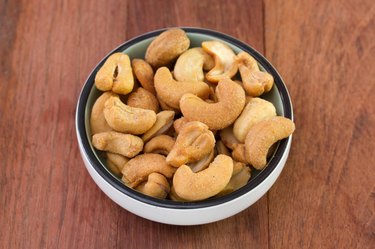
Cashews are a rich source of protein, monounsaturated fats and nutrients such as copper, iron, magnesium and zinc. Because they are also low in purines -- compounds your body breaks down into uric acid -- an individual with gout can include them in her diet. Excess uric acid in the bloodstream accumulates in joints, causing the pain and swelling characteristic of gout. By eating fewer purine-rich foods like beef, organ meats, shellfish like mussels and certain vegetables in favor of low-purine choices including cashews, you may be able to manage your gout symptoms.
Purine Content
Video of the Day
Items with a high concentration of purines are defined as those that contain between 150 to 825 milligrams of purine compounds per 100 grams of food, says the Dial-A-Dietitian Nutrition Information Society of British Columbia. People with gout are advised to eliminate these foods from their diet. A moderate-purine food is one containing 50 to 150 milligrams of purines in every 100 grams and can be eaten in limited amounts daily. Cashews are low in purines, with less than 50 milligrams of the compounds per 100 grams.
Video of the Day
Recommended Intake
According to the University of Pittsburgh Medical Center, a gout diet should include approximately 6 ounces of protein-rich foods like cashews each day. The U.S. Department of Agriculture says half an1/2 ounce of nuts is equivalent to a 1-ounce protein serving. Choose dry-roasted over oil-roasted cashews to keep your fat and calorie intake low. In addition, opt for unsalted nuts. A single ounce of salted, dry-roasted cashews contains 181 milligrams of sodium, or 12 percent of the 1,500-milligram daily limit for people on a low-sodium diet.
Protein Substitute
Individuals with gout need to limit their overall intake of protein, particularly animal-based proteins like meat, poultry and fish. Instead, the bulk of the protein on a gout diet should come from plant proteins, including nuts like cashews. In addition to having a low concentration of purines, cashews are cholesterol-free, have less saturated fat per serving than meat and are rich in heart-healthy mono- and polyunsaturated fats. Eating less meat and more plant-based protein sources such as nuts is linked to a decreased risk of cancer and heart disease.
Expert Insight
While cashews can play an important role in a gout diet, you will need to eat them in moderation to avoid excess calories that can lead to weight gain. Eating 3 ounces of cashews would supply you with 489 calories, or nearly 25 percent of the daily calorie needs of an adult following a 2,000-calorie diet. To maximize the benefits without too many calories, limit your cashew intake to 1 ounce per day, or approximately 15 whole cashews.
- USDA National Nutrient Database: Nuts, Cashew Nuts, Dry Roasted, Without Salt Added
- Myrtue Medical Center: Low Purine Diet - Gout Treatment Diet
- Dial-A-Dietitian Nutrition Information Society of B.C.: Diet for Gout
- UPMC: Low-Purine Diet
- ChooseMyPlate.gov: Protein Foods -- What Counts as an Ounce Equivalent in the Protein Foods Group?
- USDA National Nutrient Database: Nuts, Cashew Nuts, Dry Roasted, With Salt Added
- Harvard School of Public Health: Protein -- Moving Closer to Center Stage
- Archives of Internal Medicine: Red Meat and Mortality -- Results From 2 Prospective Cohort Studies
- Mail Online: How Many Nuts Can I Eat Without Getting Fat?
- Dietitians Association of Australia: Nuts