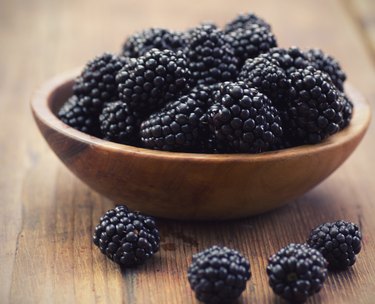
Blackberries are quite nutritious, so there are few disadvantages to eating the fruit. In some cases, however, these plump, velvety berries can cause side effects such as changes to urine color. If you choose canned blackberries, buy frozen versions that have been sweetened or add sugar to your fresh berries, they can become a significantly less healthy food choice.
Changes in Urine Color
Video of the Day
Healthy urine should be a pale golden yellow color -- like straw, according to MedlinePlus. If your urine is differently colored, you may need to seek emergency medical attention. But in some cases, red or light brown urine can be caused by eating foods that have strong pigmentation, including blackberries. Regardless, if discolored urine persists, you should see your doctor because you may have a more serious condition, such as damage to your kidneys.
Video of the Day
Watch for Added Sugar
Fresh blackberries are naturally low in sugar. A 1-cup serving of fresh blackberries has a little over 7 grams of sugar, while a 1-cup serving of canned blackberries, in syrup, has over 50 grams of sugar. A diet high in added sugars can increase your chances of obesity, and the American Heart Association recommends that you limit your daily added sugar intake to 100 to 150 calories per day, or between 6 and 9 teaspoons. Choose unsweetened blackberries to avoid the extra sugar.
Too Much Fiber for Some
Blackberries are naturally high in fiber, with almost 8 grams per 1-cup serving of fresh berries. While this may be a benefit -- most Americans do not eat enough fiber in their daily diet, and a diet high in fiber can reduce the risk of heart disease -- some people require a low-fiber diet. These people may include those who have had intestinal surgery, and those with other digestive complaints, such as diverticulitis. In these cases, fresh fruits with skins or seeds, such as blackberries, may need to be avoided.
Enjoy Blackberries Wisely
Fresh blackberries can be simply rinsed and eaten as is, or tossed into pancake batter, cereal or salads. In addition, use the berries to make jams and juices; sauces for sweets such as ice cream; or for savory dishes, such as a sauce to accompany game meats. Keep in mind, though, that making strained blackberry-derived products -- such as jams, jellies or juices -- removes much of the dietary fiber content of the berries. Many of these products may also contain added sugars, which means that they become a less healthy food choice.
- MedlinePlus: Urine - Abnormal Color
- USDA National Nutrient Database: Blackberries, Raw
- USDA National Nutrient Database: Blackberries, Canned, Heavy Syrup
- American Heart Association: Added Sugars
- University of Maryland Medical Center: Fiber
- Drugs.com: Low Fiber Diet
- BBC Good Food: How to Pick and Cook Blackberries