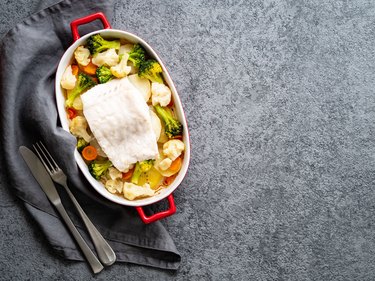
Losing weight with blood type AB positive is outlined in "Eat Right for Your Blood Type," by Dr. Peter D'Adamo, a naturopathic physician. Adamo continued the work of his father, Dr. James D'Adamo, also a naturopath.
D'Adamo Sr. began delving into the characteristics of people with different blood types and how they burn calories. Type AB positive is one of the most rare, found in less than 4 percent of the population according to the American Red Cross.
Video of the Day
Video of the Day
Whether you are positive or negative does not matter in the dietary recommendations. Type AB has emerged from types A and B, having some characteristics of both.
Losing Weight With Type AB
Losing weight for type AB positive blood means making a few changes to your diet and exercise routine.
1. Have Your Blood Checked
Make sure of your blood type by having it checked at your local hospital or clinic. Once you are certain you are type AB, follow the recommended diet in the "Eat Right For Your Type" book or access the information at Dr. D'Adamo's online website.
2. AB Positive Blood Type Diet
Eat the following foods from the AB+ blood type food list that encourage weight loss: tofu, seafood and green vegetables, which help metabolic efficiency; dairy products and kelp, which improve insulin production; and pineapple, which helps digestion and stimulates intestinal mobility.
Type AB inherited some genes from type A and type B. From type B, they received the adaptation to meats, but from type A, they received low stomach acid, making them unable to metabolize most meats efficiently.
3. Meat, Seafood and Dairy
Consume lamb, mutton, rabbit and turkey in the meat category, like your type B ancestors. The most beneficial seafood for type AB's include tuna, cod, grouper, hake, mackerel, mahimahi, monk fish, ocean perch, pike, porgy, trout, red snapper, sailfish, pickerel, sardines, shad snail and sturgeon.
Use olive oil as a source of fat. The most beneficial dairy products are yogurt, kefir, non-fat sour cream, eggs, mozzarella cheese, goat cheese, ricotta cheese and milk.
4. Nuts and Beans
Enjoy nuts and beans, as they are important immune system stimulants and cancer-fighting foods for type AB. Because ABs tend to have gallbladder problems, nut butters are preferable to whole nuts, and peanuts and walnuts are the most beneficial nuts.
In the bean department, lentils, navy, pinto, red and soybeans are most beneficial. Lentils contain cancer-fighting antioxidants, and all beans slow insulin production in ABs.
5. Avoid These Foods
Avoid the following foods that encourage weight gain: red meat, which is poorly digested and stored as fat; kidney beans, lima beans and corn, which inhibit insulin efficiency; seeds and buckwheat, which cause hypoglycemia; and wheat, which decreases metabolism, inhibits insulin efficiency and causes inefficient use of calories.
Avoid chicken, because the same lectin that irritates the blood and digestive tracts of type Bs has the same effect on ABs. Avoid all smoked or cured meats because they can cause stomach cancer in people with low stomach acid.
6. Choose Alkaline Fruits
Choose fruits that are more alkaline, such as plums, berries, and grapes. Pineapple helps weight loss by helping digestion. Grapefruits and lemons are beneficial, and lemons help clear mucus from the system. Oranges are a stomach irritant and should be avoided. The banana lectin interferes with digestion and such be replaced with apricots, figs and some melons.
7. Yoga and Cardio
Exercise with the intention of reducing stress, which plays into weight loss and health for type ABs according to the American Nutrition Association. Tai chi and yoga are recommended for relaxation in sensitive ABs. Dr. D'Adamo recommends interspersing calming activities with aerobic ones. For example, alternate running and biking with yoga and tai chi.
Read more: Side Effects of Switching to a Healthy Diet
Warning
Realize that even though Dr. D'Adamo has many favorable testimonials about the blood type diet, the American Council on Science and Health says there is no scientific basis for it. Consult your physician before starting any diet or exercise program.