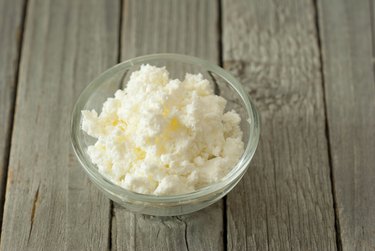
Ricotta cheese, like cottage cheese and cream cheese, is high in moisture and spoils more quickly than hard cheeses. Use it promptly because it only stays fresh for a week or two. If the cheese doesn't look or smell like it did when you first opened it, your best course of action is to throw it out.
Blue Fuzzy Things
Video of the Day
Your first clue that ricotta cheese has gone bad is a change in appearance. Although some types of soft cheeses, such as Brie or Danish blue may intentionally be coated with an edible layer of mold, any mold that grows on ricotta is a sign that the cheese has spoiled. You can cut mold off hard cheeses and still eat the cheese, but once mold appears on ricotta, throw it away. Some molds produce harmful toxins and the mold spores have likely infiltrated the entire container. The cheese may also be watery or have a light brown or yellow appearance, rather than white.
Video of the Day
Take a Whiff
Unlike many cheeses that naturally have a pronounced odor, ricotta cheese has almost no odor. Ricotta is a mild, soft cheese that tastes and smells mostly of milk. If you notice a sour or fermented odor, throw discard it.
Shelf Life
Ricotta cheese is highly perishable and should always be stored covered and in the refrigerator at 40 degrees Fahrenheit or cooler. When handling ricotta, use a clean serving spoon to scoop out a portion. Cover the container and refrigerate it promptly. Even with this careful handling, an opened package of ricotta will only last one to two weeks, according to the U.S. Department of Agriculture. To be on the safe side, discard ricotta cheese that's been in your fridge for longer than two weeks after opening it. If you can't remember when you bought the ricotta, throw it out.
Look At the Date
All packages of ricotta cheese bear a "use-by" date. This date is the last date the manufacturer will guarantee the quality of the product and can serve as a guideline for keeping the cheese. Keep in mind that an unopened container of ricotta may stay fresh for two to four weeks, and may be good for a week or two past this date. However, if the date has long since come and gone, it's a safe bet that the cheese is no longer good. When in doubt, throw it out.