
What does fact checked mean?
At SportsRec, we strive to deliver objective content that is accurate and up-to-date. Our team periodically reviews articles in order to ensure content quality. The sources cited below consist of evidence from peer-reviewed journals, prominent medical organizations, academic associations, and government data.
The information contained on this site is for informational purposes only, and should not be used as a substitute for the advice of a professional health care provider. Please check with the appropriate physician regarding health questions and concerns. Although we strive to deliver accurate and up-to-date information, no guarantee to that effect is made.
Numb Feet While Skiing
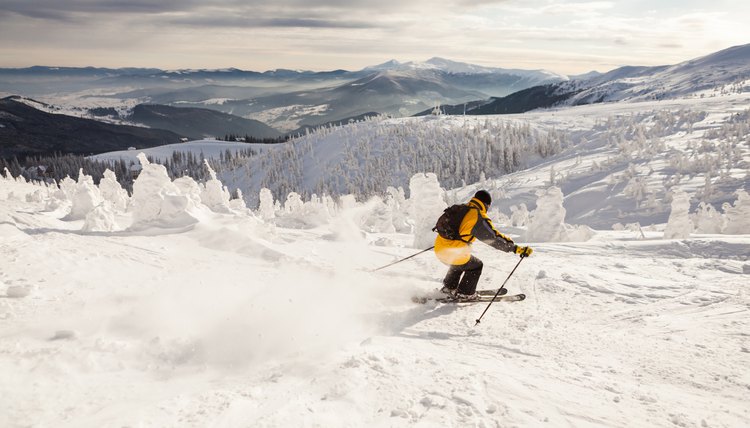
Keeping extremities warm during a day on the slopes can be a major hurdle for skiers and snowboarders. Because skiing involves high altitude, snow and speed, keeping your feet and toes warm requires proper equipment and apparel. Without properly fitting boots, you can experience paralyzing cold, pain, numbness and, in some cases, permanent damage to your feet and toes.
Major Culprits
Boots that are too tight or too loose represent the major causes of numbness in the feet while skiing. When your boots are too tight, they can trap and pinch the nerves in your ankles, feet and toes. When your boots are too loose, your feet can’t stay warm and they may develop frostnip or frostbite. Both conditions include foot numbness. A properly-fitting ski boot should feel snug but not pinch. Pinching at the ankle, top of the foot or toes can indicate a too-tight fit. A boot that is too large allows cold air to circulate around your feet and can also cause you to tighten your toes while skiing, reducing the circulation in your feet. Poor peripheral artery circulation can be another cause. If you smoke or have a medical condition such as diabetes, high blood pressure, abnormal cholesterol levels or a heart condition, you're more likely to experience poor circulation and have a greater risk of numb feet while skiing.
Preventing Numbness
Properly fitting boots can help reduce foot numbness. Get your boots at a reputable ski shop or sporting goods store and ask the salesperson to assist you with finding a boot that fits well. Boot liners, insoles and foot beds can offer support, alignment and warmth but should be replaced after a season or two to maintain a snug fit. If your boots are too tight, a ski shop may be able to make them fit better by heating and remolding them or grinding them from the inside. Keep your feet dry by airing out your boot liners after each day’s runs. Socks made for cold weather offer warmth and can help wick moisture away from your feet. Battery-operated boot heaters can offer additional protection from the cold.
Seeking Relief
Get out of the cold and remove your boots to allow circulation to return to your feet. Replace or adjust boots that are too tight. Gradually warm cold feet by placing them in warm, not hot, water. If your feet are frostbitten, do not walk on them and seek immediate medical attention.
Know the Warning Signs
Don’t ignore feet that have gone numb. Ignoring numbness can result in permanent damage, including frostbite and neuropathy. Do not use direct heat, such as a heating pad or stove to re-warm frozen feet. Pain is common as circulation returns.
References
Writer Bio
When not working in her family-owned food and bar business, Viola Horne can almost always be found with a cookbook in one hand and a whisk in the other. Horne never tires of entertaining family and friends with both comfort food and unusual delicacies such as garlic cheese smashed potatoes and banana bacon pancakes.