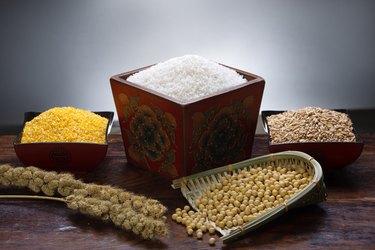
Starch is a complex carbohydrate that is found in potatoes, whole grains and cereal grains, which consists of numerous glucose strands. Eventually, all complex carbohydrates -- with the exception of fiber -- are digested into glucose. Starch is a simple sugar, which is the smallest form of carbohydrate, and is the main source of energy for all cells. While both starch and glucose are considered carbohydrates, they have different effects in your body.
Effects of Starch
Video of the Day
As you chew, the glands in your mouth secrete saliva. Some of the enzymes in your saliva pull off those glucose branches from the starches before the enzymes send them down to your small intestine. Additional enzymes in your small intestine finish the conversion process, fully turning the starches into glucose. Because the digestive process takes so long, starches tend to have a gradual effect on your blood sugar, raising it slightly over time.
Video of the Day
What Glucose Does
Pure glucose occurs naturally in fruits and vegetables, although glucose is also added to processed junk foods as a sweetener. Glucose absorbs through intestinal walls and enters your bloodstream rather quickly. Whole foods, such as fresh produce, also contain fiber, which delays glucose absorption. Whole foods also minimize the chance that a spike in blood sugar will occur. Processed foods are usually low in fiber, so that the glucose goes straight to your blood, quickly elevating your blood sugar.