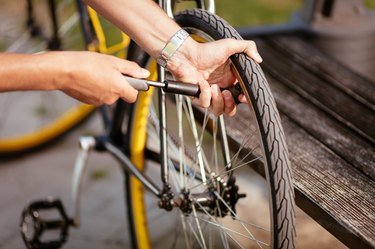
With the wind in your face and the sun on your back, you can cycle along paved roads or swing off to enjoy an adventurous ride on a bike path or trail. Whether a mountain, comfort or hybrid, your bicycle has tires carefully selected to accommodate your riding needs.
Tip
The recommended tire pressure for your 26-inch bike tires varies with the tire type, intended use and the rider's weight.
Video of the Day
Recommendations
Mountain bike 26-inch tires are 2 to 3 inches wide, with knobby tread to give you more traction on challenging terrain and help channel mud and debris away from the bike. Inflate these to 30 to 50 psi.
Video of the Day
Hybrid or road style 26-inch tires are less than 2 inches wide and have little to no tread to minimize rolling resistance and increase speed. You can inflate some models of these tires up to 95 psi, but 60 to 80 psi is a more common recommendation.
Considerations
Use the lower end of your tire's recommended pressure range for rough roads or off-road, and the higher end for paved roads, according to SheldonBrown.com.
While some road riders deliberately over-inflate their tires, it's not recommended. Inflate tires to the manufacturer's recommended tire pressure to maintain the structural integrity of the tires.
Traction
Using low pressures on your 26-inch tires might improve traction significantly, but when the tire experiences significant jolts, you'll have a higher probability of pinch flats. Pinch flats occur when the inner tube gets caught between the tire and the rim. Over-inflating your tires increases your speed at the cost of stability and traction.
Weight
Because most bicycles carry more weight on the rear wheel, inflate your rear tire about 10 percent more than your front tire, according to SheldonBrown.com. If you're carrying loaded panniers or other heavy cargo on a rear rack, or if you weigh significantly more or less than average, adjust your tire pressure accordingly.
For example, Frank Berto, former engineering editor at Bicycling Magazine, recommends a minimum pressure of 25 psi on a 26 by 1-3/4 inch tire when the total weight of bicyclist, bicycle and bicycle load is about 154 pounds. If the total weight is about 265 pounds, the minimum pressure is 35 psi.
Expert Insight
Brown notes that the rider's skill in riding can affect the ideal tire pressure. Experienced bicyclists will lift themselves slightly off the saddle when going over bumps, while new bicyclists might sit hard on the saddle, which increases the risk of pinch flats.
New cyclists may want to use a slightly higher tire pressure than they would otherwise, but keep it within the tires' stated minimum and maximum psi.